
Animal welfare
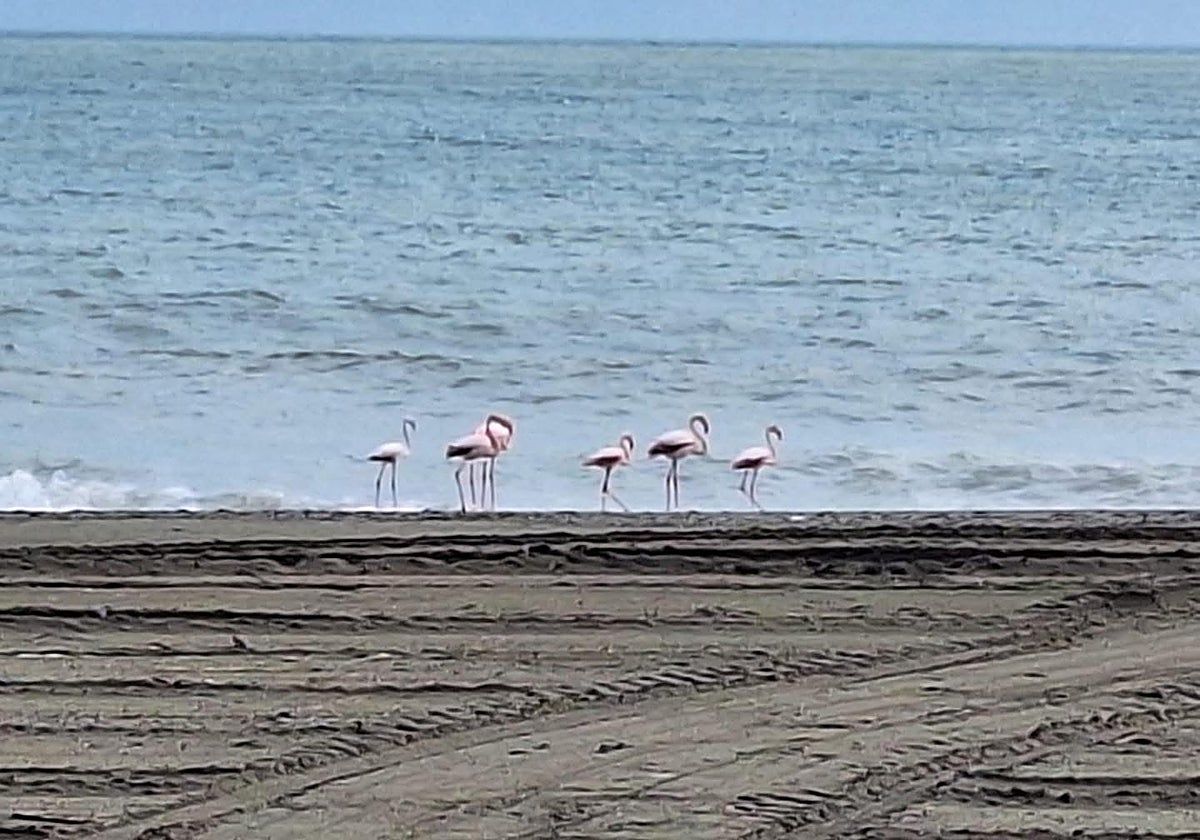
Malaga fauna: Pink flamingos on prolonged visit in Estepona
Successive storms across the Costa del Sol have forced the migratory birds to seek refuge on the town's beaches as they head for Andalusian breeding grounds

Estepona
Estepona residents and visitors have been treated to an unusual spectacle this week as dozens of pink flamingos settled on the town's beaches, primarily at El Cristo and La Rada.
While the town is a known fixture on the flexible migration routes used by birds searching for breeding grounds, the relentless storms of recent weeks have forced these elegant visitors to extend their stay.
Ornithologist Andrés Rojas explains that flamingo migratory behaviour is far from rigid. "Flamingos do not follow a strict schedule; instead, they move continuously between different wetlands, estuaries, marshes, and lagoons, depending on water levels and the availability of food," he says.
According to Rojas, these birds prefer following the coastline to "crossing large tracts of land". This makes the Costa del Sol—and Estepona in particular—a vital natural corridor connecting Andalucía’s most significant sites for the species, including the Cabo de Gata salt flats, the Fuente de Piedra lagoon, the mouth of the Guadalhorce river, and the Doñana National Park.
The recent heavy rainfall and high winds have disrupted the birds' natural rhythm, forcing an unscheduled halt. "Strong gusts of wind and poor sea conditions hinder their progress. This compels them to seek out quiet areas where they can rest and wait for the weather to break," Rojas adds.
Estepona has effectively become a sanctuary for the flock before they continue their journey. Data from SEO/BirdLife identifies the Fuente de Piedra lagoon in Malaga province as the primary breeding site in Andalucía, provided water levels are sufficient. The flamingos are expected to head inland to the lagoon as soon as the weather permits.
![[]](http://static.vocstatic.com/voc26/latest/assets/images/favicon/surinenglish/apple-touch-icon-57x57.png)