
Food and drink
Eating out is more expensive than ever and Costa del Sol and Malaga province restaurants are feeling the pinch
Those who can afford to eat out are ordering less than they did five years ago, according to those in the know

Malaga
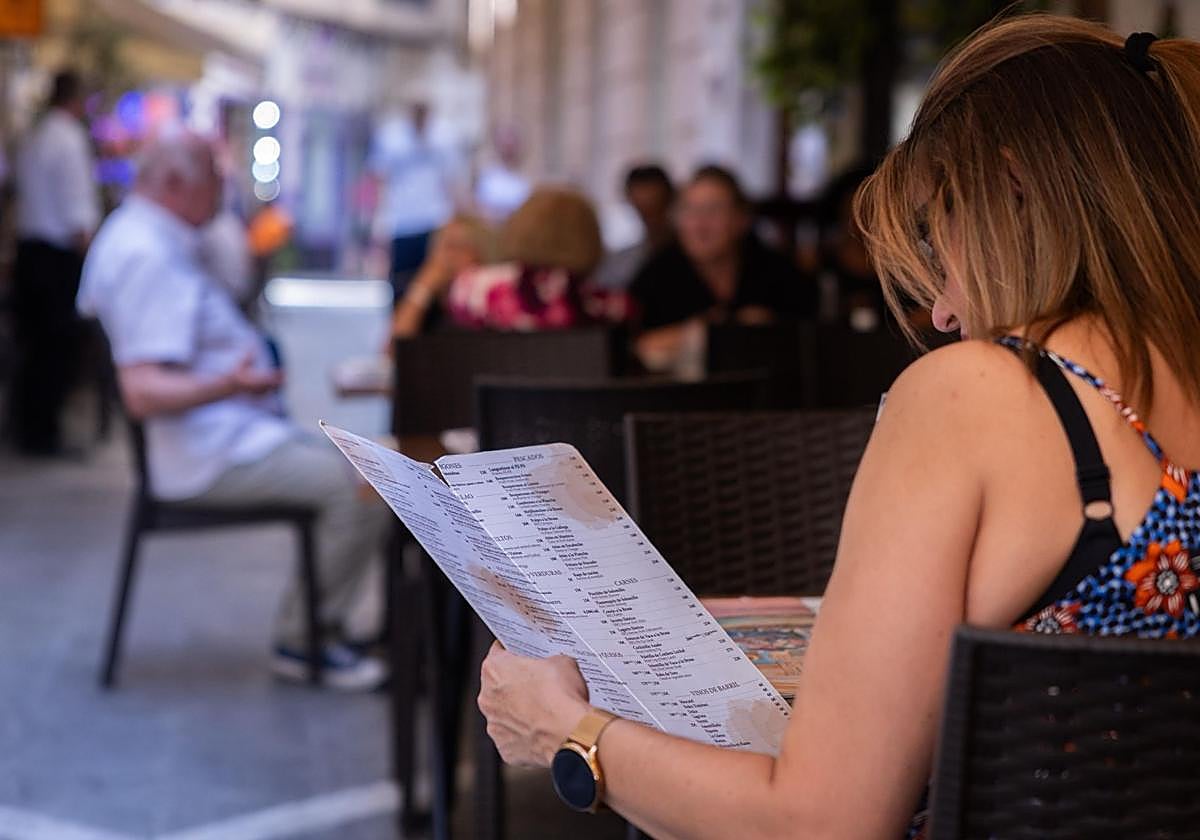
The sharp rise in prices is being felt by Malaga province's hospitality and catering sector, which has noticed that customers are not giving up the habit of having a drink on a terrace, but are limiting their spending to cheaper dishes or choosing just a few tapas to share. This has led to restaurants having to adapt their strategies to stay open.
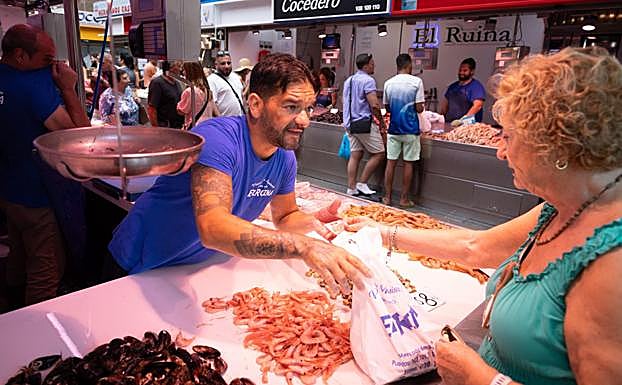
According to the latest data from the Andalusian institute of statistics and cartography (IECA), a large number of foodstuffs have risen by more than 10% this summer compared to last. This is the case of eggs (19.1%), beef (15.8%), coffee, cocoa and herbal teas (15.3%), as well as pulses and vegetables (11.4%). In addition, fresh fruit and beef have increased in price by more than 8%. Meanwhile, fresh fish and milk have risen in price by around 5% this summer compared to 2024.
Only two items in the shopping basket are cheaper now than twelve months ago: oils and fats which have fallen by 36.3% thanks to the recovery of olive harvests after the recent rains. The other good is sugar, which is down nearly 18%.
However, despite this recent drop, according to IECA data for Andalucía, oils are 54% more expensive today than in 2020, while the price of sugar is 31% higher than five years ago. This is the case for products that have fallen in the last year. But this snowball effect is multiplied by the fact that some meats, such as beef, have risen by more than 50% since the pandemic. Similar figures apply to fresh fruit and pulses. Eggs have risen by 65%. And milk has seen a 40% rise.
Change since 2020
According to Manuel Villafaina, president of the federation of beach businesses in Andalucía and Malaga, "Since 2020, there has been a 56% increase in meat, fish, oil, and we have been putting up prices little by little," he says. He adds that the average bill in the beach bars has gone up "from between 10 and 20 euros in 2020, in 2022 it rose to between 15 and 25 and now, in 2025, it is between 20 and 30 euros. "In the last year, prices have not risen more than 5%", he says.
29%
hospitality prices have risen over the last five years
In contrast, the hospitality and catering industry has seen its main raw materials increase in price by more than 50%. As a result, they regret, the sector has not recovered the profitability figures of 2019.
Javier Frutos, president of Mahos, the Malaga hospitality and catering association, explains that the sector's problem is that not only have raw materials risen sharply, but also electricity and fuel have become more expensive. CPI (consumer price index) data reports that in summer 2022, the overall CPI was rising at 11.4%, food at 15.2% and restaurants and hotels at 9.7%. In 2023, if the overall CPI was 2.7%, food was 10.3% and hotel menus were 8%. In 2024, the general price index (3.4%) compared with the shopping basket (2.9%) and bars (8%). This year, in the same order, the figures are 3%, 1.9% and 4.7%. Frutos claims that the hospitality industry has not recovered profitability in 2019.
The sector says that it is changing the menu (and not only the prices): using cheaper raw materials and adding imagination to its dishes
The head of Malaga's hospitality and catering employers' association says that the sector's costs have also risen due to the increase in the minimum wage in recent years. "Prices in the industry are going up because people are no longer exploited and this has repercussions for the client. It should have always been like that. But before, people paid one euro for a beer and the working conditions of the staff were not taken into account. Now the salaries are higher, above the wage agreement in the whole of Malaga and the workers work an eight-hour day," he says.
"There are not enough qualified staff, which means we need to hire more, which is another factor that raises costs. This is in addition to the increase in the price of raw materials," says Diego René, who runs eight restaurants in Malaga city. René then goes on to reveal one of the sector's strategies for coping with this situation and that of a "hard-pressed" clientele: using cheaper raw materials and using imagination in the dishes. He confesses that entrecôte, sirloin steaks, octopus legs, duck... have been removed from many menus: "The customer is used to paying 25 euros and not 50, but the price of the raw material has doubled."
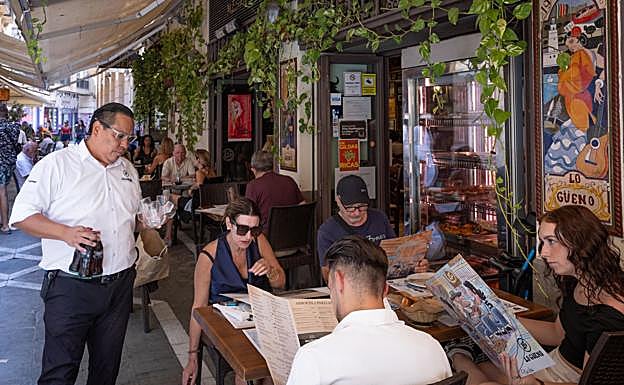
René points out that in the last year, prices in his restaurants have risen by an average of 10%. This is a figure which, he justifies, helps to offset the increase in costs and which the customer does not notice very much. So in his top restaurant, the Michelin-starred Beluga, the average bill has risen from 60 to 80 euros, while the most affordable one has remained at around 13 euros.
René can be found on Saturdays in Plaza de las Flores with its packed terraces and there are Orellana and La Farola de Orellana near the cathedral. The two eateries on Calle Moreno Monroy are also busy. There, a partner-owner, Patricia Carralero, explains that although they are trying to absorb the rise in food prices, they have changed the menu, with increases in the fried fish, for example, from 18 to 22 euros and the tapas are all 3.50 euros.
They have applied a minimal increase to the wine but say that they haven't put up the price of beer. "There are things we can't raise," he says. At Quitapenas, another of Malaga's traditional taverns, they say that prices are more or less the same as last year. In El Mentidero they have had the same menu for two years but recognise that the prices in Malaga are prohibitive and admit that they do not rule out a price increase: "Fish and vegetables are very expensive in the market".
Places with a high turnover, those with tapas and portions, can afford to maintain prices or not raise them much, but those with say two lunch and dinner sittings have no choice but to adopt more aggressive strategies to help them cope with rising costs.
-kGCE-U2302770139528azF-624x385@Diario%20Sur.jpg)
At Los Mellizos, manager Eusebio Lobón explains that this year the price of soft drinks and seafood have gone up, but little else: "Apart from tourism, we have to live off the people of Malaga", he says, implying that more cents and more euros per plate would mean a drop in clientele.
"A lot of people ask for the cheapest. Or tapas, tapas, tapas. If you tell them that with a couple of tapas for eight they are going to be hungry, they tell you that they had a late breakfast"
And that is the fear that many people in the hospitality sector have: "If you raise the prices, they stop coming", they say. "Many people ask for the cheapest. Or tapas, tapas, tapas. If you tell them that with a couple of tapas for eight they're going to be hungry, they tell you they've had a late breakfast," restaurant owners explain.
"Mercadona tourism"
This is the same feeling that the Rocamar beach bar in Huelin conveys. There, manager Mara Ruiz Castro explains that they haven't put up their prices since 2023: "You can't raise prices exorbitantly for the clientele. This way we all win a little bit". But she says, "This is Mercadona tourism. Here they have an aperitif , although we have been selling espetos at five euros for ten years", she points out.
.jpg)
"Sometimes they only order a chopped tomato salad and an espeto. Yesterday we had a table of five people and they paid just over 50 euros; less than at McDonald's"
Eli Manzano, the manager of a neighbouring beach bar, María, says that the menu this year has gone up by one euro for each dish, or at most two. She says they have had fewer customers and those that do come complain about the prices.
"Sometimes they just ask for a chopped tomato salad and an espeto. Yesterday we had a table of five people and they paid just over 50 euros; less than at McDonald's", Manzano says.
A little further west, in Torremolinos, at Los Manueles, they report that their prices have increased by between 5% and 10%, which means that the menu has been revised by twenty cents on some items and a couple of euros on others. But they suggest that people are eating less or eating cheaper, because the average bill remains between 22 and 28 euros. People are eating less seafood and more rice and fish. They have also cut back on desserts, coffees and drinks.
At the other end of the coast, near El Palo, in Las Acacias, the manager, Malú Moyado, says that they are working on a new menu with higher prices and they notice that customers are spending "very little". The average bill has dropped a lot, from 20 to 15 euros. There are people who bring a hidden drink or who order an "espeto" and bring out a Tupperware box with their salad". In any case, the restaurants in Malaga still offer something for all budgets: there are espetos at nine euros and also tapas at two euros.
![[]](http://static.vocstatic.com/voc26/latest/assets/images/favicon/surinenglish/apple-touch-icon-57x57.png)