
Health
Cristina's fight for life: 14 ICU admissions for a serious rare disease
Non-clonal mast cell activation syndrome causes severe alergic recations, although her quality of life has improved since her fallopian tubes and ovaries were removed in 2018
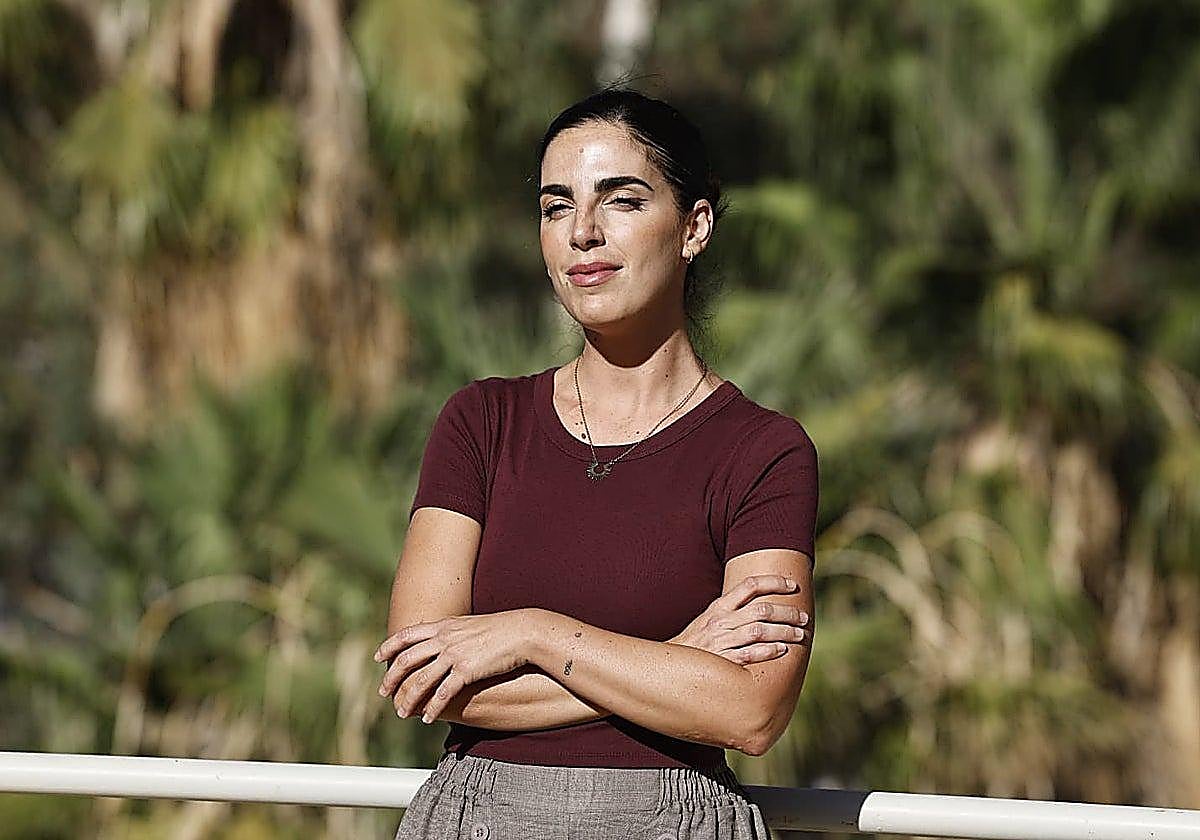

Cristina Cosano Rosales, 39, has faced more in her life than most could ever imagine. Born in Córdoba and living in Malaga city, her battle with a rare, life-threatening disease has been a constant struggle.
Diagnosed with non-clonal mast cell activation syndrome – a condition that causes the immune system's mast cells to overreact, triggering extreme allergic reactions such as anaphylactic shock and bronchospasm – Cristina has been admitted to intensive care 14 times and spent years trying to get a diagnosis, but she has never thrown in the towel.
Anaphylactic shock is a severe allergic reaction that can be life-threatening, with a drop in blood pressure and difficulty breathing. Sometimes it causes bronchospasm, which is the narrowing of the bronchial tubes and causes wheezing, coughing and shortness of breath.
This has been the reality for Cristina since she started suffering from the disease at the age of 23 until, after an endless pilgrimage through hospitals, she was able to put a name to what was happening to her at the age of 26. "They are the cells that are in charge of inflammatory activity and the body's response is an allergic reaction. It has brought me to the brink of death," she explains to SUR.
Epilepsy
In addition to this, she was diagnosed with epilepsy as an adult, the episodes of which provoke the same responses in her. "Every time I have a seizure, the block is triggered," she explains, adding: "I have had anaphylactic shock in every possible circumstance." Her case, however, is more serious than that of other sufferers. In fact, she says, she has never met anyone "with as much activation" as she has had in her body.
She improved a lot from 2018 onwards. Until then, she was continuously admitted to hospital and has been in the ICU 13 or 14 times. "Neither the anaphylactic shocks, convulsions and bronchospasms could stop me. They put me in the ICU until I recovered and then back to the ward," she says.
The doctors realised that when she was about to get her period, these virulent reactions were triggered, so they decided to remove her fallopian tubes and ovaries. Since then, she has not had to be admitted to hospital again. "For me, quality of life means that I am not in hospital, that I am not in the ICU, but at home: I take high doses of corticoids, I have a biological treatment that I administer at home, and I use a port-a-cath, because many of my veins have been destroyed" she explains.
The diagnosis was elusive: some doctors even looked for psychological or psychiatric causes in the face of continuous hospital admissions
The disease often takes a long time to be diagnosed. "At first they (doctors) thought it was a mental issue." She spent two weeks in a hospital in Malaga and before that, three months in the Reina Sofia. A psychiatrist told her that he saw no signs of a mental illness and then she was referred to the regional university hospital in Malaga.
"There was a year in which I was admitted 60 or 70 times: I went to the civil hospital with allergic reactions," she says, adding immediately: "There was a time when doctors doubted me: they would tell me that I was seeking attention, that it was all in my head, that I had some issue with my partner; they tried to address every possible psychosomatic and psychiatric problem."
This was until she was seen by the specialist in internal medicine at the regional hospital, Dr Iván Pérez de Pedro. "He believed in the diagnosis and saw it more clearly." She was sent to Barcelona and Toledo, whose hospitals have specific services to treat this type of illness. It was in Toledo that the diagnosis was confirmed.
She had her daughter in 2013, "From the time I had Daniela, those three or four years, until they decided to remove my fallopian tubes, the most I was out of hospital was a month and a half. I was admitted and they gave me morphine, very high doses of corticoids, immunoglobulin, and then I had to wait for the flare-up to pass, which was becoming increasingly severe," she says.
A pattern
"They saw that a pattern was repeating itself, which was that every time I was about to get my period, I had to go straight to the ICU. I've been 13 or 14 times and it was like: 'We don't know what to do,'" she explains.
In addition to being a teacher, she has studied several vocational training modules during her hospital stays and in 2025 she started a work placement. She has a recognised disability of 69 per cent.
""There is no record of anyone with the activation I have had having had their fallopian tubes and ovaries removed; I would have liked to find one"
Are there more cases like yours? "With so much activation, no: there is no medical reference showing that a person with the level of activation I’ve had has had their fallopian tubes and ovaries removed. I would have liked to find a reference, I don’t know, so I could have relied on that person or spoken to someone, or that they might have understood me a little better,” she says.
"Thanks to the professionals"
She thanks the professionals of the regional hospital and says: "You don't have to be unhappy with a rare disease." She spends her time walking around the port and the mountains of Malaga."I have always been very optimistic, perhaps too much so."
.
![[]](http://static.vocstatic.com/voc26/latest/assets/images/favicon/surinenglish/apple-touch-icon-57x57.png)