
Public transport
Costa del Sol town rejects 3.7-million-euro subsidy to resume abandoned tram service
The town hall said that the investment needed to repair the system, which hasn't been in operation for 13 years, would be around 15 million euros
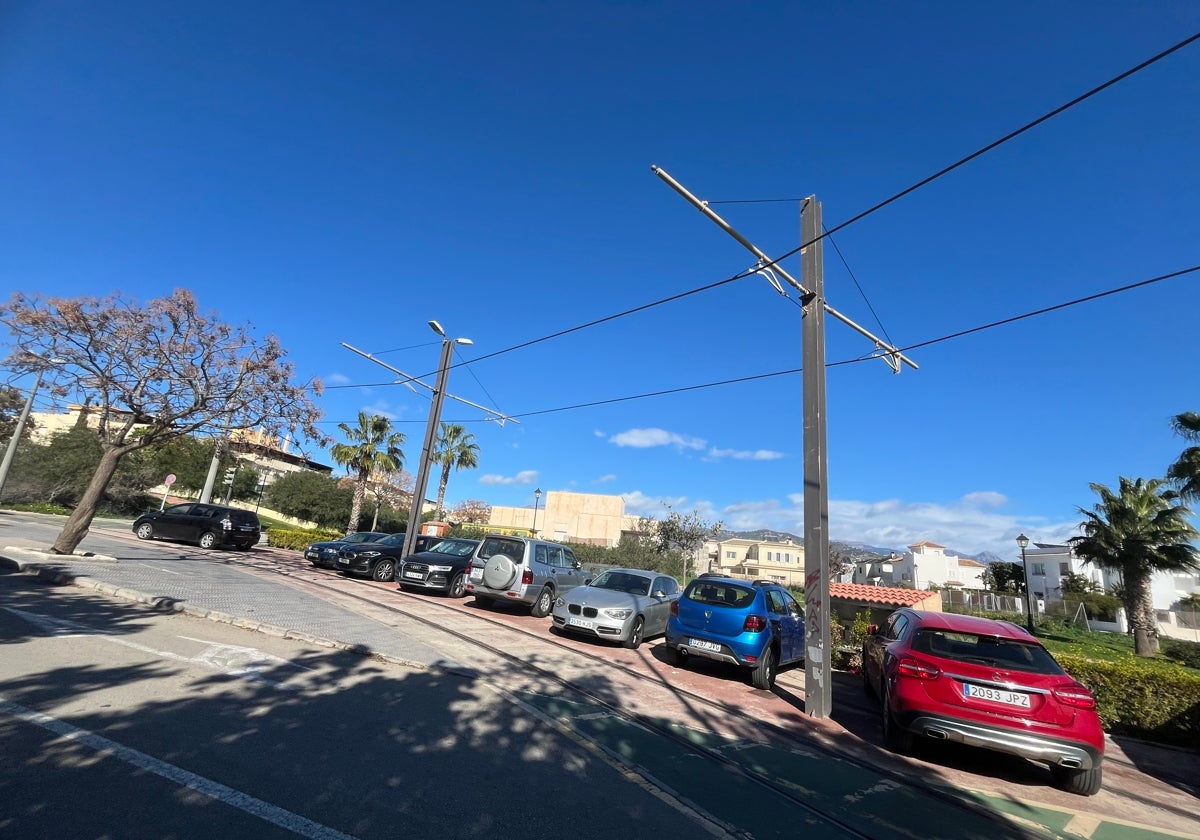

Vélez-Málaga
Thirteen years after the tram in Vélez-Málaga on the eastern Costa del Sol was pulled from service, the town hall has announced that it has definitively shelved plans to reinstate it due to the high cost it would entail; around 15 million, according to their calculations.
The town hall announced its decision not to formalise the grant of 3.7 million euros of European funds, on Wednesday 23 July. The funding was granted in 2022 and was intended to be used for the reactivation of the tram. The town hall has said that the decision was taken "with a sense of institutional responsibility, financial sustainability and respect for the real priorities of the citizens of Vélez".
The town hall also recognised that the more than 15 million euros it would cost to repair the damage done to the tramlines in the 13 years since it was pulled from service was "an unaffordable investment for the current economic-technical capacities of the town hall, which also would not have the economic involvement of the central government".
The town hall said that instead they have "chosen to focus municipal resources on urgent and priority projects for the population, such as the reinforcement of the cleaning contract, which will be increased to 12 million euros; 295 public housing units; the revitalisation of the historic centre with new car parks and the recovery of the Lope de Vega theatre; as well as an increase in the maintenance of parks and gardens".
Difficult decision
In municipalities such as Vélez-Málaga, with more than 80,000 inhabitants, the provision of urban public transport services is compulsory, as established in article 26 of the Ley Reguladora de las Bases del Régimen Local (Law Regulating the Bases of the Local Regime). "However, this provision must be guaranteed under models that respond to criteria of efficiency, economic sustainability and real coverage of citizens' needs," the town hall said.
The statement went on to say that "various technical reports underline that in recent years the town hall has not received the necessary financial support to carry out maintenance and conservation work on the tram infrastructure". This accumulated lack of action has generated, according to the town hall, "a significant deterioration in the mobile units and in the route, which would force today to undertake a multimillion structural investment that, if tackled without planning or external support, could compromise the budgetary stability of the municipality".
"Surveys show that the majority of residents do not consider the resumption of the tramway a priority"
Added to this reality is the public's perception: "The available studies and opinion polls show that most residents do not consider the resumption of the tram as a priority. On the contrary, the population is more interested in more sustainable transport solutions extended to the whole municipality, such as electric buses or BRT (Bus Rapid Transit) systems, which are more viable, less expensive and better adapted to the urban structure of Vélez-Málaga and its population centres," they stated.
The councillor for transport, Celestino Rivas, said that "this decision is not a renunciation, it is a firm commitment to the real needs of the residents and to a sensible management of public money. We cannot mortgage the future of Vélez-Málaga on a project with a very high cost and little practical use when there are urgent needs to be met. To govern is to prioritise. It is not about what we would like to do, but about what is responsible to do."
The town hall also pointed out that the tram stopped operating years ago "precisely because of its lack of profitability and sustainability, as it did not meet the expected demand and generated a high cost for the public coffers".
"Any final decision will have to await the results of the report on the future coastal train"
In parallel, the recent commissioning by the Spanish Government of the feasibility study of the coastal train, which will analyse the possible rail connection between Algeciras and Nerja, "represents a turning point in the planning of public transport throughout the Costa del Sol".
Vélez-Málaga town hall as said that "this study will include the evaluation of the role that the Vélez-Málaga tram system could play in the future within a wider metropolitan trasnport network, so any final decision will have to wait for the results of the report".
"Today we choose to focus our efforts on useful and sustainable projects, on cleaning up our streets better, on helping young people to access housing, on recovering public spaces and on improving transport in all parts of the municipality. Because that is what our residents are asking us to do and that is what we are going to do," concluded Rivas.
![[]](http://static.vocstatic.com/voc26/latest/assets/images/favicon/surinenglish/apple-touch-icon-57x57.png)