
European Union
Nerja’s bronze giant marks 40 years as Spain’s first tribute to EEC
While the rest of the nation signed papers, this coastal town commissioned a masterpiece to celebrate joining what would become the EU
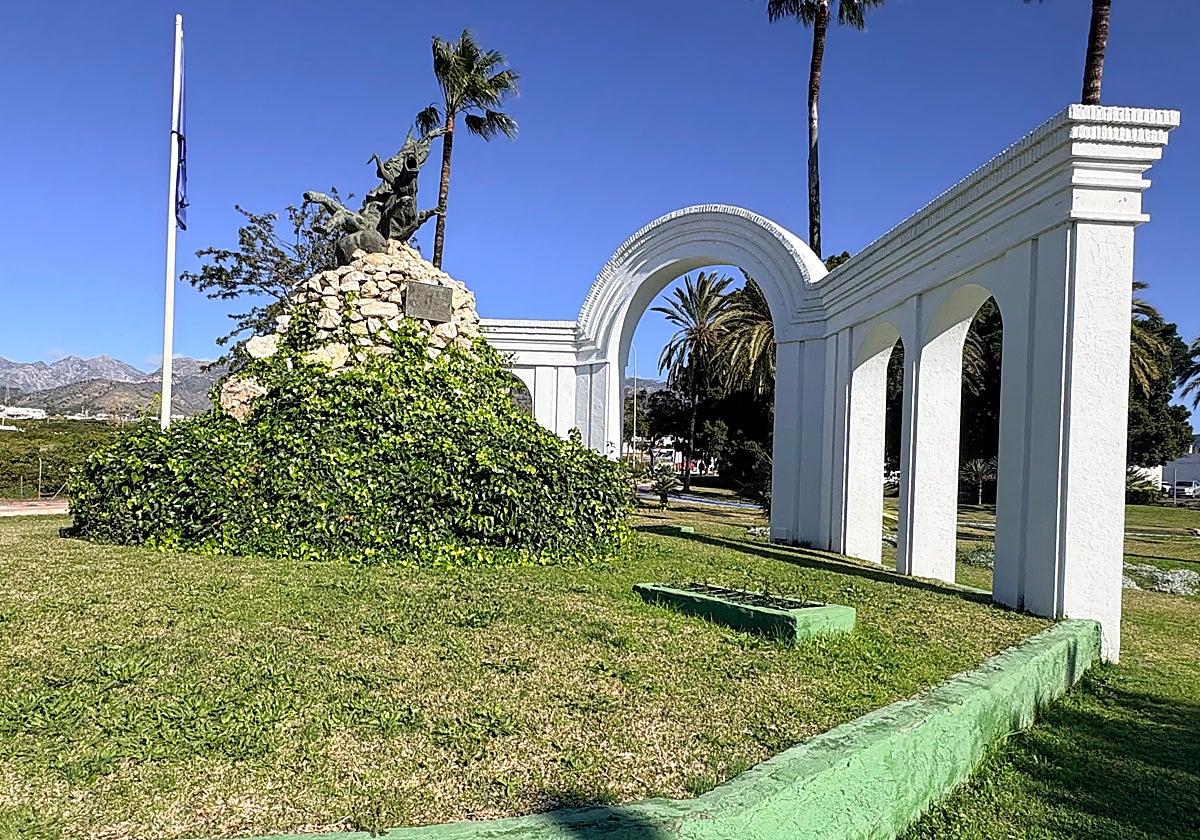

A colossal bronze statue has guarded the entrance to Nerja for four decades, standing as a permanent reminder of the moment Spain opened its doors to the continent.
The Rapto de Europa (The Abduction of Europa) is more than just a roadside landmark on the old N-340 as it winds its way East from Malaga towards Almeria; it was the first municipal monument in the country dedicated to Spain joining the European Economic Community (EEC).
Now, as the artwork approaches its 40th anniversary, the town is looking back at the unique decision that made it an "exception on the European map”.
While Madrid was busy with the bureaucracy of accession in 1985, Nerja wanted a physical symbol. The result was a dramatic sculpture by the late Cordoban artist Aurelio Teno, inspired by the Greek myth of Zeus, in the form of a bull, abducting the princess Europa.
The project began in February 1985, months before Spain officially signed its treaty of accession.
It was driven by two key figures: the sculptor Teno and his friend, the town chronicler and Sur journalist José Adolfo Pascual. Pascual spent a year documenting the creative process, culminating in a rare 12-page special supplement published on inauguration day, 25 January 1986.
The location was strategic. The council, led by then-Mayor Antonio Villasclaras Rosas, placed the work on the main coastal road near the Balcón de Europa, deliberately linking the town’s identity with the new European future.
The unveiling was a major diplomatic event. It attracted the French consul François de Vial and the president of the EFE news agency, Ricardo Utrilla, who had the honour of raising the European flag.
According to contemporary reports by Ideal of Granada, Nerja was the only town in Spain to mark the geopolitical shift with such a grand artistic gesture - a fact that keeps the monument relevant in historical studies today.
Although Teno died in 2013, the story of how the sculpture came to be has been preserved.
In 2022, the family of José Adolfo Pascual donated the original model of the sculpture, along with a trove of photographs and sketches, to the Museum of Nerja. This donation allowed historians to reconstruct the full context of the work.
Local historian Francisco Capilla notes that while the artistic interpretation of the myth has sparked debate over the years, its power as a symbol remains.
Forty years on, the Rapto de Europa remains a tangible record of a municipality that didn't just witness history, but chose to carve it in stone.
![[]](http://static.vocstatic.com/voc26/latest/assets/images/favicon/surinenglish/apple-touch-icon-57x57.png)