
Agriculture
Spain's mango farmers claim 'we get 80 cents per kilo and the consumer pays six euros'
The tropical fruit harvest has tripled in Andalucía's Malaga and Granada provinces to around 35,000 tonnes after the abundant rainfall of 2024 and 2025

Malaga
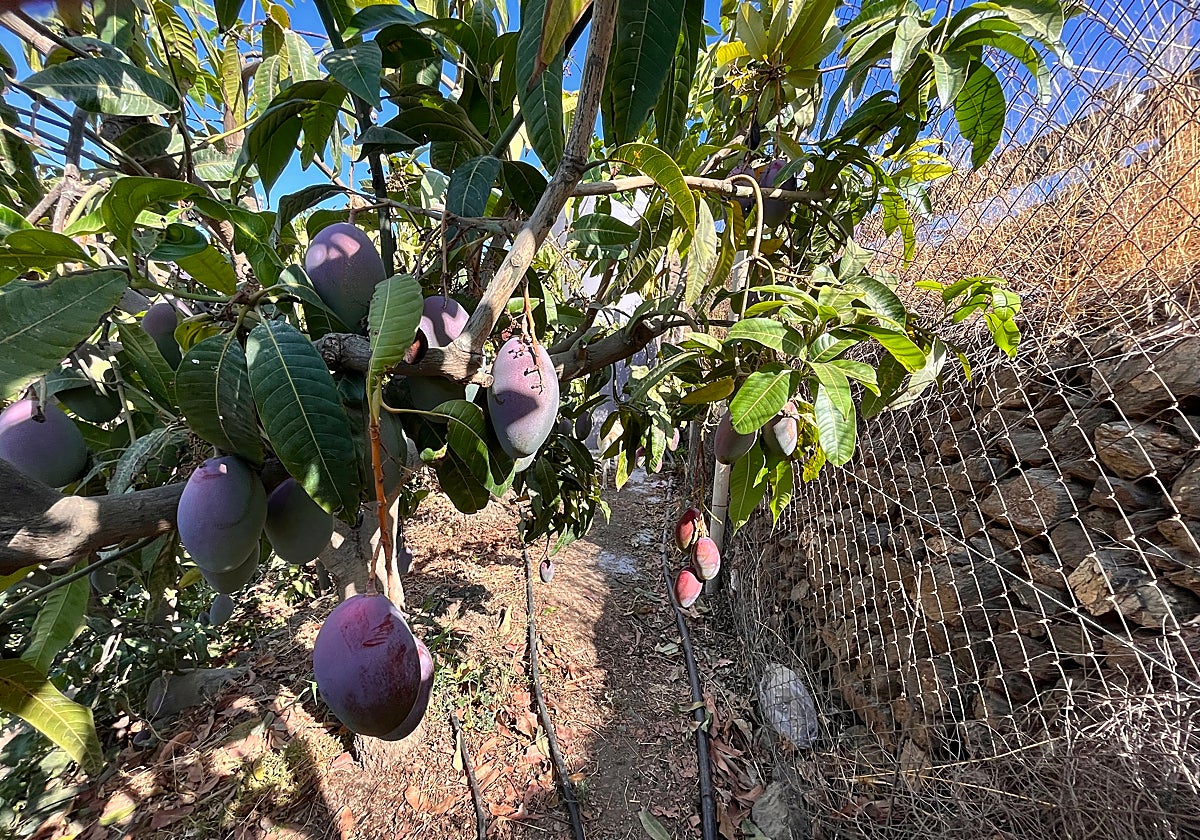
The mango harvest has tripled in Malaga and Granada provinces of Andalucía to around 35,000 tonnes after the abundant rainfall of 2024 and 2025. After three years with very low yields due to the drought, the farms in the Axarquía and the Costa Tropical, the two main producing areas in Spain, are recovering well thanks to the rainfall.
However, growers are on the warpath about the low prices they are being paid compared with the price consumers are being charged to buy the subtropical fruit. "They pay us 80 cents per kilo and the consumer up to five or six euros", the UPA union of small farmers has reported.
However, as SUR has been able to verify, in the last few days, retail prices in the large supermarkets in Malaga, including Carrefour, have been around 2.30 euros per kilo. There are even offers of just two euros per kilo in some smaller local greengrocers and coastal towns.
"Economic liberalism is making the big eat the small".
"We small mango growers are going under. Economic liberalism is making the big eat the small and when we are no longer here and we stop producing, society will eat products from outside Spain, of lower quality and at exorbitant prices", the secretary general of the UPA in Malaga, Francisco Moscoso, stated.
Francisco Pineda, a mango grower and secretary of subtropicals in UPA, said growers "are charging, on average, 80 cents per kilo, while the consumer pays between four and six euros on the shelves".
"The only ones who can make a profit are those who work their land alone or with their families," claimed Alfredo Moreno, president of the Axarquia farmers' platform.
Between 400 and 800 grams
The mango harvest that has just begun has already seen prices at source "at rock bottom" and this is despite the fact that there will be a good crop, double that of last year. Pineda sums it up in these terms: "A mango weighing between 400 and 800 grams is paid at one euro. Below 400 grams they pay us between 35 and 40 cents. This weight represents approximately 20 per cent of the crop, so the average comes out at around 80 cents".
"The big difference is that last year we charged, on average, 1.5 euros per kilo and at the beginning of this season, prices are between 70 and 80 cents," said Pineda, a farmer from Benamargosa.
"We have losses of more than 12,600 euros per hectare"
According to his calculations, at an average of 18,000 kilos per hectare, with about 70 cents less difference between last year and this one, "we have losses of more than 12,600 euros per hectare. If we cover the production costs, we can be satisfied," he said in a statement published by UPA on its social media.
"We are tired of denouncing the ruinous prices that we charge for mangoes that have gone from being a star product to leaving farmers starving," he added. For UPA, the food chain law "is not being complied with and there is a clear lack of control on the part of the Junta de Andalucía. In the end, it is the producers who pay the consequences, as always", concluded the UPA.
Reinforcing security to prevent theft in the countryside
Mayor of Vélez-Málaga, Jesús Lupiáñez, has held a meeting with local and regional farmers in order to secure the rural environment and the development of economic activity. In this meeting and continuing in the line of action that has been implemented during the legislature, contacts have been maintained with representatives of the Trops cooperative and the main farmers' associations of the Axarquía, as well as with the police.
This meeting aims to reaffirm all the actions carried out in recent months and continue to combat theft in rural areas, with special attention to the theft of subtropical products, a problem that seriously affects farmers in the area. That is why, a year ago, the town hall introduced an operations plan for prevention and reaction to the theft of agricultural products (Popra), "a measure that is bearing fruit", as evidenced in the meeting held at the municipal offices, in a "considerable" reduction in theft in subtropical crops in the town.
Lupiáñez claimed in a statement "the effective coordination and cohesion between Local Police, National Police and Guardia Civil, who are working with perseverance and determination to consolidate an action plan marked by prevention and security at the service of our farmers". In these terms, it has been reported that controls are being carried out "in an exhaustive and strategic manner, in a perimeter deployment to cover the entire network of rural lanes and locations in Vélez-Málaga".
The surveillance is being carried out using drones and helicopters, with the aim of stopping possible thefts and safeguarding the image of local agricultural products, among which subtropical produce, a benchmark in the sector in the municipality and the region, is taking centre stage. This work is contributing to "the campaign with the fewest thefts in recent seasons, despite the fact that this year has seen record production". Forecasts point to around 35 million kilos of mango being harvested this season.
The dialogue environment has served to consolidate the foundations of a joint work "which is progressing well and which is committed to opening up new avenues of intervention" which will strengthen what has already been achieved. In this respect, Lupiáñez has endorsed the various proposals brought to port, such as bringing forward the controls on the roads that connect crops with the exits of the municipality, increasing efficiency in the detection of theft and other crimes against local and regional farms.
Representatives of agricultural associations, including ASAJA, UPA, COAG and the Spanish subtropical association, and of the aforementioned Trops cooperative have taken part in a framework of dialogue that has meant a new step forward "in a solid and progressive line of work", and which, as the councillor for agriculture remarked, Jesús María Claros, has resulted in "a positive impact on the sector, thanks to this interaction between security forces and farmers, which is being reinforced every day and in which the dedication of the Local Police and National Police and the collaboration of our farm workers are decisive factors in each advance achieved".
![[]](http://static.vocstatic.com/voc26/latest/assets/images/favicon/surinenglish/apple-touch-icon-57x57.png)