
History
Volunteer at Civil War grave exhumation in Malaga town: 'I was shocked to see 20 bodies piled up in one metre of earth'
Young people taking part in the first phase of work near the municipal cemetery in Campillos, where it is estimated that up to 200 victims could eventually be found, have recounted their experiences to SUR

Campillos
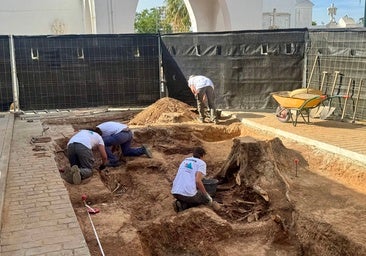
The first phase of the Civil War mass grave exhumation work in the municipal cemetery of Campillos to the north of Malaga province has not only left a historic milestone with 73 bodies recovered, but also a deep mark on those who participated in it as volunteers.
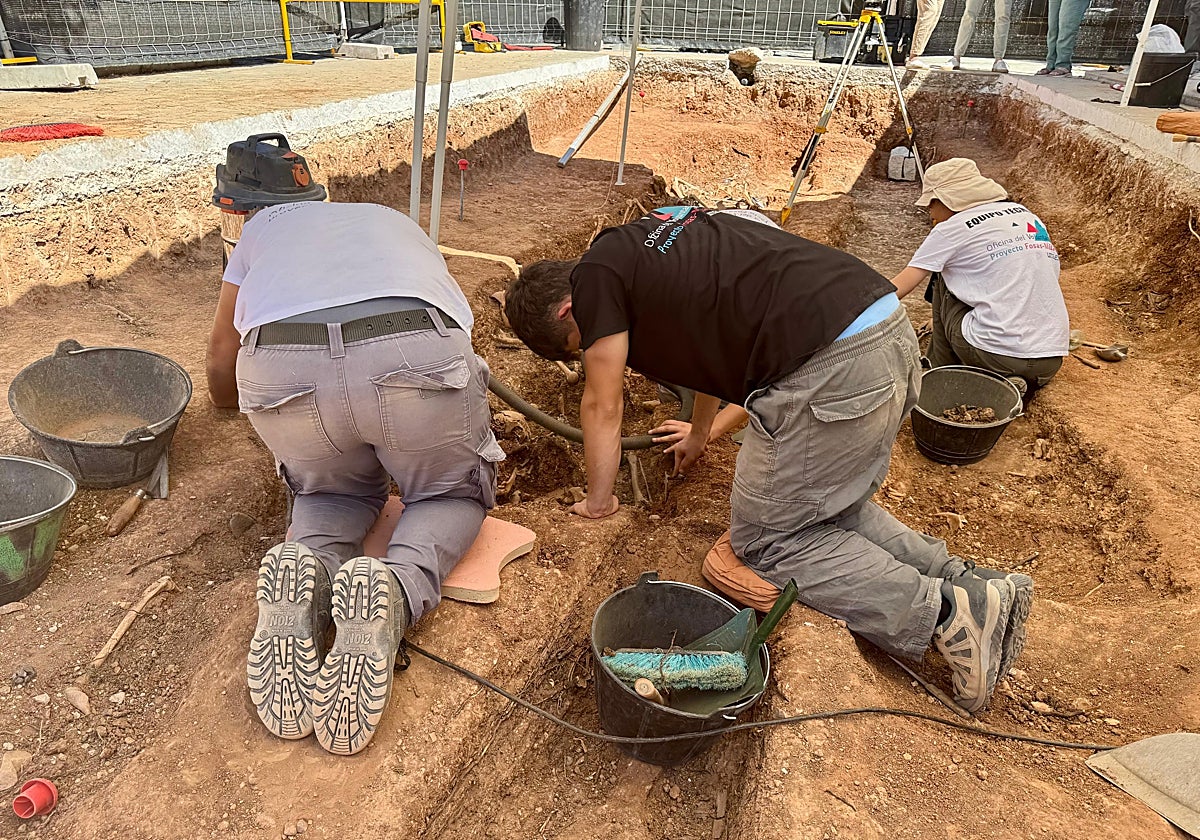
Young students, mostly from the University of Malaga, joined the technical team during weeks of intense summer heat to excavate the first of the two graves located. Among them was law student Irene Ciudad, who recognises that what impressed her most was to see the magnitude of the burials. "I was shocked to see 20 bodies piled up in a metre of earth and one of them with his hands tied behind his back," she said.
The first contact with the grave aroused different emotions in the volunteers. Guillermo Gutiérrez, for example, said that the initial shock was so strong that he could hardly take it in. "At first you don't think about anything, because if you do, it's too hard," he admited. As the days went by, the routine of archaeological work forced him to concentrate, although certain images remained engraved forever, like the well-preserved body of a woman.
Related story
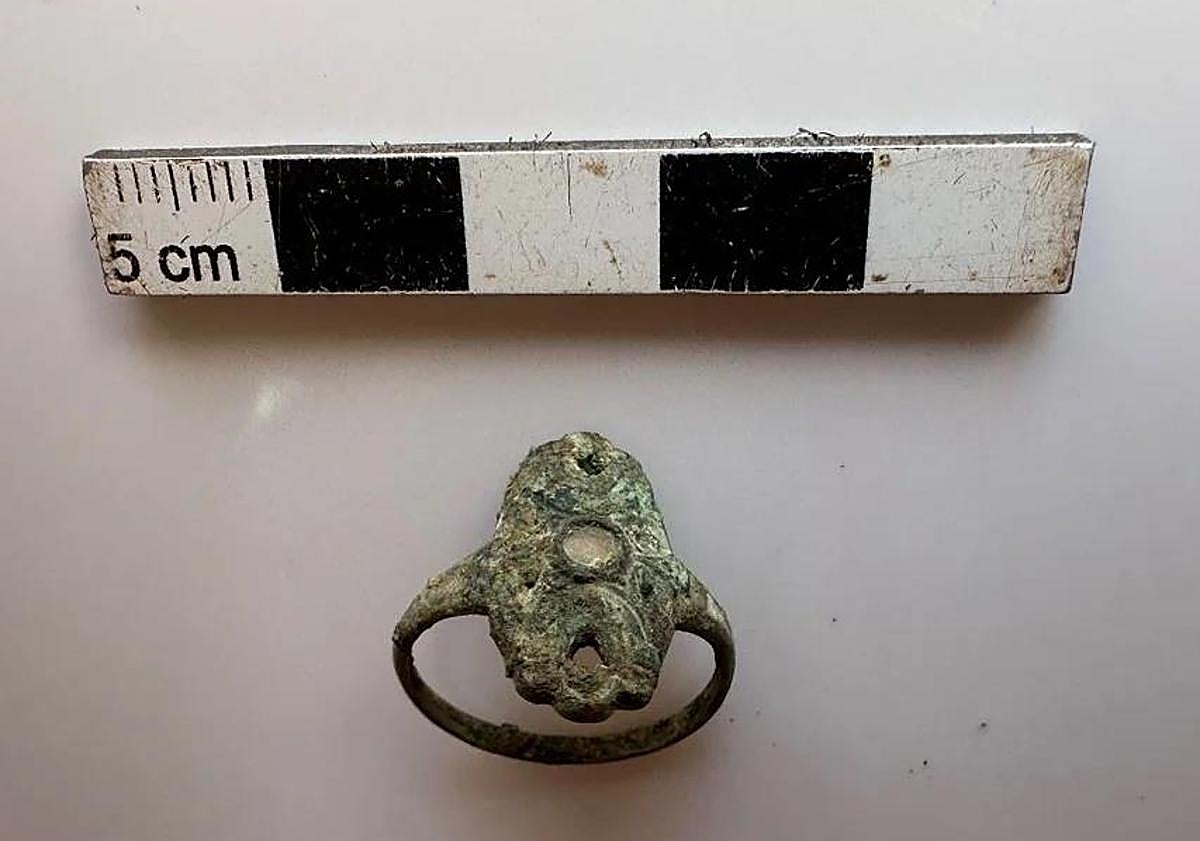
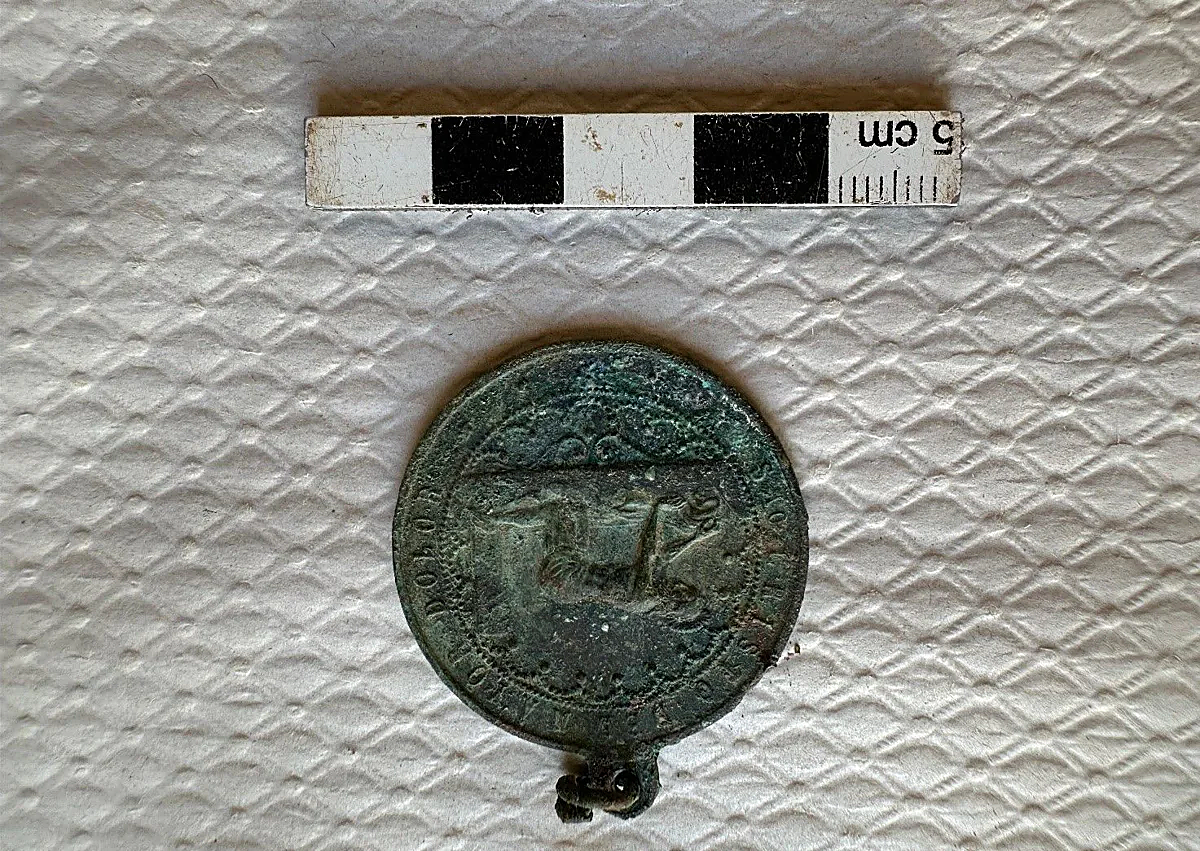
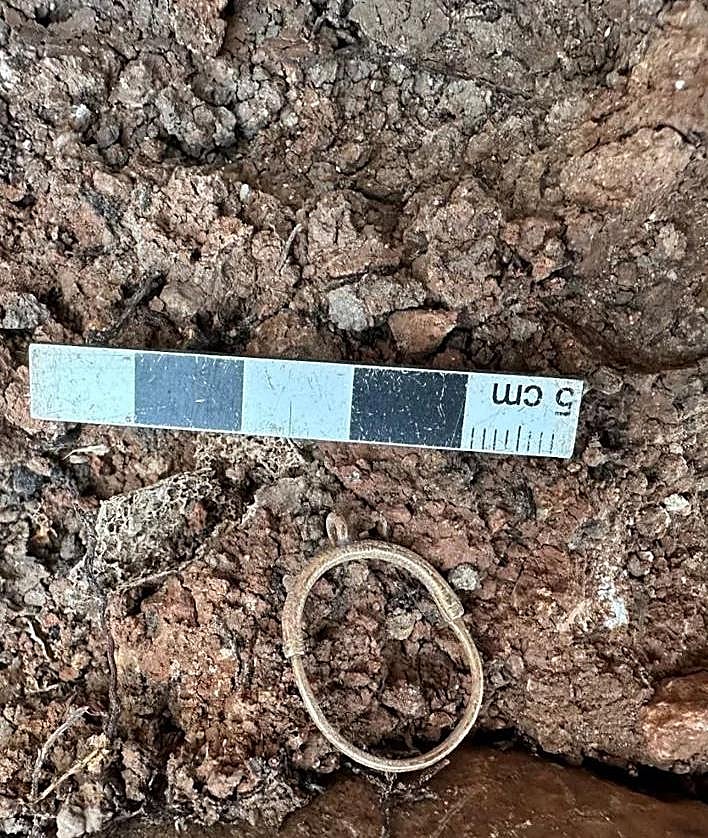
Both Irene Ciudad and Guillermo Gutiérrez agreed that the experience changed their perception of what it means to work with historical memory. Ciudad admits that, at first, she felt out of place. "I was very shocked, because I had no connection with archaeology. It scared me, but after a few hours I was so focused on doing it well that the feeling of intensity gradually faded," she said. Gutiérrez, who had never participated in an excavation before, says that the most shocking thing was when personal objects of the victims appeared: keys, a pendant or some coins. These small details reminded him that he was looking at people, not just bones.
'I was scared at first, but after a few hours I was so focused on getting it right that the feeling of intensity went away,' said Irene Ciudad
Both said that, beyond the remains, it was the contact with relatives that gave them the greatest meaning to the work. "When someone tells you that their grandparents or parents are there, it is impossible not to be moved," Gutiérrez said. He was especially moved when listening to a man who had spent his whole life demanding the opening of the grave. "When he came and told us his story - that's when I broke down." Ciudad, who had no direct contact with the descendants, highlights the social value of this type of intervention. "It is important for the relatives, but also for democratic memory, because these people gave their lives to defend their ideas".
The volunteers also gained personal insight. Ciudad said that participating in the exhumation helped her lose her fear of death. "I was always concerned about cemeteries, but after these weeks I've seen that it's not so bad. We all end up there and this has helped me get rid of the taboo." Gutiérrez recognises that the experience has made him reflect on the lightness with which people sometimes talk about politics today. "They died because of what was real fascism. Experiencing it in a practical way, not just through books, makes you more aware."
Guillermo Gutiérrez said that 'practically experiencing it, not just through books, makes you more aware'
Technical balance
The testimonies of volunteers are complemented by the expert technical assessment. Professor at the University of Malaga and lead researcher of the project María José Berlanga stated that the work has been "very special and intense", above all due to the contact with the families. Director of the excavation Andrés Fernández Martín said that there are still around 20 bodies to be extracted from the first grave, which will bring the number of bodies in this area alone close to 100. If the second grave, which is still intact, is symmetrical, the number of victims could be well over 150, potentially reaching 200.
According to historian Encarnación Barranquero, what unites these victims is that they were not Francoists, but rather people who were repressed after the entry of the rebel troops in September 1936. Although identification is still in progress, they were mainly civilians (militiamen, trade unionists or relatives of Republican officials) executed for their militancy or simply because of their kinship. "We can't say they were combatants, they were victims of Francoism," she said.
The investigation has also made it possible to distinguish up to five burial groups corresponding to different days of executions, which opens the door to establishing a precise chronology linked to historical documentation. Another striking fact is the percentage of women exhumed, which now exceeds 20%, well above the average for Andalucía and Spain. Among the remains, personal objects such as earrings or utensils have also been found, which reinforces the hypothesis that many of them were repressed along with the men in their families.
In parallel to the excavation, DNA samples have been collected from both victims and family members. These tests will be sent to the specialised laboratory of the University of Granada, which will collate the results in order to facilitate identifications. According to Fernández, the high participation of descendants in this process increases the possibility of naming the recovered bodies. "This gives us the opportunity to provide answers and close wounds that have been open for almost 90 years," he said.
The second phase of the work is scheduled for 2026 and will focus on the parallel grave, following a similar process to this year's: two and a half months of excavation, a budget of around 30,000 euros and the participation of students from the University of Malaga. For Berlanga, maintaining the educational component is fundamental. "The students not only learn forensic archaeology, they also become aware of history and understand the value of dignity and reparation."
![[]](http://static.vocstatic.com/voc26/latest/assets/images/favicon/surinenglish/apple-touch-icon-57x57.png)