
Hiking in Malaga
The Sierra del Camorro trail that leads you past a demon's home
This circular path runs through a natural monument, and allows visitors to discover its unique geology


Málaga
If you venture into the jagged limestone peaks of the Sierra Norte de Málaga, you will find more than just a hiking trail. You will find a gateway to a local purgatory.
The route of the Sierra del Camorro is a journey through a "Natural Monument" that blends vertigo-inducing geology with a dark, centuries-old myth: the legend of a demon trapped within the bowels of the earth.
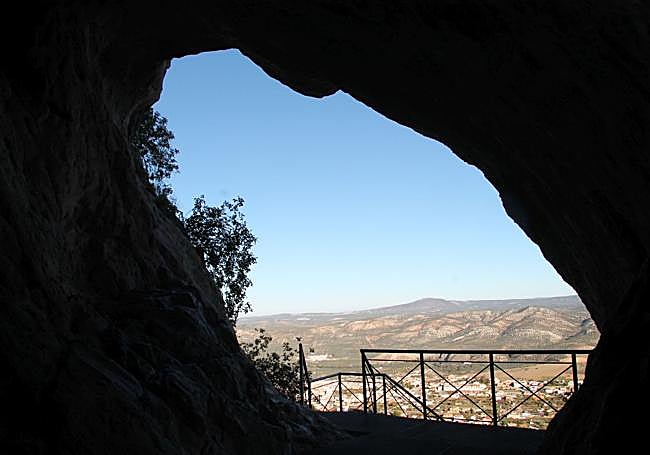
The trail winds its way to the mouth of the Cueva de Belda, a cavernous void that, according to local lore, was once the residence of a particularly spiteful devil. As the story goes, the demon spent his days tormenting the pious until a courageous friar engaged him in a battle of wills. Using nothing but a rope made of esparto grass and a flurry of prayers, the monk "tied up the devil," subduing the beast and confining him to the shadows of the cave forever.
The circular path runs along the Sierra del Camorro Fault, which has been declared a natural monument, and passes next to the Belda and Nueva Caves until Medina Belda. It is a notable section of the PR-A-234 .
-
Route data
Region: Sierra Norte de Málaga
Municipality: Cuevas de San Marcos
Difficulty level: Medium. The most demanding part of this route is at the beginning, with the ascent being relatively steep and zigzagging. After that, you should bear in mind that the path is narrow and, at times, stony. Finally, the most complicated part will be the ascent to Medina Belda and the return journe. Although there are metal handrails and even ropes, it is recommended to proceed with caution.
Type of route: Circular
Approximate duration: 2 hours and 45 minutes
Length: 6.7 kilometres
Minimum height: 487 metres
Maximum altitude: 763 metres
Nearby places of interest: Belda Visitor Reception Centre, natural monument of the Sierra del Camorro Fault , Cueva de Belda, Medina Belda, Cueva Nueva, Iznájar reservoir, Toy Museum of Spain and the World and the town centre of Cuevas de San Marcos.
-
How to get to the starting point
To begin this route, head to the Belda Visitor Reception Centre, which we recommend you visit before or after this hike (please check opening hours beforehand). Next to this building, located at the foot of the Sierra del Camorro, the trail begins. To get there, first you must pass through the village of Cuevas de San Marcos.
-
Route description
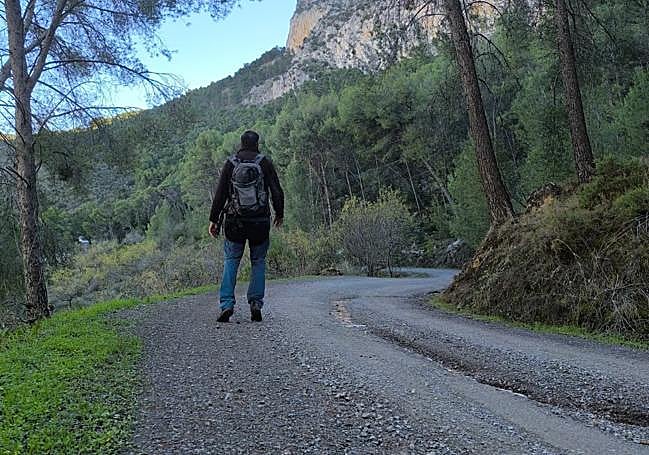
1From the Belda Visitor Reception Centre (check opening hours), find the crossroads on the PR-A-234. Take the narrow path that goes uphill to the left. Gradually climb upwards until you reach a pine forest. First go round it and then start to climb along the zigzagging path. Like this, the ascent to the Cueva de Belda will be clearly outlined. Then pass the foot of the Sierra del Camorro Fault, which was declared a natural monument in Andalusia. A few metres further up you will see the stairs and the entrance to this well-known cave. Access is restricted between 1 March and 30 September as this is mating season for the various bats that inhabit the cave. For the rest of the year, the cave is accessible.

2To access the grotto you have to enter a small enclosure, which you can only access when the door is open, and then go up some metal stairs. This is how you reach this famous cave, which is the place where, according to a legend told in the area, a demon lived who bickered with a friar. After many arguments, the friar managed to subdue this evil character. Today, Cueva de Belda cave is emblematic of the Sierra Norte de Málaga region. It is possible to venture inside the cave for a few metres, but it is not recommended to go much further because of the lack of lighting and so as not to disturb the possible species that form part of this ecosystem.

3From the Cueva de Belda, exit and take the path just to the left of the entrance. This way, you end up taking a narrow path with a slight slope that runs through the upper part of the pine forest next to the limestone cliffs of the Sierra del Camorro. After about six hundred metres you will come to an esplanade, where there is an area set aside for vehicle parking. And just to the left you will see a track that leads to Cueva Nueva. After about a four hundred metre ascent, you will reach this cave, which is not as spectacular or as accessible as the Belda cave, but it's worth noting that it's a historic site in this region.
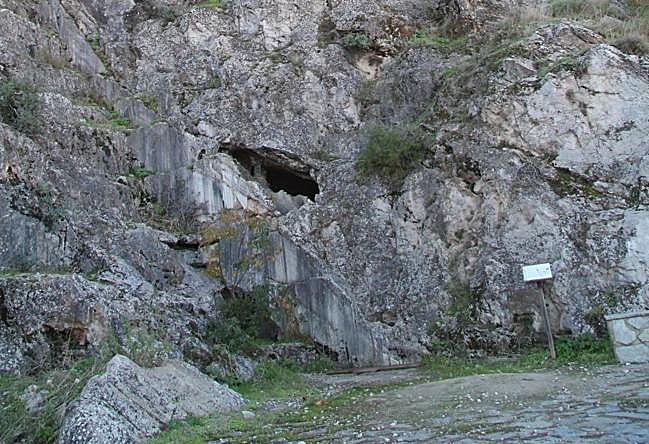
4From Cueva Nueva, continue along the path signposted PR-A-234. The most demanding part of the route begins. Although there are stretches with handrails and even ropes, proceed with caution, especially if the ground is wet. You have to face a steep slope, where there aresome metal stairs. Shortly, you will reach the limestone part of the sierra, where you can find some vestiges of what used to be Medina Belda. You can even climb up to what is known as the White Cross of 1876, where there are spectacular panoramic views of both Malaga and Cordoba. You can see villages such as Cuevas de San Marcos and Cuevas Bajas as well as the Genil or the Iznájar reservoir. Olive trees grow everywhere, surrounded by the sea.

5From Medina Belda it is time to return along the same path, first passing through Cueva Nueva again, and then arriving at the designated parking space. Here you should first take the wide lane to the left, which turns right a few metres further on. Ater a slight descent, you will comfortably reach the starting point a kilometre and a half later. This trail could be extended further if you continue from Medina Belda to the top of the Sierra del Camorro.
Flora and fauna
This route offers a variety of natural landscapes. As well as the riverside vegetation that can be seen around the Genil or the Iznájar reservoir, Mediterranean forest vegetation can be seen in the Sierra de la Camorra, where a lush pine forest (Aleppo pine) awaits. At the same time, you will pass through areas of different crops, such as olive trees, almond trees and irrigated orchards. As far as fauna is concerned, in the sierra you can spot some birds of prey, such as the short-toed eagle, and other birds , such as the jackdaw and the wood pigeon. Other birds that can be seen quite easily are partridge, turtle dove, thrush and quail. There are also large mammals, such as the ibex, and smaller ones, such as the rabbit and the hare. Nor should we forget the important bat colony that inhabit the Cueva de Belda, where up to six different species of bat can be seen.

![[]](http://static.vocstatic.com/voc26/latest/assets/images/favicon/surinenglish/apple-touch-icon-57x57.png)