
Crime
Inside the Malaga province prison, the one with the 'famous swimming pool'
The secure facility, which prior to its current use was a detention centre for foreigners, is one of the most modern in Spain, a benchmark for those built on the ‘standard centre’ model type; a mini-city with all kinds of services for the inmates

Archidona
The Malaga II penitentiary centre, opened in 2018, is located on barren land that is situated about five kilometres from Villanueva del Trabuco and nearly seven from the popular Plaza Ochavada in Archidona, the municipality to which it belongs. In the midst of the huge wasteland in the north of Malaga province on which it was built, the massive dimensions of the prison are not really visible, but up close it is clear that the centre is enormous. It occupies a built-up area of 102,232 square metres, on a plot of more than 361,000 square metres. There are 1,008 cells and another 186 complementary cells which, however, are not "used".
The prison population is 420 people, spread over four modules, which are sufficient for this census, so that others are unused, as the director, Andrés Enríquez Narváez, points out. Of course, the complex is surrounded by high walls, but it is striking that, unlike others, it does not have a watchtower.
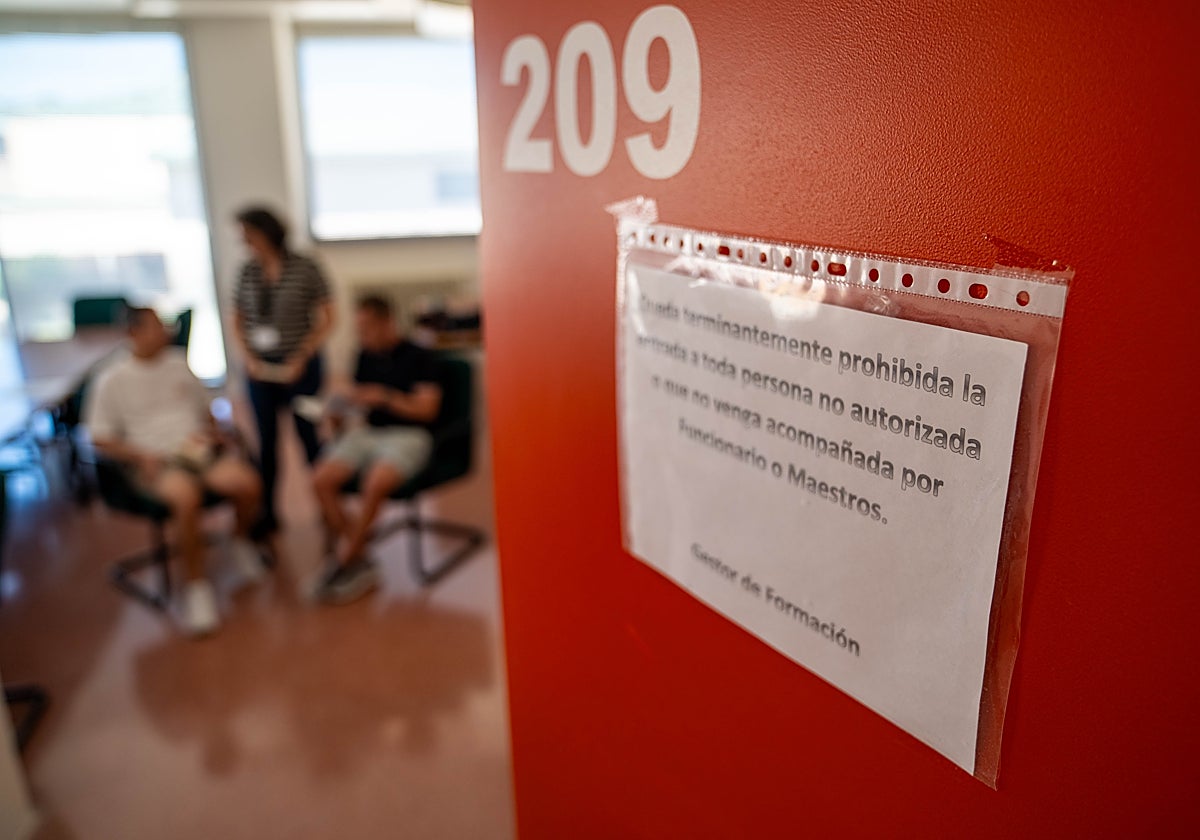
The staff of the general secretariat of penitentiary institutions number 210. The managers of this type of service are appointed to their posts by the government; staff members apply for a posting, awaiting assignment if they are interested. In this regard, Archidona is usually considered a “stopover”, given its reasonable distance from cities such as Seville, Cordoba, or Granada
Like a supermarket
If one enjoys freedom, in order to set foot inside Malaga II, they must first stop at a roadside checkpoint. Access is only granted if the security personnel have the national identity number (DNI) of the person who wants to enter on their list. Once you have passed the first checkpoint, the main visitors' car park is on the right. You have to walk to the second checkpoint, which is located in a building with an eye-catching glass window that serves as a large entrance hall. There are lockers, like those in supermarkets, with a key that only works if you insert a coin. In the receptacles you deposit your belongings, practically all of them, especially telephones.
Once this has been completed, there is one more checkpoint, where you have to provide your identity again and explain the reason for your visit. The next step is to pass through a metal detector; anything that can be carried is X-rayed. Finally, the sturdy sliding doors arrive.
The spaciousness is significant, given the circumstances, as the main feature of the building, with an architecture that follows the criteria of the so-called ‘standard centre’, as the director points out. Among the main innovations of this model are larger cells, air conditioning and, in general, a concept that organises the prison as a kind of city, designed to adapt to different needs, connected by common spaces, which, of course, are not easily crossed.
Sad story
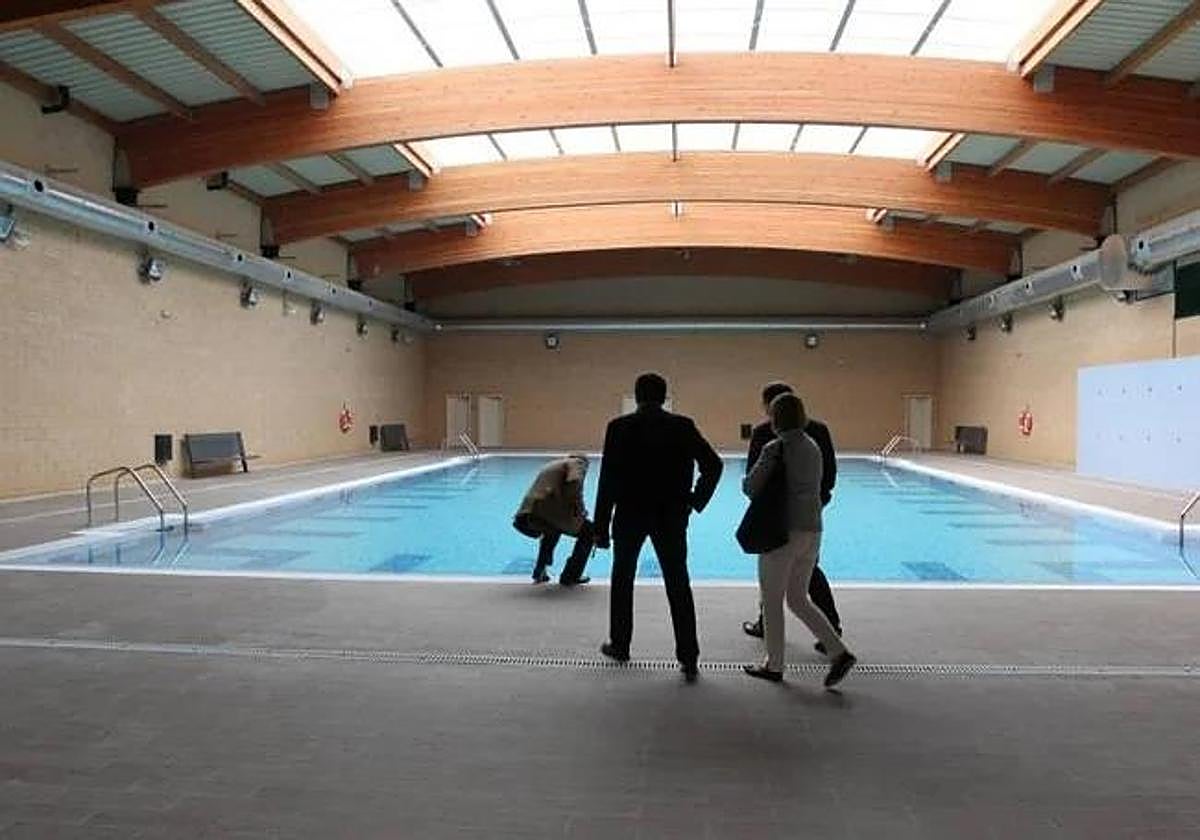
Communal places are important. One of these is "the famous swimming pool", as Malaga II staff call it. The story of the bathing area is a curious and sad one, which served to allow the one in Archidona to overshadow the notoriety of the provincial prison in Alhaurín de la Torre. The latter, inaugurated 34 years ago, had the honour, for a long time, of being one of the most closely watched prisons in Spain. It housed inmates such as Jesús Gil, Juan Antonio Roca, Marisol Yagüe, Isabel García Marcos, the murderer Tony King and the late Julián Muñoz, who was eventually transferred to the Jaén penitentiary when a plot by other inmates to obtain images of him in order to sell them was uncovered.
Years later, the Archidon prison also experienced its "minute of glory", not because it housed "illustrious" prisoners, but quite the opposite.
The facilities became the target of incendiary remarks and even political squabbles due to their botched opening. In a controversial decision that provoked outrage among humanitarian organisations, the Rajoy government transferred around 500 migrants in 2017 to the prison, which was not yet operational. To make matters worse, one of them, a young man, took his own life by hanging himself with a sheet in his cell.
And there was more: when the characteristics of this infrastructure became known, opinions spread that it was "a luxury prison" because it had a gymnasium, an auditorium with musical instruments, medical services and the famous swimming pool.
But the truth is that Archidona, although an exemplary building, is not so unusual; it is one of the latest in the country, but there are more prisons of its kind, such as Algeciras, Puerto III or Pamplona. Other earlier prisons also have similar facilities.
A moat
Continuing along the route of this prison, after the main gate and the administration and management area, a footbridge leads to the place where the inhabitants of this temporary and obligatory accommodation live. The bridge spans a sort of moat; there is no water, as in medieval castles, but a lane along which a Guardia Civil vehicle patrols.
On this stage, to the right if you look at it from the entrance path, there is a large tile with the coat of arms of the penitentiary institutions. It is being restored, but its elements are visible, as set out in the ministerial order: the sword pointing downwards, a symbol of authority; the cogwheel, alluding to prison work; palm and oak branches and the crown, representing the State. The same emblem is worn on the breastplate of the staff uniform, renewed in 2024 and similar to that of the National Police; it has a single tone, unlike the previous one, which combined the light blue of the shirts and the black of the trousers.
Article 25(2)
After crossing the overpass, a square appears - larger than many outside the walls - which leads to the modules (not included in this visit). The most complex is number 19, where those serving sentences there are held.
The sociocultural and sporting block stands out in the complex, "which is very necessary", says the director.
Malaga II is a unique ecosystem in which Article 25.2, included in chapter II, rights and freedoms of the constitution, prevails, which reads as follows: "Prison sentences and security measures shall be aimed at re-education and social reintegration and may not consist of forced labour. Prisoners serving a prison sentence shall enjoy the fundamental rights of this chapter, with the exception of those expressly limited by the content of the conviction, the meaning of the sentence and prison law. In any case, he shall be entitled to paid work and to the corresponding social security benefits, and access to culture and to the full development of his personality.
![[]](http://static.vocstatic.com/voc26/latest/assets/images/favicon/surinenglish/apple-touch-icon-57x57.png)