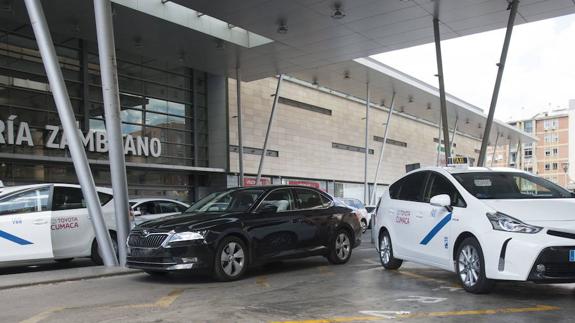
The VTC to taxi ratio continues to rise and there is one per 2.5 taxis
The Costa del Sol has become the place where there is greatest competition between taxis and private cars with driver
francisco jiménez
Lunes, 27 de agosto 2018, 17:13
The attempted "balance" which the government has promised to achieve between taxis and private cars with drivers (known as VTCs in Spain) is looking rather complicated, at least with regard to the ratio of one VTC for every 30 taxis which is stipulated under transport regulations.
Although the regional governments will not be granting any new licences for these services, which are provided by digital platforms like Uber and Cabify, courts all over Spain are still dealing with claims against the change in the rules. This includes Malaga, which is now the province with the most competition between these two forms of transport.
According to the latest figures from the Ministry of Public Works, which regulates the sector although the licences are managed regionally, there are currently 1,066 VTC licences in Malaga, compared with 825 in July, 796 in June and 571 a year ago. Also, of the 280 new licences activated in Andalucía in the last two months, 270 are in Malaga.
Looking back still further to 2014, there were only 240 VTC licences, but that was before this sector (which has been operating on the Costa del Sol for years, mainly transporting tourists from the airport to hotels) was revolutionised by the arrival of the two multinationals, Cabify and then Uber. Their black saloons can often be seen driving along the Malaga coast, and they are only permitted to operate if their services are pre-booked. In other words, they are not allowed to tout for business.
After this new batch of licences, Malaga now comes below only Madrid in numbers (4,955 compared with 3,927 in June) and Barcelona (1,813 compared with 950 two months ago), but when compared with the 2,741 taxis which operate in the province according to the National Institute of Statistics (the Public Works figures only show the 2,646 which are authorised to operate between towns), the reality is that this province is furthest from the ratio of 1/30 because at present there is one VTC for every 2.5 taxis. In other words, to comply with the ratio set down by law, there should only be 86 VTCs in operation or, looking at it the other way round, 31,980 taxis. In Madrid the rate is 1/3.2, and in Barcelona 1/6.5, the same figure as nationally.
Why is this ratio not being applied? The answer lies in the opening up of the sector which was approved by the previous socialist gobernment. It cancelled this restriction between 2009 and 2013, which opened the way to numerous licences being granted. When the PP government came into power in 2013, it tried to put a stop to this by changing the law, but it took two years for the regulations to be drawn up so the 1/30 ratio did not come into force again until November 2015.
Since then, anywhere which did not comply with this ratio was unable to grant new licences, but the problem has arisen with applications which were made in the intervening period. During that time the companies saw a great opportunity and applied for thousands of licences (the application costs 35 euros, but the licences can be sold for around 50,000).
Concessions in the courts
Because of this proliferation, the Junta de Andalucía turned the tap off, but the courts have been finding in favour of those who lodged an appeal. According to estimations from the taxi sector, 10,000 applications all over Spain which were made before November 2015 are awaiting a decision from the courts, more than 1,000 of them in Malaga. Will the 1/30 ratio ever be possible again? The only way would be for the VTC licences to be cancelled, but that would involve a great deal of public money being spent on compensation, and legal action could also be taken against the administrations.
In addition to this situation, which is not occurring in other tourist destinations, is the fact that in Andalucía there are another 644 licences (197 of them in Seville and 117 in Granada) which can operate freely anywhere in Andalucía as long as the service is pre-booked. For example Cabify, which also operates in Seville, Barcelona, Madrid and Valencia, has over 200 drivers who move around the two Andalusian provinces depending on demand.
A further 9,021 VTCs in Spain can work in other reg ions, as long as their takings do not exceed 20 per cent of their three-monthly turnover.