
Culture
Why a scientist fell in love with this peculiar Andalusian carnival
Fuentes de Andalucía preserves a unique 'festival of gossip' where social norms are suspended and private scandals are turned into public song
Alekk M. Saanders
Fuentes de Andalucia
Fuentes de Andalucía, located in Seville province, is considered an authentic town because it still preserves many of its rural traditions, including its peculiar carnival.
Besides being the oldest one in the region, the Carnival of Fuentes de Andalucía has been recognised as a "Festival of Tourist Interest". Its origins are unknown, but there are documents that date it to the same time as the arrival of the Bourbons on the Spanish throne.
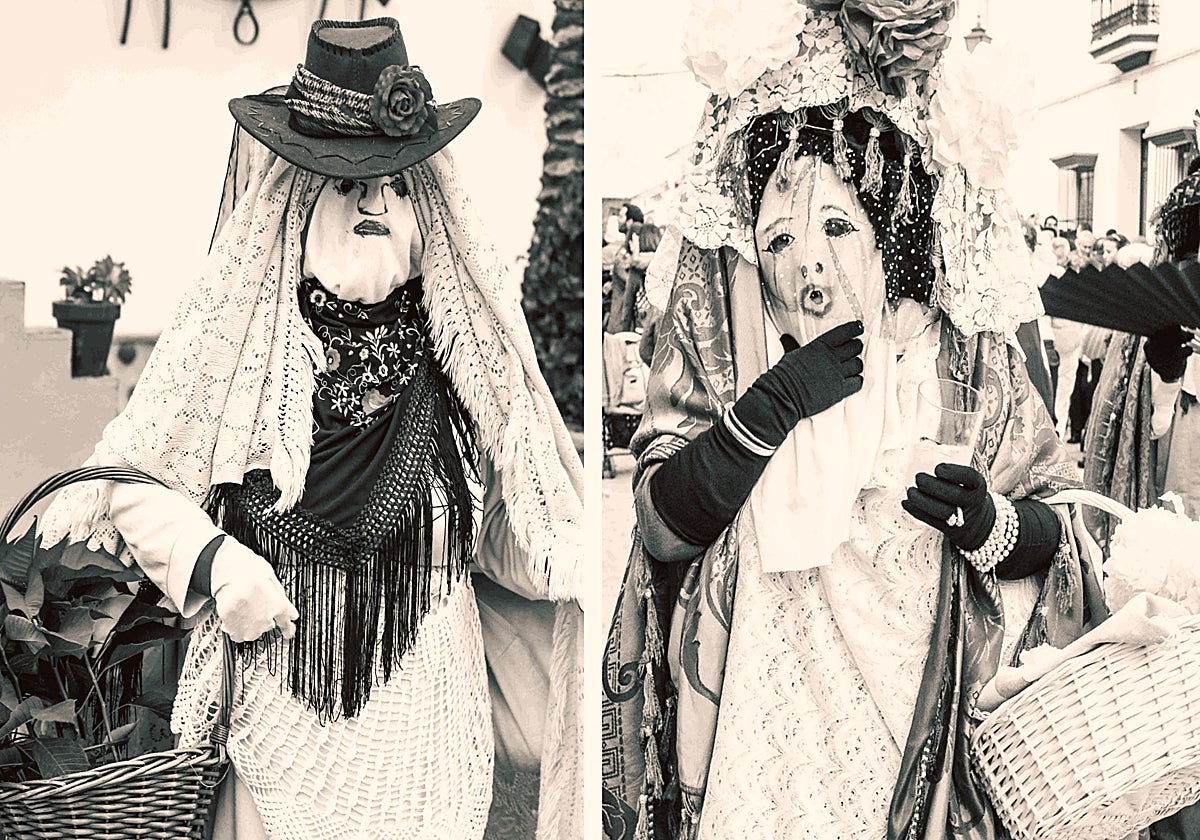
What is known for certain is that this festival existed throughout the 19th century, as at that time the working class dressed up in the characteristic costume: 'la máscara' (the mask) to imitate the wealthier classes (often men dressed as women, women as men).
One type of mask became increasingly popular: made with fabrics and sheets, stuffed with cushions to avoid being recognised.
-U07366645323FYZ-650x455@Diario%20Sur.jpg)
During the celebrations, the wealthy residents left Fuentes de Andalucía, leaving it to the mercy of the less fortunate. For several days, workers and employees marched through the streets, singing bawdy songs, almost all of which alluded to various events that had taken place there during the year.
The carnival in Fuentes de Andalucía became better known throughout Spain thanks to its resistance during the Franco dictatorship. Franco banned carnivals throughout Spain to prevent costumes from being used as a pretext for violent actions or criticism of the regime.
The Church also supported this ban, opposing any activity considered impure, such as carnival. Nevertheless, in Fuentes de Andalucía, masks continued to fill the town square and break the established rules.

"Our carnival is becoming increasingly well known thanks to its unique characteristics, such as the celebration of Mardi Gras on the first day of carnival, the participation of music groups ‘murgas’, the streets filled with people dressed in masks, the presence of the typical sweet el entornao and Rigo aniseed, and culminating in a beautiful costume ball and a spectacular closing ceremony on Piñata Sunday..."
Luis Conde Pérez
“Our carnival is becoming increasingly well known thanks to its unique characteristics, such as the celebration of Mardi Gras on the first day of carnival, the participation of musical groups ‘murgas’, the streets filled with people dressed in masks, the presence of the typical sweet el entornao and Rigo aniseed, and culminating in a beautiful costume ball and a spectacular closing ceremony on Piñata Sunday, which takes place on 22 February.
"We are proud to have preserved its traditions, resisting the influence of other famous carnivals and maintaining its essence, which makes it one of the most authentic carnivals in Andalucia," Luis Conde Pérez, Councillor for Culture in Fuentes de Andalucía told SUR in English.
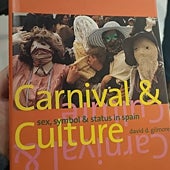
The uniqueness of the carnival in Fuentes de Andalucía attracted the attention of American anthropologist David D. Gilmore
The uniqueness of the carnival in Fuentes de Andalucía attracted the attention of American anthropologist David D. Gilmore. The cover of his book Carnival and Culture: Sex, Symbol & Status in Spain features a photograph from the carnival in Fuentes de Andalucía.
David D. Gilmore conducted ethnographic research in this town as part of his anthropological studies. From 1973 to the early 1990s, he carefully studied the carnival in Fuentes de Andalucía, which he compared it with a festival of gossip. Carnival has always been a powerful moment for the community to express its social views.
David D. Gilmore identified the Carnival in Fuentes de Andalucia as a crucial ritual where social norms are temporarily suspended: private scandals and gossip became public, allowing the community to address repressed issues, sexual indiscretions and social tensions though song and performance.
It is worth noting that traditionally, all revelations are accompanied by a certain degree of respect and even understanding for those being criticised. Gilmore stresses that the Andalusian carnival is not so much about revolution or politics as such, but rather about the inevitable ambivalence of all human feelings.
![[]](http://static.vocstatic.com/voc26/latest/assets/images/favicon/surinenglish/apple-touch-icon-57x57.png)