
Extra AUTODOC
What to do when spare parts arrive damaged
Inspect packages before signing, photograph everything, and contact the seller as soon as possible with evidence

SUR in English
Most car owners ordering parts online assume damaged deliveries mean automatic free returns. The reality in 2026? It depends on who's responsible and proving that requires immediate documentation. According to a Statista UK study (2023), damaged or defective products accounted for 21% of online returns, making it one of the leading causes alongside receiving the wrong item or sizing issues.
Here's what to do when you receive a package: don't sign the delivery receipt without inspecting the package first. If there are visible signs of damage to the package, photograph the packaging and damaged part before the courier leaves if possible. Contact the seller as soon as possible with visual evidence. Under EU consumer rights, sellers must cover return costs for damaged goods but only if you document the damage properly upon delivery.
Why delivery damage happens so often across Europe
The European automotive spare parts industry faces significant logistics challenges in 2026. Alexandru Lazariuc, Technical Specialist in Auto Parts Selection, explains the core problem:
"There are still problems with delivery: deadlines are all over the place, the quality of courier services varies from region to region, and goods are lost or damaged. The 'last mile' still depends on local carriers…"
For residents across Spain and Europe, this "last mile" problem affects delivery reliability. According to 2023 Statista data for UK shoppers, 21% of returns in the study were due to items arriving damaged or defective, which was equal to returns made due to "wrong item/size" issues. The combination of long-distance shipping from Central European warehouses and variable local courier quality creates challenges for keeping parts in-tact during transit.
Three scenarios that determine who pays for damaged returns
Scenario 1: visible damage in seller's product packaging
The seller pays for return shipping. This is straightforward under EU Distance Selling Directive if the packaging shows the seller used inadequate protection, they're liable.
Scenario 2: courier damage to intact packaging
This is where disputes happen. The courier company is technically responsible, but sellers often argue you should have refused the delivery. According to AUTODOC return policies, customers who sign to confirm that the package was "received in good condition" may have to cover return costs even when damage was later uncovered.
Scenario 3: hidden damage discovered during installation
Contact AUTODOC support immediately with photographic evidence of the defect. Document the damage with clear images showing the part before the installation took place. The company reviews each incident individually to determine who is responsible. Providing detailed photos of the defect, showing the serial numbers, damage points, and original packaging helps support teams process claims efficiently.
What to do the moment your package arrives
INFOGRAPHIC: 5-step visual checklist
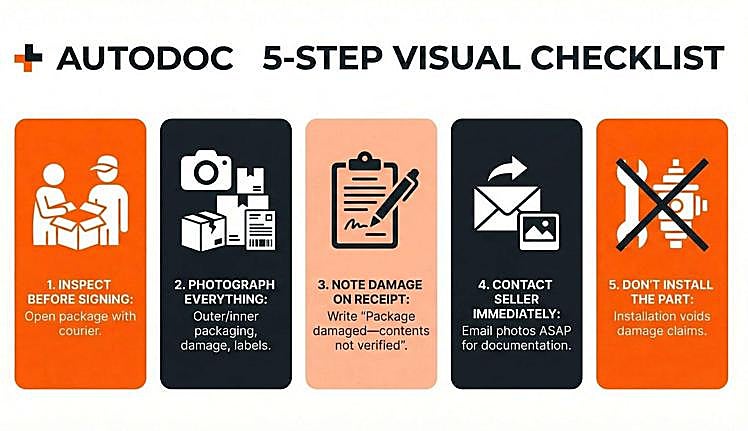
1. Inspect before signing: open the package with the courier present if possible
2. Photograph everything, including the outer packaging, inner padding, the damaged part, and shipping labels
3. Note the damage on the delivery receipt: write "package damaged, contents not verified" before signing. This is critical if there is clear damage to the package upon arrival
4. Contact seller immediately: email photos as soon as possible; written communication creates documentation
5. Don't install the part: an installation voids most damage claims
According to AUTODOC customer service procedures, claims filed with photographic evidence as soon as possible have significantly higher approval rates than delayed submissions. With damaged goods representing over one-fifth of all online returns, having clear documentation from the moment of delivery is critical to protecting your rights.
How better warehouse locations reduce damage rates
Smart retailers are addressing delivery damage by redesigning their logistics rather than just improving packaging. Lazariuc describes one approach:
"AUTODOC's new site in Ghent... we needed to be right next to the major ports to counter the volatility in Western Europe… a distributed network is more flexible: spare parts can be shipped faster from the nearest centre and seasonal peaks are easier to manage."
The logic is simple: shorter distances mean fewer handoffs between carriers, reducing damage opportunities. When parts ship from locations closer to their destination, they spend less time in transit and pass through fewer sorting facilities. Information from AUTODOC indicates that distributed warehouse networks correlate with lower damage rates, though "last mile" challenges with local couriers remain across different regions.
This infrastructure approach doesn't eliminate damage, but it does reduce the frequency of damage claims. When damage does occur, proximity makes returns faster and cheaper for both parties.
Protection steps for online auto parts orders
Immediate actions prevent disputes: document any visible damage before the courier leaves. Photos are your evidence. Contact the seller immediately.
Know your EU consumer rights: you have 14 days to return online purchases, but damage claims require prompt evidence. Sellers must cover return shipping for genuinely damaged goods.
Choose sellers with distributed logistics: companies with warehouses located near major ports typically have more reliable delivery processes and simpler return procedures.
Use written communication: emails create clear paper trails of your claim. Save all correspondence, photos, and tracking numbers for reference.
The fundamental principle in 2026: proving that there is damage means documenting it immediately. Inspect packages before signing, photograph everything, and contact the seller as soon as possible with evidence. Your financial protection depends on this documentation.
![[]](http://static.vocstatic.com/voc26/latest/assets/images/favicon/surinenglish/apple-touch-icon-57x57.png)