
Tradition
Thanksgiving Day: historical connection with Andalucia
Apparently, the first European Thanksgiving feast (accíon de gracias) on the American continent was organised by Spanish colonists in what is now Florida, 56 years before the pilgrims in Plymouth did so
Alekk M. Saanders
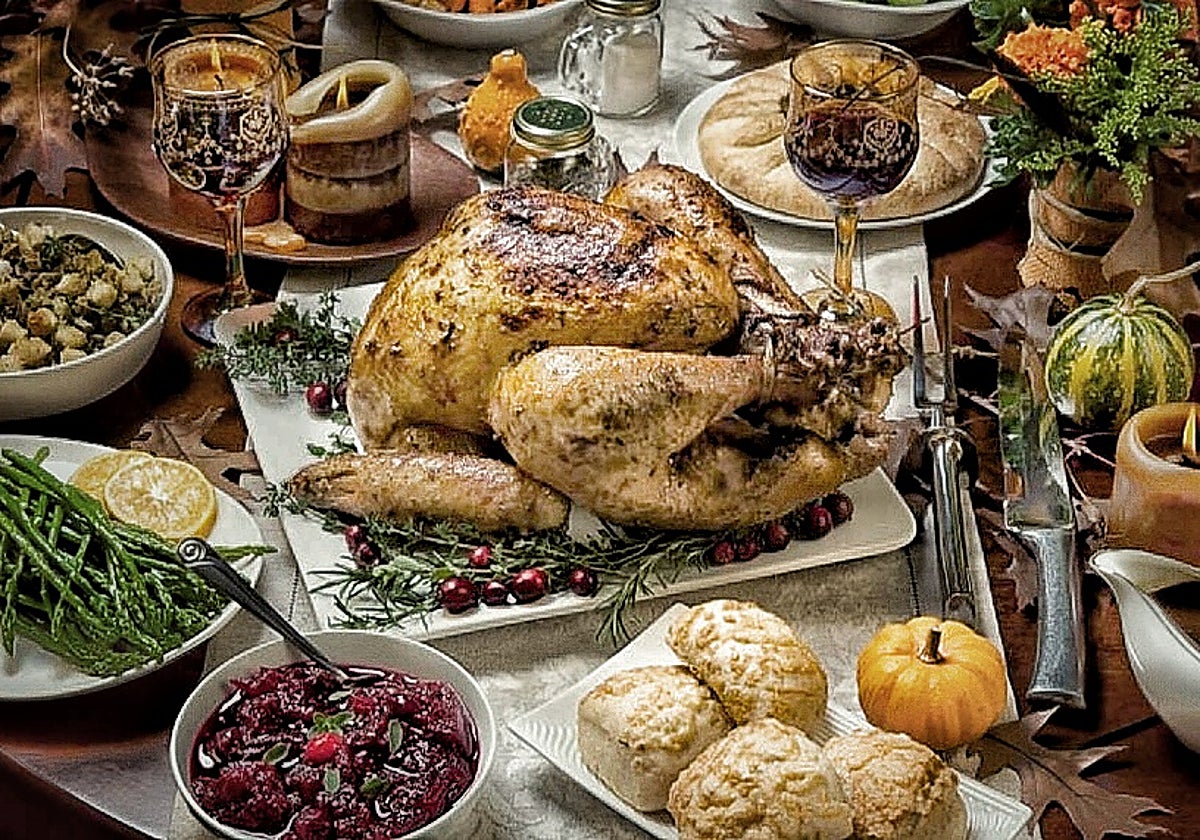
Thanksgiving, one of the most significant holidays in the United States, is celebrated in memory of the harvest celebration in colonial New England in 1621. During the feast, a group of pilgrims shared their food with Native Americans from the Wampanoag tribe. However, few people know that Spanish conquistadors had held similar banquets with the natives earlier. On 8 September 1565, Spanish settlers and the native Timucua tribe shared food in St. Augustine which is considered the first celebration of its kind in the present-day United States.
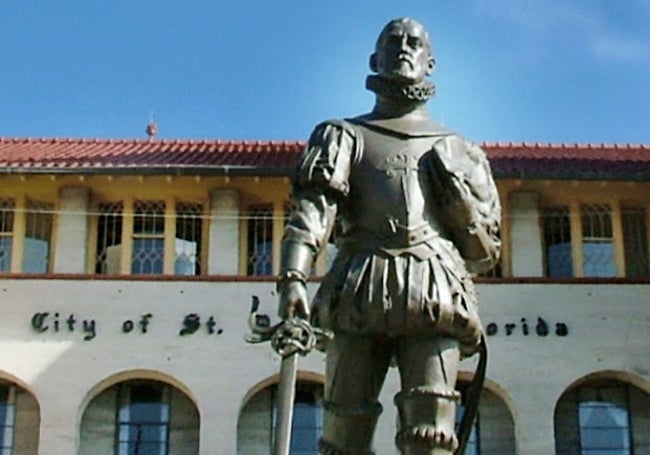
St Augustine, located in Florida, is considered the first permanent European settlement in North America. Incidentally, Columbus's colleague, Juan Ponce de León, was the first to land on the site where the city now stands in 1513, supposedly searching for the legendary Fountain of Youth. He named this land Florida and claimed it for the Spanish crown. In 1564, the mouth of the St Johns River attracted the attention of the French, who founded Fort Carolina there. To drive out his competitors, the Spanish conquistador Pedro Menéndez de Avilés was sent to the area the following year. The brave Asturian was famous for his piety and navigational skills.
From Seville via Cadiz
It can be said that the story of Spanish Thanksgiving began in Andalucía because it was Seville where Pedro Menéndez de Avilés was ordered to attend by King Philip II and where he organised all the details of the expedition that was victorious in North American territories. It is believed that the Spanish king and Menéndez de Avilés had a close relationship, and it is not surprising that the monarch entrusted him with restoring lost dominion in North America. In addition to converting the indigenous population to Catholicism, the Spaniards' goal in Florida was to establish permanent settlements there.
In addition to converting the indigenous population to Catholicism, the Spaniards' goal in Florida was to establish permanent settlements there.
Andalucia is also mentioned in the Thanksgiving story as the place where the expedition began. Pedro Menéndez de Avilés set sail from Cádiz on 29 June 1565 with a large fleet. On board his flagship, the San Pelayo, and several smaller ships were about 2,000 sailors, soldiers and settlers. Among them were people from all regions, including Andalusians, mainly from Seville. However, fewer than 1,000 people reached the American continent on 28 August, St. Augustine's Day.
A mix of cultures
Menéndez de Avilés reportedly defeated the French colony with relative ease and founded Fort San Agustín nearby on 8 September. It is believed that the chief of the local Timucua tribe himself allowed the Spaniards to establish a colony on the tribe's lands. This is probably why, as a sign of special gratitude, Pedro Menéndez de Avilés organised a celebration similar to Thanksgiving Day.
In 1565 Spanish settlers and the indigenous Timucua people shared a communal meal to celebrate the founding of the town. It was a mix of Old and New World foods
In 1565 Spanish settlers and the indigenous Timucua people shared a communal meal to celebrate the founding of the town. It was a mix of Old and New World foods. The Spanish likely served a cocido (a stew), along with red wine brought over from Europe. Apparently, the Timucuans contributed local fare such as wild turkey, venison, corn and beans. After that, the Europeans and the indigenous people attended a solemn mass, which was jointly celebrated by several Spanish bishops.
St Augustine was the first successful European settlement in Florida and remained the most significant city in the region for almost three centuries. Additional fortifications were quickly built there to protect people and supplies. St. Augustine also developed rapidly thanks to investments by Pedro Menéndez himself, who traded with the new lands, mainly from the Andalusian ports of Seville, Cadiz and Sanlúcar de Barrameda.
It is also worth noting that in 1598, Spanish explorer Juan de Oñate organised a grand celebration on the banks of the Rio Grande, today’s Texas, which was also attended by members of Indian tribes.
![[]](http://static.vocstatic.com/voc26/latest/assets/images/favicon/surinenglish/apple-touch-icon-57x57.png)