
Gardening in southern Spain
Senna bicapsularis
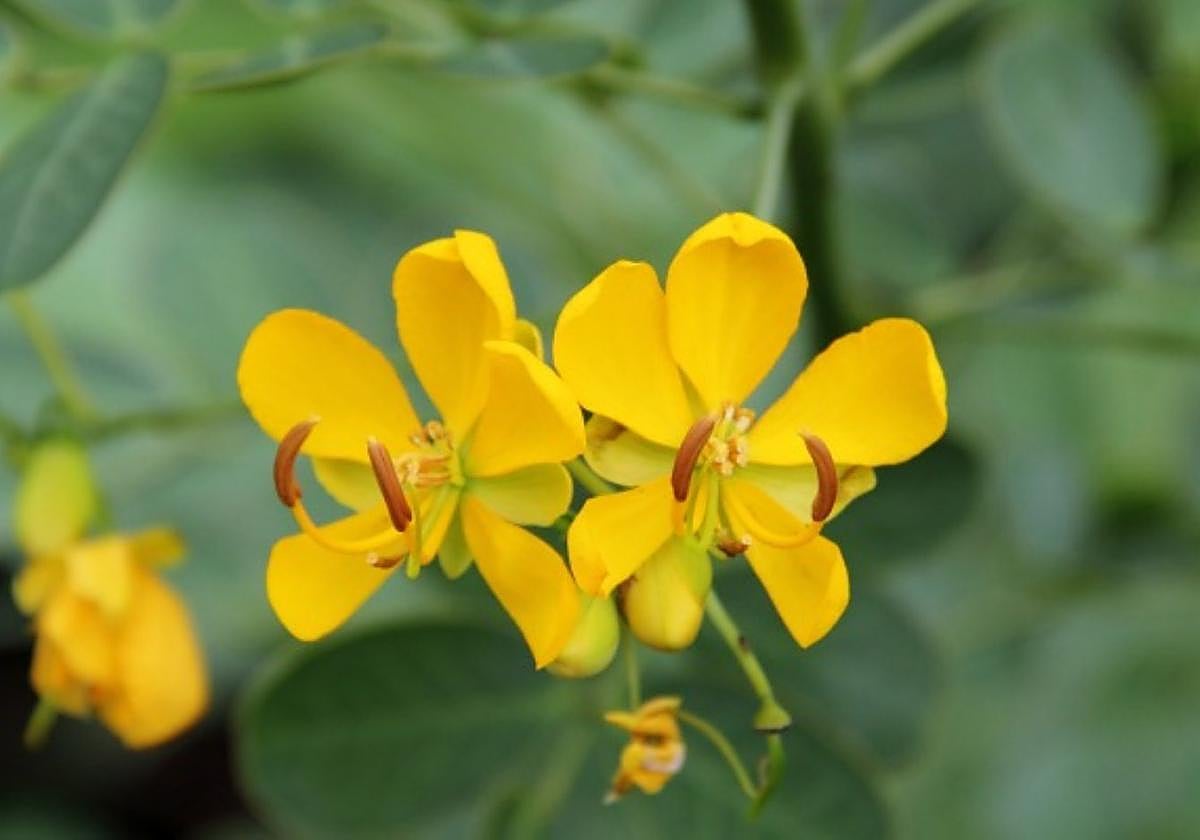
This fast-growing plant produces masses of sulphur-yellow flowers from autumn until spring, attracting pollinating insects, especially butterflies
Denise Bush
Senna (synonym Cassia) bicapsularis, commonly called rambling senna, butterfly bush or winter cassia, is a semi-evergreen shrub native to South America. A member of the Fabaceae (legume) family, it fixes nitrogen in nodules on its roots, enriching the soil naturally.
This fast-growing plant produces masses of sulphur-yellow flowers from autumn until spring, attracting pollinating insects, especially butterflies. It can be pruned into a spreading shrub or allowed to develop into a small tree.
Senna bicapsularis thrives in free-draining, loamy soil and requires full sun. During the hot, dry season it will go dormant and is moderately drought-resistant. Fertiliser should be used sparingly, as excessive feeding encourages thick foliage at the expense of flowers.
The plant can withstand short periods of frost provided the root ball is adequately protected. Any frosted growth should be cut back hard and new growth will soon sprout. Protection from strong winds is advisable, as these may blow the plant over.
Pruning after flowering helps curb its somewhat untidy habit and keeps the plant compact. Regular maintenance will ensure a more attractive shape and encourage better flowering.
This versatile shrub can be grown in a pot, as a specimen plant in a border, for screening, or as an informal hedge. Propagation is from seed or semi-ripe stem cuttings. Dipping cuttings in hormone rooting powder will increase the chances of success.
![[]](http://static.vocstatic.com/voc26/latest/assets/images/favicon/surinenglish/apple-touch-icon-57x57.png)