
Art and culture
Win a Picasso for €100: million-euro masterpiece raffled for Alzheimer’s research
The Recherche Alzheimer Foundation is selling 'tickets of hope' for a chance to own the Malaga-born genius’s 1941 work, Tête de femme
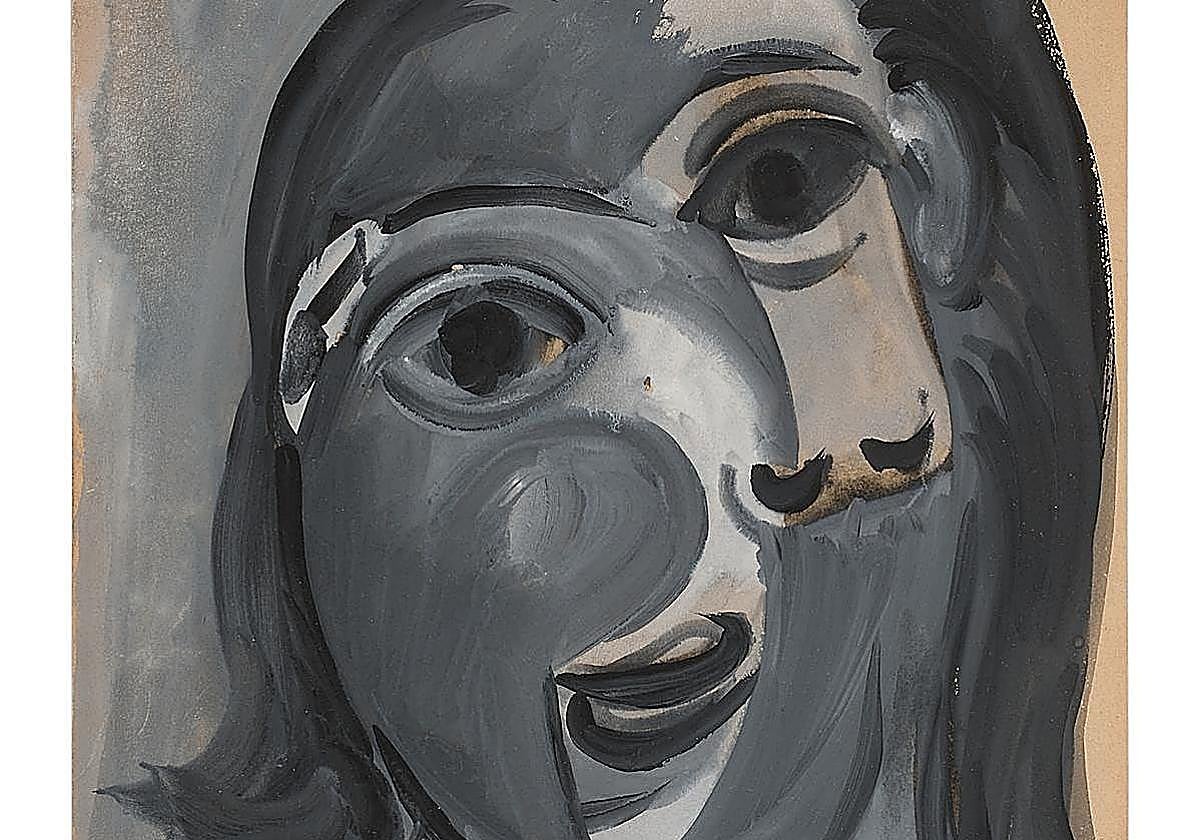

For just 100 euros, you could be the proud owner of a Picasso - and all for a good cause.
The French foundation, Recherche Alzheimer, which funds research into Alzheimer's, is raffling off a valuable work of art by the Malaga-born genius.
That small investment will be multiplied 10,000 times over and one lucky winner will be able to treasure 'Tête de femme' (Head of a Woman), a piece by one of history's most influential artists.
The foundation is selling 120,000 'tickets of hope' for Alzheimer's patients and their families. One of the buyers will become the new owner of the 38.9 by 25.4 centimetre gouache painted by Picasso in 1941 and currently valued at one million euros.
It comes from the Opera Gallery collection, shown in 30 countries and based in Madrid since 2023. Gilles Dyan is a founding partner of Recherche Alzheimer, which supports more than 40 research teams in Europe.
The draw will take place on 14 April at Christie's Paris headquarters. Entries can be made via the website www.1picasso100euros.com.
There will be only one winner. All other participants will have the satisfaction of having contributed to research advances into this disease.
This unique raffle adds another chapter to the mythos of Pablo Picasso - a man whose life was as colourful as the Mediterranean coast where he was born. Long before his works became the currency of global philanthropy, Picasso was a child of Malaga, where the light of the Costa del Sol first influenced his perception of shadow and form.
Though he spent his most transformative years in France, evolving through the sombre Blue Period and the fractured geometry of Cubism, he famously carried the dust of Spain on his shoes, often saying, "Without my roots in Malaga, I could never have painted the world."
The decision to raffle Tête de femme mirrors the artist’s own penchant for the unconventional. Picasso was known to settle restaurant tabs with a quick sketch on a napkin - pieces that are now worth more than the bistros themselves.
The year Picasso painted Tête de femme - 1941 - was one of the darkest and most defiant periods of his life. While many artists fled the Nazi occupation of Paris, Picasso chose to remain in his studio at 7 Rue des Grands-Augustins.
The Nazi regime had officially branded Picasso a "degenerate artist," banning his work from being exhibited or sold publicly. Despite the constant threat of the Gestapo, he refused to leave.
During this time, materials like bronze were strictly rationed for the German war effort. Picasso famously engaged in "silent rebellion" by secretly casting sculptures in bronze anyway, smuggling the metal into his studio.
His works from 1941, including Tête de femme, often reflect the claustrophobia and tension of the era. The distorted features and sombre tones found in his wartime portraits are seen by historians as a reflection of the psychological toll of the occupation.
The "1 Picasso for 100 Euros" initiative follows a fascinating lineage of "accessible" masterpieces.
Such a scheme is nothing new, but it is "exceptional", according to its organisers, who have already raffled off two Picassos. In 2013, Jeffrey Gonano, a 25-year-old from Pennsylvania, became the owner of a Picasso drawing valued at over one million dollars.
Five million euros were raised for the International Association for the Safeguarding of Tyre, a Lebanese World Heritage city where a village was built to revitalise traditional crafts, create jobs and stimulate the local economy.
In 2019 Claudia Borgognona, an Italian accountant from Ventimiglia, was the winner of another Picasso piece. Her 25-year-old son Lorenzo bought her a raffle ticket as a Christmas present.
She became the owner of a 1921 still life by Picasso valued at one million euros, donated by collector David Nahmad. Another five million euros were raised for the NGO Care through the sale of 51,140 tickets across 100 countries. Those euros funded water purification and hygiene programmes in some of the hardest-hit regions of Africa, a crucial issue during the covid-19 pandemic.
Recherche Alzheimer funds research to better understand the mechanics of a disease that affects 800,000 people in Spain and where 40,000 cases are newly diagnosed each year.
Some 35 million people worldwide suffer from Alzheimer's, a figure that could double by 2050, according to the World Health Organisation.
![[]](http://static.vocstatic.com/voc26/latest/assets/images/favicon/surinenglish/apple-touch-icon-57x57.png)