
Culture
Town in Granada to revive pig slaughter ritual to preserve cultural heritage
The X Feria de la Matanza de Cozvíjar, which will take place on 26 January, is organised by the festival committee with the collaboration of the town hall of Villamena

Rafael Vílchez
The historic village of Cozvíjar is preparing to celebrate its X Feria de la Matanza on 26 January. In the past, this ritual was considered a feast in every house, because it provided plenty of food for the whole year. In Cozvíjar and other places, people used to say that "one likes everything about the pig, even the way it walks". Pig slaughter played a central role in the fragile economies of most families in Cozvíjar. Some privileged families were even able to perform two slaughters per season, allowing them to sell some of the products and earn extra income.
Traditionally, the men would kill the pig, scorch it with ferns or dry twigs, clean and gut it. In the meantime, the women would prepare the rice to make the black pudding with the blood and other seasonings, including onions, to be cooked in copper cauldrons, some of them centuries old and repaired to prolong their useful life, using techniques such as riveting to seal leaks. A craftsman from Dúrcal was highly sought after for this precise work. Wine, a type of schnapps and traditional sweets such as cookies and 'mantecados' were always part of the slaughter ritual.
Last year's Feria de la Matanza de Cozvíjar included the Cozvíjar-Cónchar walking route guided by Rubén and Juan Antonio; tastings of San Antón stew and pork products; live music; gastronomic and craft stalls at Casa de la Cultura; bar drinks and dancing. Among those attending were mayor of Villamena Manuel Luis Vílchez and president of the Omnia foundation Antonio Castro. Based in Granada province, Omnia supports vulnerable groups and their development.
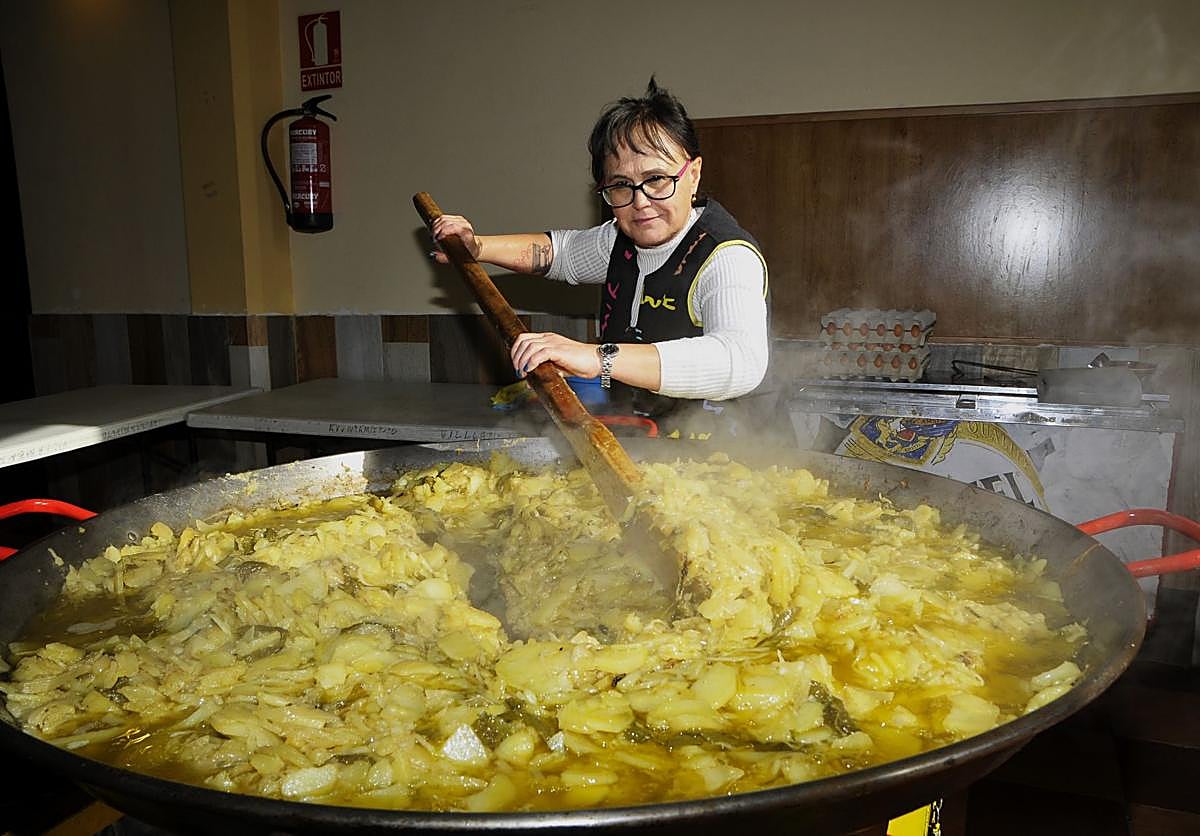
Councillor Pili Villena said: "The festival was organised by the committee. At midday, there was San Antón stew with beans, ribs, pig's ears, bacon and a dish of fried potatoes, sausages, black pudding and eggs. We also made a giant two-metre-long sandwich with bread, tomato, omelette and cured meats. In addition, there was roasted pork, 'migas' and other dishes."
Villena highlighted the work of the festival committee and cook Isabel. "Last year was the first time that several people from Valle de Lecrín and Alhama de Granada set up their stalls of crafts, foods, sweets and handicrafts," she said.
Local resident Paquita Vílchez Caballero, 83, said that, when she was young, many slaughters were held in Cozvíjar. "A lot of pigs were raised and fattened throughout the year with produce from the fields and leftover food in this area. A slaughter lasted between three and four days. One of the tasks was to peel and cook the onions, prepare the spices, slaughter the pig early in the morning, collect the blood in a basin, clean the pig with bowls, lids and knives, and so on. Several women would clean the innards. The slaughter continued with making blood sausage, cutting up the pig, salting hams, shoulders, bacon, ribs and jowls. Sausages, chorizo and other cured meats were also made. People usually ate potato stew, roasted innards, blood sausage mix and cabbage salad. Wine was never missing from any household," she said.
Paquita also remembered when several pigs used to be slaughtered in her house every year. "My father, Francisco, would go to the Padul fair every year to buy small pigs to fatten them up - some for us and others to sell. I remember when my father used to take me and my brother to Padul on a donkey. Those were different times. We, the three siblings and our parents, lived in a farmhouse in Marchena and we had rabbits, hens, roosters, pigs, etc. My father worked for a very wealthy man, Don Celestino Echevarría, who trusted him. Many times Don Celestino would buy a pig to celebrate. My father would take care of it. I also remember that in my village they made tiles, slabs and bricks because the local red soil is very good for it. There were also ovens and oil and grain mills. I have worked all my life picking olives by hand. Life used to be very hard work," she said.
Villa Amena de Cozbijar was founded by King Carlos II in 1687 in favour of Fernando Sánchez de Teruel y Quesada, husband of the third lady of that place. Its current name refers to the municipality of Villamena, formed in 1974 by the union of the towns of Cozvíjar and Cónchar.
![[]](http://static.vocstatic.com/voc26/latest/assets/images/favicon/surinenglish/apple-touch-icon-57x57.png)