
Health
Short snippets of exercise for a better night's sleep whenever and wherever, even in summer
Light exercise before or after dinner will help you fall asleep better and for longer. Here are some suggestions to get you started...

Jon Garay
Madrid
Summer is synonymous with holidays, for spending hours lying on a sandy beach or stretched out by the pool, for shaking up our normal schedules followed throughout the year, when the rush never lets up, keeping us running from one place to the next with our tongues hanging out. Yet it is also the time of year when we sleep the worst. There are two main reasons why it is harder to fall asleep during these months. The first, and most obvious, is the heat, which prevents us from falling into the sweet arms of Morpheus and dreamtime. Most of Spain has already suffered the first two heatwaves of this summer season, with thermometers soaring above 40C and even some nights in the north of the country staying above 20C. "The rise in temperatures until very late, even throughout the night on so-called tropical nights, prevents us from lowering our body temperature, falling sleep and maintaining a deep and restorative sleep," explains María José Martínez, coordinator of the chronobiology working group, part of the Spanish sleep society (SES). This particular special interest group studies the science of biological rhythms in living organisms, including humans.
Climate change is not helping either. Experts are already talking about 'climate insomnia', a growing disorder that can be explained very simply. Before falling into a deep sleep, the body temperature drops between 1.0 and 1.5 degrees, but with nights over 25C, this is just mission impossible and translates into much tossing and turning, fewer hours of sleep and a sleep quality that leaves much to be desired. A study involving data from 47,000 individuals from 68 different countries even put a figure on this loss: if this continues, by the end of this century we will have an average of 50 hours less sleep per year, meaning up to an hour's less sleep per day for over six weeks.
The other reason is circadian rhythms, our biological clock, which are altered by the high number of daylight hours. Under normal conditions, when the sun goes down, our body secretes melatonin to aid with sleep. With the long days at this time of year, nothing invites us to head to bed. "In the summer period, it gets dark very late, so we delay our bedtime," says the sleep expert.
An after-dinner walk, yoga or pilates
Lack of sleep is not just a matter of waking up tired and being in a foul mood the next day. It has serious health implications. An adult should sleep a minimum of seven hours per night with more sleep for children, (eight to ten hours for those aged 13 to 18 and 16 hours for babies). According to the prestigious Mayo clinic, not getting enough sleep is associated with weight gain, increased risk of metabolic issues, coronary heart disease and type 2 diabetes.
That lays out the problem, now it's time for solutions. A good way to help us sleep in summer is to do some physical activity later in the day, avoiding the midday heat. Exercise in short bursts, in small doses, like having a snack instead of a blowout meal. We should not be "running 20 kilometres at 10pm or doing any other prolonged and strenuous exercise", says Martínez.
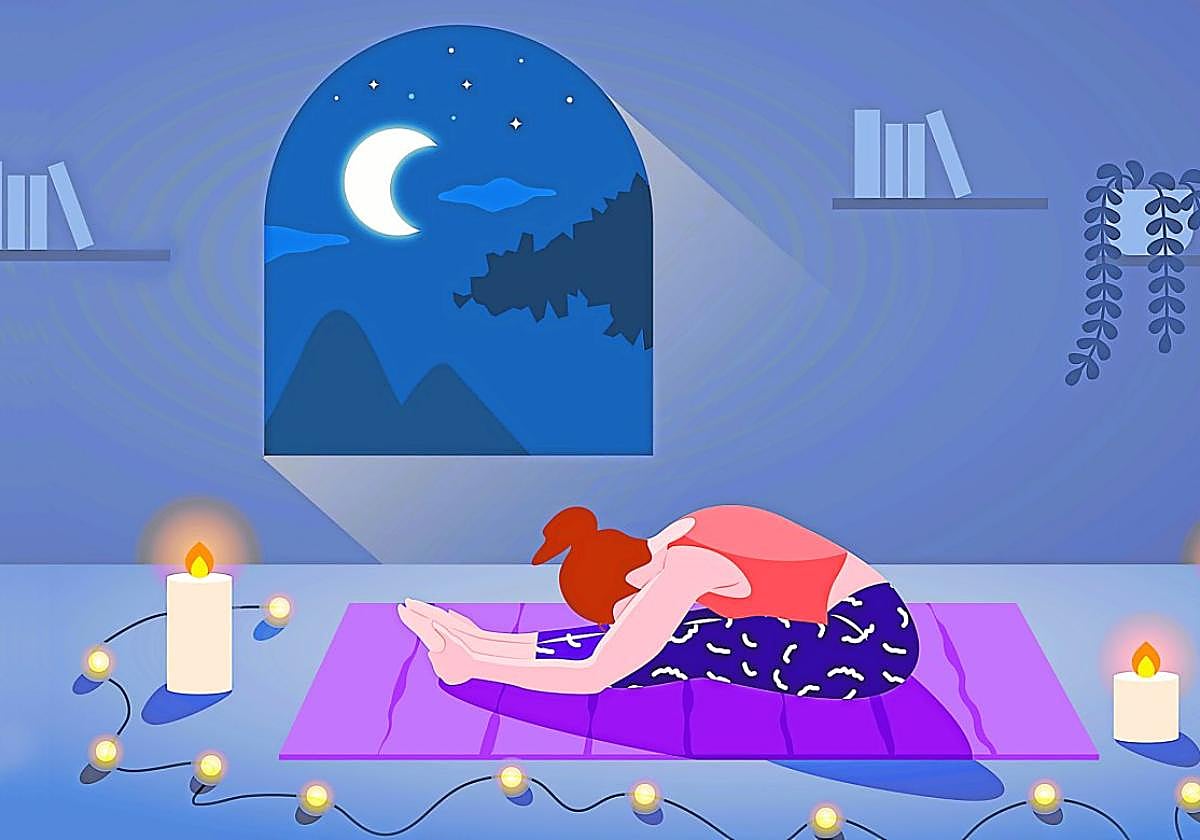
"In general, we recommend doing sport before 8pm so that we can go to bed at around 11 o'clock. The idea is to delay neither dinnertime nor bedtime. This isn't a positive step for either," says the SES representative. It is especially recommended to do light exercise after dinner, such as walking, yoga or some pilates "to reduce any heaviness".
A study published in the British Medical Journal for Open Sport & Exercise Medicine has confirmed the benefits of these short bursts of exercise for sleep quality. Specifically, three minutes of moderate exercise every 30 minutes over a four-hour period would be sufficient. These can be simple strength exercises such as chair squats, leg raises or straight-legged hip extensions for 20 seconds each.
27 more minutes of shut-eye
The result is that the participants (28) in the experiment who followed this exercise routine slept an average of 7 hours and 12 minutes, that's 27 minutes more than those who did not. The time they woke up also changed: if they stayed sedentary, they woke up at 7:35am on average but, if they got moving, their night's sleep lasted until 8:06am. The improvement was not only in quantity, but also in quality, as these snippets of movement help reduce the risk of heart and metabolic diseases in the long term.
However, the researchers acknowledge several limitations in their work. The first, and most obvious, is the very small number of participants. The second, also obvious, is that the experiment was conducted under lab conditions that don't always correspond to real-life conditions. The third is that, while existing research suggests nocturnal exercise may not adversely affect sleep, exactly how it influences sleep quality remains unclear. Hence they recommend a longitudinal study involving more volunteers in a domestic setting.
María José Martínez adds a fourth 'catch' to these research findings: all the participants were women. "Men and women do not sleep in the same way. In general, women tend to go to bed earlier and sleep more until the menopause happens. Men, on the other hand, tend to sleep less well until they reach that age, as sleep apnoea, for example, is more common in men." Whatever the case, what is clear is that doing a bit of exercise late in the day can help us sleep better, even in the summer heat.
Why is it not a good idea to hit the gym at 10pm?
As a general rule, experts do not recommend intense exercise late in the day. Although some people say it relaxes them, followed by a restorative shower, after the ups and downs of a busy day, it can prevent them from falling asleep. The reason for this is that strenous exercise ends up raising the body's temperature, upping the heart rate and stimulating the nervous system. All these factors make it difficult to relax and fall asleep as the body temperature needs to drop a few degrees. Furthermore, excessive training can also cause muscle pain, which is why "hitting the gym at 10pm is of no benefit to anyone", says our sleep expert, Martínez.
![[]](http://static.vocstatic.com/voc26/latest/assets/images/favicon/surinenglish/apple-touch-icon-57x57.png)