
Health and safety
Should social media be treated like drugs? Spanish experts say yes
Psychologists back plans to ban access for under-16s but stress that education and regulation must go hand in hand
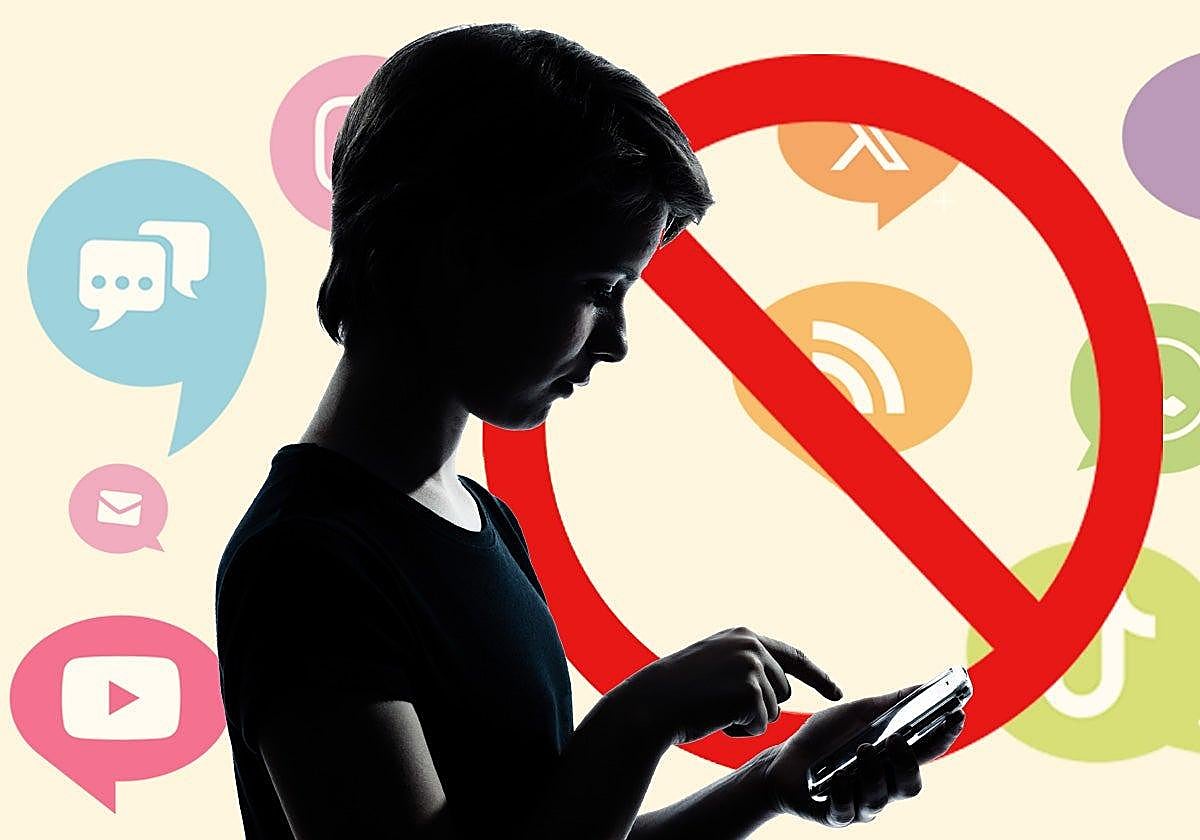

Spanish psychologists and educators welcome the ban on social media use for under-16s that PM Pedro Sánchez announced at the beginning of February. They warn that social media has had a more harmful effect on developing brains in the last 15 years than ever, but they also believe that it will be difficult to reconcile restrictions with freedom of expression.
One telling example of the impact of social media is an interview back from 2010 when Apple founder Steve Jobs himself said that his children hadn't used the new iPad and that the family limits the "children's use of technology".
In 2021, a group of data specialists revealed the depth of knowledge that big tech companies have about the detrimental influence of social media. According to an internal survey conducted by these companies, 32 per cent of teenage girls said that their self-image had worsened after using social media, while 13 per cent of young people questioned in the UK said that their suicidal thoughts had increased in the digital environment.
With so much data confirming the detrimental impact of social media on young people's brains, only one question remains: why didn't politicians react much earlier?
This is what doctor and radiologist Maria Vidal would like to know. She is the head of the association for responsible digital education, created in 2023 and fuelled by the concern of thousands of parents.
"There are plenty of studies that clearly show how screens are shaping brain development," she says. "I also work on call at Hospital Materno. Until now, a child psychiatrist was never needed on call, but they have become essential. That makes it quite clear that we have a problem," Dr Vidal says.
The figures in Europe are not as worrying as in the UK, but there are still clear signs that the mental health of young people has worsened since 2010. The latest Pisa education study reveals a decline in students' reading and maths skills that began in 2012, shortly after internet and social media became widespread on mobile phones.
You don't need to be a scientist to know that young people's concentration wanes when they have a mobile phone nearby. Even adults cannot escape the temptation.
How are students supposed to cope when they have to write an essay or solve a complex mathematical problem? For many young people, common tasks have become mission impossible.
President of the Association of Psychologists of Eastern Andalucía Mariela Checa has "been calling for regulation for a long time". "We professionals can see a clear impact on our adolescents. We detect alterations at a neurological level," she says.
Checa, however, believes that a ban is useless if it is not accompanied by digital education. "It can't just be a prohibitive regulation. Social media will continue being there and we have to create a manual for good use," she says.
Adolescent psychologist Angélica Cuenca works with young people who have learned to hate their physique through the mirror of comparison almost on a daily basis. "Social media sets a standard of perfection that is unattainable, with filters, impossibly thin waists, 'healthy' breakfasts... I've been treating teenagers for 18 years. What I've seen in the last four or five years with TikTok I've never seen before. It's very common now to have girls who don't like any part of their body. They are always going to lose because they compare themselves to what they see on social media," she says.
One need only look at today's platforms to see how far they have fallen short of the promise of becoming spaces for open and egalitarian discourse. Instead, they have been transformed into tools for undermining civil democratic dialogue. It seems no coincidence that the global triumph of populism coincides with the rise of social media.
One of the most difficult tasks for politicians in the coming years will be to defend freedom of expression and, at the same time, to regulate social media so that they do not end up ruining liberal democracy. This is the battle that currently fought in countries such as Spain, France and Australia.
Sceptics argue that it is impossible to keep children and adolescents away from social media. Psychologist Natividad Pryzscinski compares the efficacy of the ban on social media to that on the sale of alcohol and cigarettes to under-18s.
If platforms are required to prove they have no users under 16 and violations are met with hefty fines, big tech companies should have every incentive to comply.
By now, one would be well aware of the high level of sophistication that social media have achieved in activating the brain's reward system. "The algorithms of TikTok and Instagram are so well-calibrated that they capture users' attention with alarming force," Pryzscinski warns.
Teacher Jesús Martín confirms her observations. In his job, he constantly sees "how many students' ability to concentrate has decreased". He advocates regulation, but also warns that a simple ban will not be enough. "Technology is part of our lives and has positive things to offer. We have to educate people on how to use it correctly," he says.
He does believe, however, that social media bring more negative than positive, the most alarming among them being cyber-bullying. "We teachers see how the conflicts that used to take place in the playground have moved to social media," Martín says.
According to psychologist Carlos Barea, "social media should be treated as if they were drugs", as they contribute to "unhealthy" behaviour. Extreme cases range from eating disorders to social isolation and even suicide. Barea also draws a connection between social media and pornography consumption.
Barea, like many of his colleagues however, also believes that banning access to digital content could prove difficult.
![[]](http://static.vocstatic.com/voc26/latest/assets/images/favicon/surinenglish/apple-touch-icon-57x57.png)