
Health
Is it possible to get enough protein without eating meat and fish?
There are alternatives, although they require certain combinations
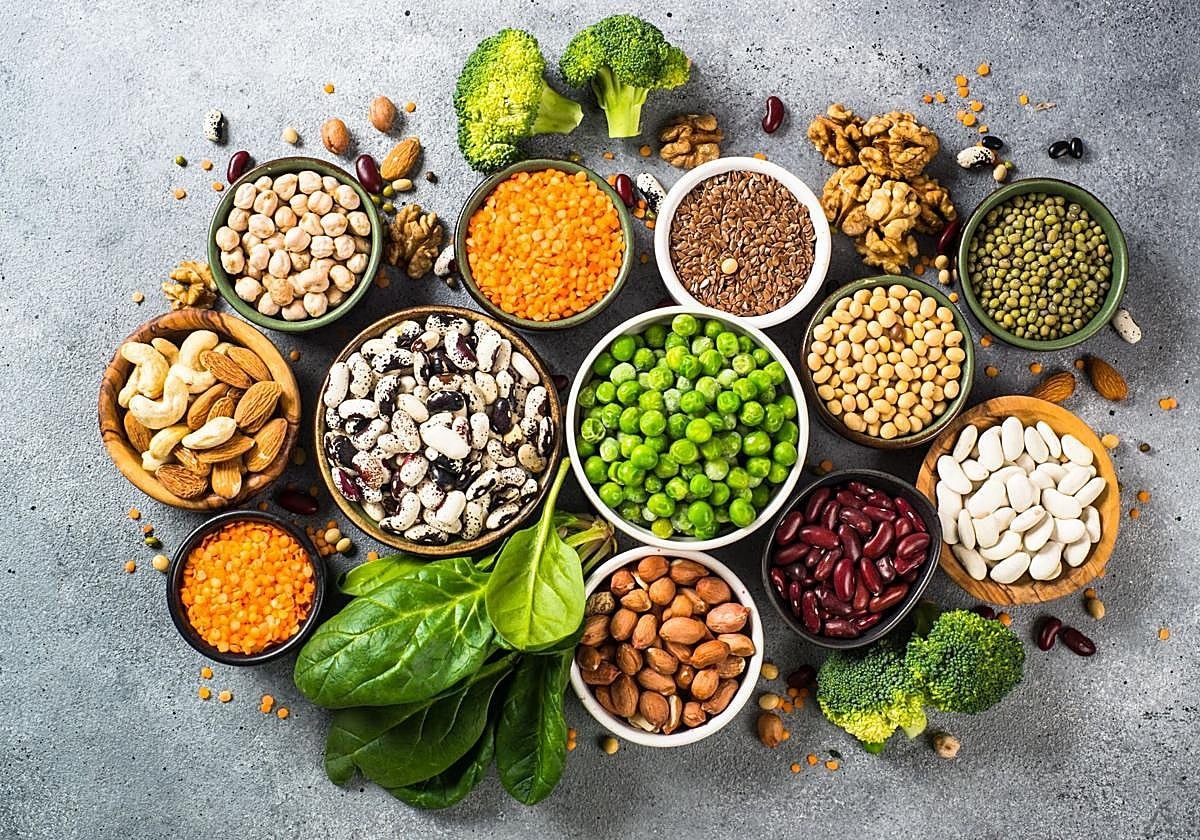

When we think of carbohydrates, we think of bread, pasta and rice; fibre we associate with fruit and vegetables; and protein with meat and fish. But foods are much richer than this simplification. Today we focus on protein to provide alternatives for those who tire of eating a grilled steak or fish day in and day out. But is it possible to achieve the recommended protein intake without these two foods?
The amount to be ingested is between 10% and 20% of the total daily calorie intake, although it could be as much as 35%, according to the Spanish Academy of Nutrition and Dietetics. «A 60-kilo woman with light physical activity should eat 60 grams of protein a day, around 240 kilocalories», they point out by way of example. A steak would not be enough (not all the weight of the steak is protein), but with that, an egg and some legumes....
But what about without steak? Well, you can also reach this amount, although you will have to make some combinations on your plate, as the alternatives to meat and fish are mostly of vegetable origin and this type of protein does not have the same effect on our organism as animal protein. «Animal protein is generally more digestible than vegetable protein and its content and proportion of essential amino acids is usually higher,» the Academy points out.
Catherine Montes, former professor of nutrition and dietetics at the Basque Culinary Centre and director of Nature Health, helps us to create a protein diet alternative to chicken and hake.
Legumes
In some cultures, especially in Latin America, pulses are a major protein, although they are rarely served on their own. «Being of vegetable origin, it does not have the complete amino acids, so if we only take pulses as a source of protein, we would suffer deficiencies. The solution is to take pulses together with rice or other cereals and seeds. For example, beans with corn, which is a common dish in South America, or, in Eastern cultures, chickpea hummus with pita, which is flour, and tahini, which is a seed.
Cereals
As with legumes, cereal protein, although valuable, «is not complete». "Quinoa is one of the most complete cereals, but rice, buckwheat, oats, etc. are also a source of protein," always combined with other vegetable protein sources (seeds, pulses, etc.) "It doesn't mean that we have to eat them on the same plate, but on the same day. We can have oatmeal for breakfast and chickpeas at lunchtime."
Seeds
Sesame, chia, flax, hemp? To benefit from the protein value of seeds, it is important not to take them whole, "but crushed because, otherwise, they are not absorbed and will only act as fibre". Crushing them is one option; another is to soak them, which is what is done, for example, with chia. "It has a gelatin that is the soluble fibre and when it is left in water for a while it is easier to access the nutrients. If we take it whole, the chia 'leaves' our organism just as it has entered".
Nuts
Walnuts, almonds, hazelnuts.... "They are best crushed or are very chewy, although no matter how much we chew an almond, it will not provide us with the protein content of a spoonful of almond oil, for example. Another option is to take nuts in flour (almond flour, which is widely used to make gluten-free biscuits) or in powder form (flax)."
Vegetables
"They are more recognised for their vitamins and minerals, but they are also a small source of protein that needs to be supplemented with other foods," stresses Catherine Montes. She points out the differences between vegetables. "Broccoli, Brussels sprouts and spinach have more protein than pumpkin or courgette, which are basically water. And, although it is more of a legume than a vegetable, soya," which is a magnificent source of protein in all its derivatives: tofu, tempeh, edamame... "even soya yoghurts or drinks, which are more recommendable than rice or oat drinks because, as the latter have more protein and the others more carbohydrates, they do not generate as many glucose peaks".
Dairy
"Cow's, goat's or sheep's yoghurt is very interesting from a protein point of view because it is of animal origin. In fact, I would give a runner who has finished a marathon a glass of cow's milk, which is a very complete food and will help them recover," says Catherine Montes.
Eggs
"Another wonderful and complete source of animal protein, not to mention its versatility, which increases the possibilities at the table," the expert reminds us.
The function of protein in the body
Collagen carrier:gives support to the tissues.
Enzymatic function: it regulates our metabolism by participating in, activating or slowing down all the chemical reactions that take place in our organism.
Transport: it transports extremely important molecules, such as haemoglobin, which is the protein responsible for carrying oxygen to all our cells.
Immunological function: many proteins are inside our defence cells (antibodies).
Motor function: responsible for enabling muscle contraction of our heart and other muscles.
Source of energy: proteins provide 4 kilocalories per gram. However as an energy substrate, they are less efficient than carbohydrates or fats.
![[]](http://static.vocstatic.com/voc26/latest/assets/images/favicon/surinenglish/apple-touch-icon-57x57.png)