
Health
A new diagnostic system for antibiotic allergies is being tested on patients
Developed by Malaga company Bioherent, the device is cheap, fast and reliable based on photonic technology that, once it passes the clinical trial, will reach the market in 2028

Málaga
Bioherent, a deep-tech startup based in Malaga, has announced a major breakthrough in the diagnosis of antibiotic allergies. The company revealed that its new system, BioExplorer, successfully completed its first patient tests late last year with an reliability rate of 88% - significantly higher than the current market standard.
The BioExplorer system, which utilises advanced silicon photonics, is now a fully functional reality. In initial preclinical trials performed on 30 patients with sensitivity to amoxicillin, the technology demonstrated a drastic improvement over traditional testing methods.
"The diagnostic capacity of our biosensors is 88%, compared to 53% for existing solutions," said Yara Aceta, CEO of Bioherent.
With the technology now proven in a clinical setting, Bioherent aims to tackle the widespread healthcare issue of false antibiotic allergy diagnoses. The company is currently working toward a projected market launch in 2028.
Antibiotic allergies are a major challenge in hospitals. When a patient with sepsis or another serious infection cannot be given penicillin or another drug from the beta-lactam family (the most widely used in medicine), doctors lose their main therapeutic weapon.
This problem is fuelled by another: the abundance of false diagnoses. It is estimated that 10% of people are 'labelled' as allergic, but only 1-3% are actually allergic, meaning that more than half of those who are supposedly allergic are not.
Why does this happen? Because this label is sometimes attached to patients because they have had adverse reactions that are not allergies, as there is no reliable in vitro diagnostic method for this immune reaction. The only way to test with absolute certainty whether someone is allergic to penicillin is by in vivo testing, i.e. injecting the drug into the patient... with the risk that this entails.
The misdiagnosis of allergies also contributes to feeding the big problem with antibiotics: that of bacterial resistance. This is a threat that is growing silently: in 2023 it was linked to 24,000 deaths in Spain and more than 4.5 million worldwide. And projections point to an alarming scenario: it is thought that they could overtake cancer as the leading cause of death by 2050. One of the few things that can be done to stop this snowball is to use antibiotics accurately.
"Overdiagnosis of allergy has an impact because these patients are only given secondary antibiotics, the overuse of which contributes to these microbial resistances.
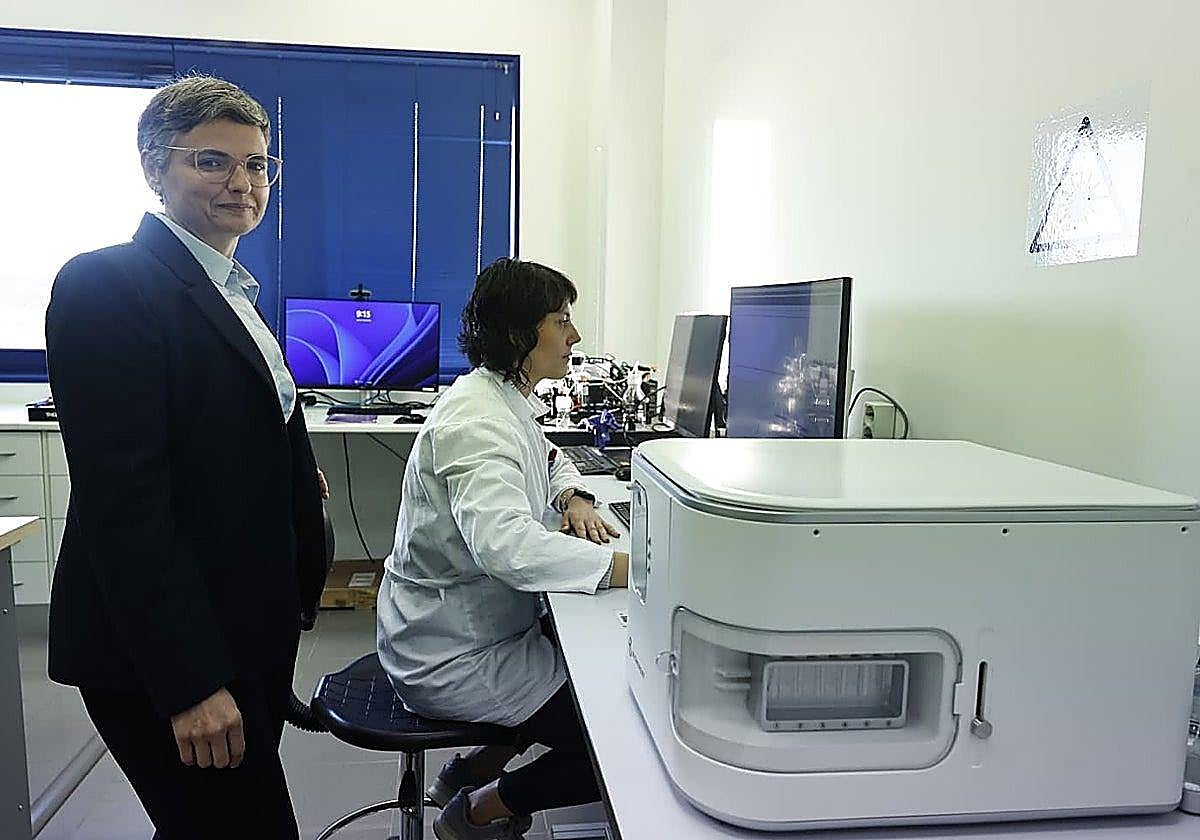
BioExplorer is an inexpensive (the prototype cost 25,000 euros and there is room for optimisation), automated and fast device, intended for installation in hospitals and diagnostic laboratories. It works in combination with disposable cartridges also developed by Bioherent. Each cartridge integrates a miniaturised photonic biosensor chip with an optimised microfluidic system: this is where the patient's blood sample is introduced. The machine analyses it and within minutes delivers the result.
Yara Aceta explains that the roadmap for 2026 includes continuing the preclinical study until it reaches 150 patients, as well as making "some refinements in the engineering of the instrument, with the idea of having the device certified by the end of the year and thus being able to begin clinical studies in 2027 aimed at obtaining the CE IVD mark [the one applied to In Vitro Diagnostic devices]".
These trials are expected to last a year, so if the results are successful, Bioherent will be able to start commercialising its technology in 2028. "We will start with cartridges focused on the detection of allergy to amoxicillin, penicillin G and penicillin V," says the company's CEO.
The business model of this startup founded by researchers from the University of Malaga is based more on the recurring sale of consumables (the cartridges containing the patient samples) than on that of the diagnostic platform. "In the first three years we expect to sell 50 devices and around 3,000 cartridges per device per year. We will start marketing in Spain and Portugal directly and later on we will approach Europe through distributors," Aceta explains.
The detection of allergies to antibiotics is just one of the business verticals that this company from Malaga intends to develop. Its diagnostic and molecular analysis machine based on photonic technology can also be used for many other things. Bioherent is already developing cartridges for monitoring immunotherapy treatments and foresees other applications, such as the detection of allergies to other drugs like anti-inflammatory drugs, muscle relaxants or markers... "The technology we have developed is very versatile," says Aceta.
Another line of business being developed is the transfer of its technology to third parties who want to develop applications for medical diagnostics (in fields such as cardiology or oncology, for example) or for biotechnology. BioExplorer can also be used to study molecular reactions, which would be useful, for example, in the development of new drugs.
Bioherent is a company born at the University of Malaga, which was founded in July 2021 and whose promoters are Iñigo Molina, Professor of Communications Engineering; Ezequiel Pérez-Inestrosa, Professor of Organic Chemistry; and María José Torres, Head of the Allergology Service of the Regional Hospital of Malaga and Professor of Medicine. The combination of these three branches of knowledge -engineering, chemistry and medicine- in a single team is the key to the solid progress Bioherent is making in the international race to achieve an in vitro diagnostic method for antibiotic allergy.
Molina highlights the intense collaboration that continues to exist between the company, which now has 14 employees, and the UMA, specifically with the Photonics & RF Research Lab, which belongs to the School of Telecommunications Engineering in Malaga. "The research group continues to collaborate through doctoral scholarships. We do applied research focused on developing the next generation of Bioherent technology, which will be cheaper and more accurate," he explains.
Bioherent is the perfect example of what is known as 'deep tech': innovative companies and technologies based on scientific discoveries or advanced engineering to solve complex, global problems. It is a type of startup that needs a long 'cooking' time to bring a product to market and, at the same time, a powerful investment to pay for the work of scientists and the technology they need. In the case of this Malaga-based company, the 2.9 million-euro investment it has received from the Bullnet Capital investment fund, which specialises in 'deep tech' (cutting-edge technology), and the CDTI has been crucial.
![[]](http://static.vocstatic.com/voc26/latest/assets/images/favicon/surinenglish/apple-touch-icon-57x57.png)