
Health interview
Bella Pajares: "Regular physical exercise reduces the risk of relapse in breast cancer"
Dr. Pajares has helped many women to live with better quality of life and more awareness after an illness thanks to integrative oncology
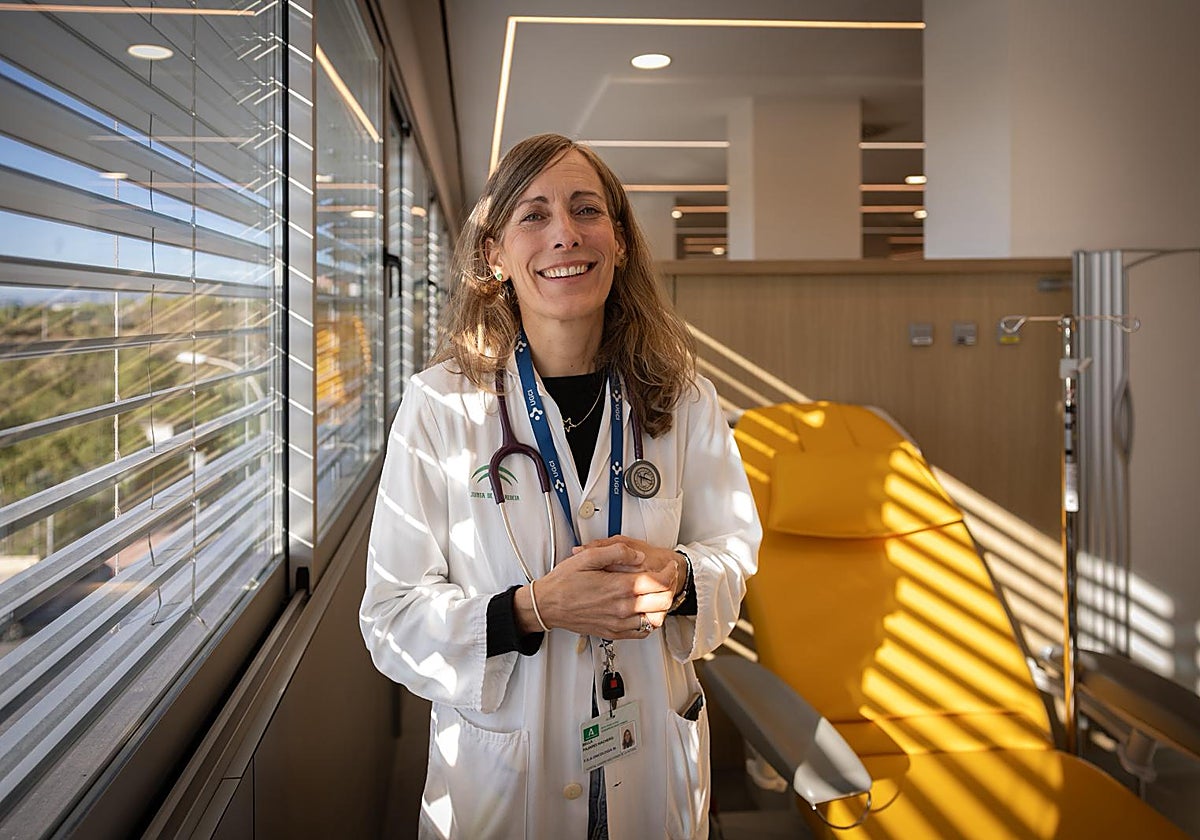

Bella Pajares is an oncologist at the Hospital Clínico Universitario Virgen de la Victoria in Malaga and head of the Mueve Montañas project, an initiative that advocates a recovery approach for breast cancer patients that not only focuses on pharmacological or purely medical issues, but also on physical exercise, healthy eating and emotional wellbeing. Mueve Montañas is funded by Novartis and, as Dr Pajares explains, its team is essential. It is made up of the physiotherapist Inmaculada Conejo, the nutrition technician María José de los Ríos, the psycho-oncologist Lucía Vegas and the radiotherapy oncologist Jaime Gómez-Millán.
-How was Mueve Montañas born and what is the need it meets?
-It was born out of a realisation after spending many years in breast cancer patients' consultations. I became aware that, in addition to the surgery, radiotherapy, chemotherapy, and systemic therapies that are necessary for patients to be cured.... after these treatments, I mean, life is not the same, everything changes. First of all, there are physical changes, women often lose their hair, these are real consequences, not to mention the emotional and intellectual ones at a social and family level. We often return patients to their lives so that they can try to live as they did before, but they cannot. Mueve Montañas was born from the conviction that there are tools that are not pharmacological, but that can help the patient a lot at that moment in her life, after having overcome an oncological process: we are talking about physical exercise, a healthy diet and an adequate control, in some way, of her emotions and all the stress and anxiety that comes with an oncological diagnosis and that has numerous repercussions on the quality of life of patients.
"The requirement to join Mueve Montañas is to have overcome the oncological process in the sense of not having an active tumour disease".
-What evidence do you have on the impact of physical exercise on cancer patients?
-Physical exercise is in some ways the cornerstone and of the three pillars probably the one with the highest quality of scientific evidence, with studies showing that exercise prevents the development of up to 18 types of tumours with a significant magnitude, a 20-25% risk of occurrence. But more importantly: in neoplasms or tumours such as breast cancer, colon cancer or prostate cancer, regular physical exercise before, during or after treatment, depending on when it is measured, reduces the risk of relapse, especially in breast cancer, and increases survival, which is an obvious reason to offer it to patients. Not to mention other benefits it has not only on prognosis, but it decreases fatigue, improves quality of life, improves functionality. It is one of the few things that has evidence that it improves what we call "chemobrain", which is the cognitive impairment associated with chemotherapy and hormone therapy. That difficulty in concentration, difficulty in finding the right word, in multitasking, which is something that happens very frequently to our patients.
-Which patients benefit from the programme?
-The requirement to enter the programme is mainly to have overcome the oncological process in the sense of not having active tumour disease. So patients diagnosed with breast cancer need to have undergone surgery. Once they have undergone surgery they can participate, that is, they can participate by receiving radiotherapy, or hormone therapy, or some immunotherapy, or target therapy. But they have to be operated on, that is, they have to be free of disease. It is true that it does not matter how much time has passed since their operation.
-What is integrative oncology and, above all, what is it not?
-It is a vision that tries to empower the patient in everything he or she can do to improve his or her state of health and illness. The oncology patient is not always a patient; many times he or she ends up being a healthy individual. To try to improve that state of health, to try to add years of life and quality of life, integrative oncology has that vision. It tries to empower the patient to use their resources to improve their quality of life. And, in a way, by using the tools that have the most scientific evidence. There is, as I say, physical exercise, the Mediterranean diet, stress management techniques, meditation, mindfulness, relaxation techniques, emotional support. But there are many others. There is also art therapy, music therapy, acupuncture, and so on. Integrative oncology aims to empower the patient to take control of their health process by adding quality of life.
-And are these practices being structurally incorporated into Malaga's public health system?
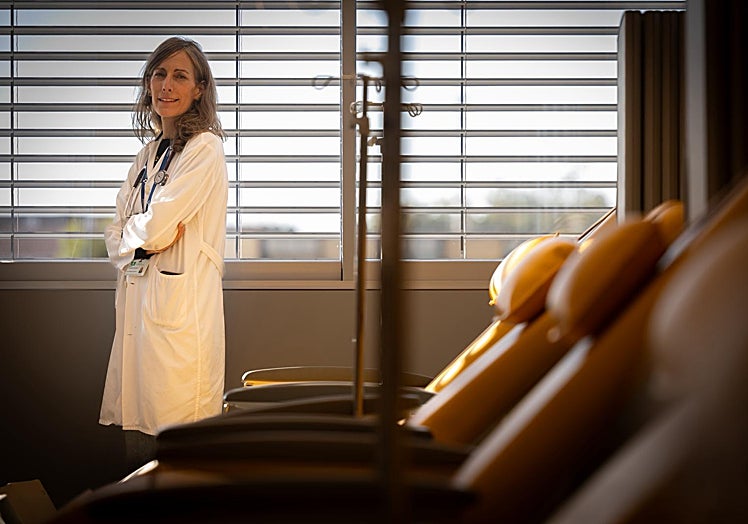
-I know that this is something that generates a lot of interest throughout the country. The Spanish Society of Medical Oncology is interested in offering this kind of therapeutic options for the patient and support tools. There is a project to introduce this issue of physical exercise. It is true that it is, in a way, slowly developing. Our centre is a pioneer, not only with Mueve Montañas, but also because of the Rehabilitation Service. Our hospital has been offering for the last two years, a physical exercise programme led by a physiotherapist specialised in this area. This is offered not only after diagnosis, but also before surgery, in the immediate postoperative period and after surgery. They offer this physical exercise with all its benefits, very much aimed, for example, at improving and preventing the appearance of lymphedema, which is a sequelae of breast cancer surgical and radiotherapy treatment that affects quality of life.
-What habits are most difficult to change in Malaga and Andalucía?
-The most difficult habits to change, in terms of health habits, are related to the issue of movement. Very few of the women we see in the clinic are used to walking to get around. They usually come by car, they go by car. So when they are told 'use public transport and get off two stops earlier, or get off the bus three stops earlier, or simply walk-you can get somewhere in 20 or 25 minutes'-well, maybe it's not justified to take a car, because those 20 minutes are going to add up and that movement is going to add up.The second is a false belief that what we eat is a Mediterranean diet. It's a little bit difficult to change, because we think that the Mediterranean diet is eating meat almost every day, plus a little sweet or any kind of sugary thing. The Mediterranean diet is not that. Most of the bulk is going to be vegetables, pulses, and fruit, with meat occasionally-twice a week-and fish three or four times a week.
"I would like the future to be accompanied by integrative oncology, by units that incorporate these elements so that the oncological process can return women to their lives in an optimal state of health".
-How do you imagine breast cancer oncology in ten years' time?
-I would like to think that in 10 years' time we will continue to de-escalate treatments, that is, we will be treating women with a low risk of local relapse and distant relapse with less aggressive therapies, that we will be de-escalating systemic therapies, chemotherapy, surgery or radiotherapy and that at the same time we will have more tools to identify those high-risk women who will benefit from intensifying this therapy, So, scientific advances and all the lines of research are going to allow us to identify those where we have to go all out and also all those where we do not need to be aggressive, so they are going to benefit from the fact that there is no overtreatment. And I would love this future to be accompanied by integrative oncology, by units that incorporate these elements so that the oncological process can return women to their lives in an optimal state of health and, above all, having become aware of the past process and with a powerful learning process.
![[]](http://static.vocstatic.com/voc26/latest/assets/images/favicon/surinenglish/apple-touch-icon-57x57.png)