
Green fingers
Gardening in southern Spain: Porcupine flower
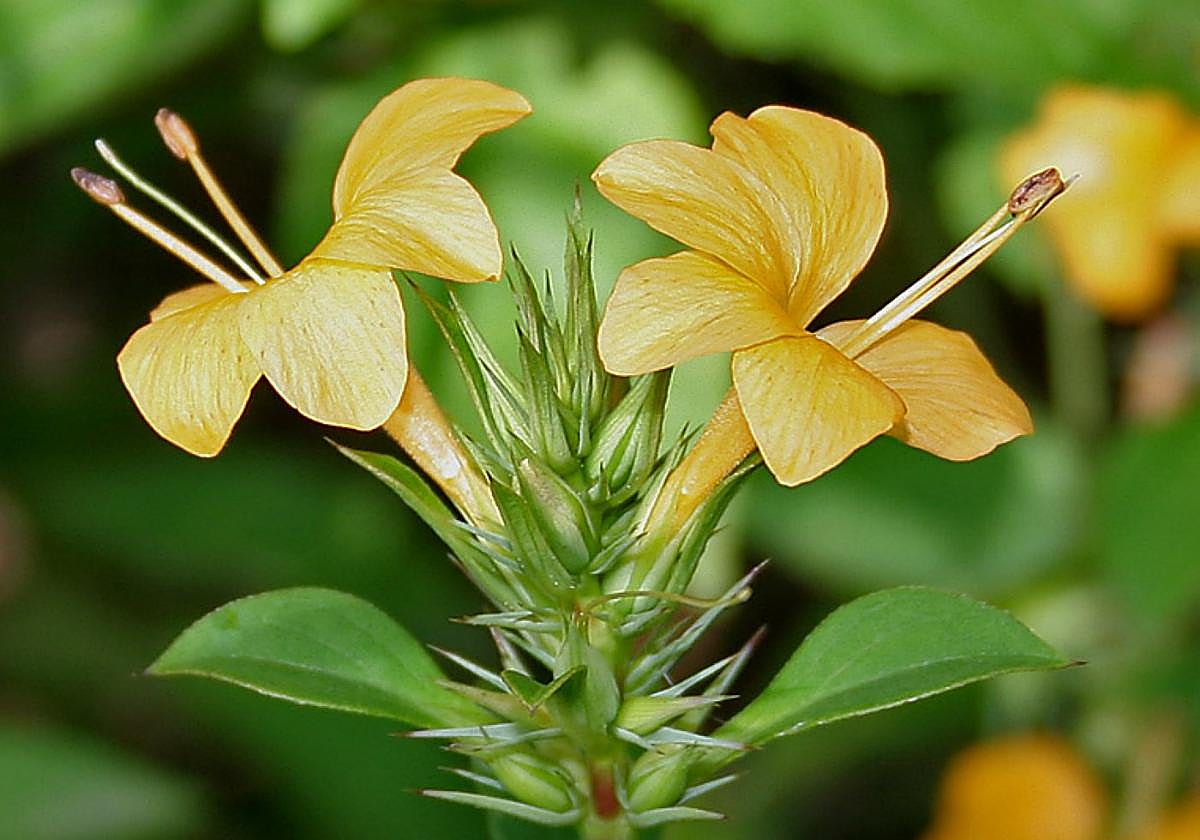
Barleria prionitis is a prickly, evergreen shrub native to tropical regions of East Africa and Asia
Denise Bush
Malaga
Barleria prionitis, commonly called the porcupine flower or Philippine violet, is a prickly, evergreen shrub native to tropical regions of East Africa and Asia.
It is a member of the Acanthaceae family and has yellow or orange flowers and dark-green, glossy leaves with three to five spines at the base of each. It is drought resistant once established although it will benefit from deep watering during the hottest months. The porcupine flower can be grown in a border, a container or as ground cover. It is a useful ground cover plant and can be used for xeriscaping and for stabilising soil on slopes.
The flower period starts early in spring but may be even earlier in mild winters and can be prolonged throughout the summer by the clipping back of the dead blooms. This will also help the bush to keep a compact shape.
It grows fast and will soon reach a metre to a metre-and-a-half high. Barleria needs a location with plenty of sunlight and a rich, free-draining soil.
Propagation is by stem cuttings in summer or by seed. The leaves and roots of Barleria prionitis have been used in traditional medicine to treat rheumatism, relieve constipation, toothache and headaches, liver disease, jaundice and urinary infections. The leaves were used as a poultice to help heal wounds and extracts of the plant are still used in cosmetics and hair products.
![[]](http://static.vocstatic.com/voc26/latest/assets/images/favicon/surinenglish/apple-touch-icon-57x57.png)