
Green fingers
Gardening in southern Spain: Lasiosiphon rubescens
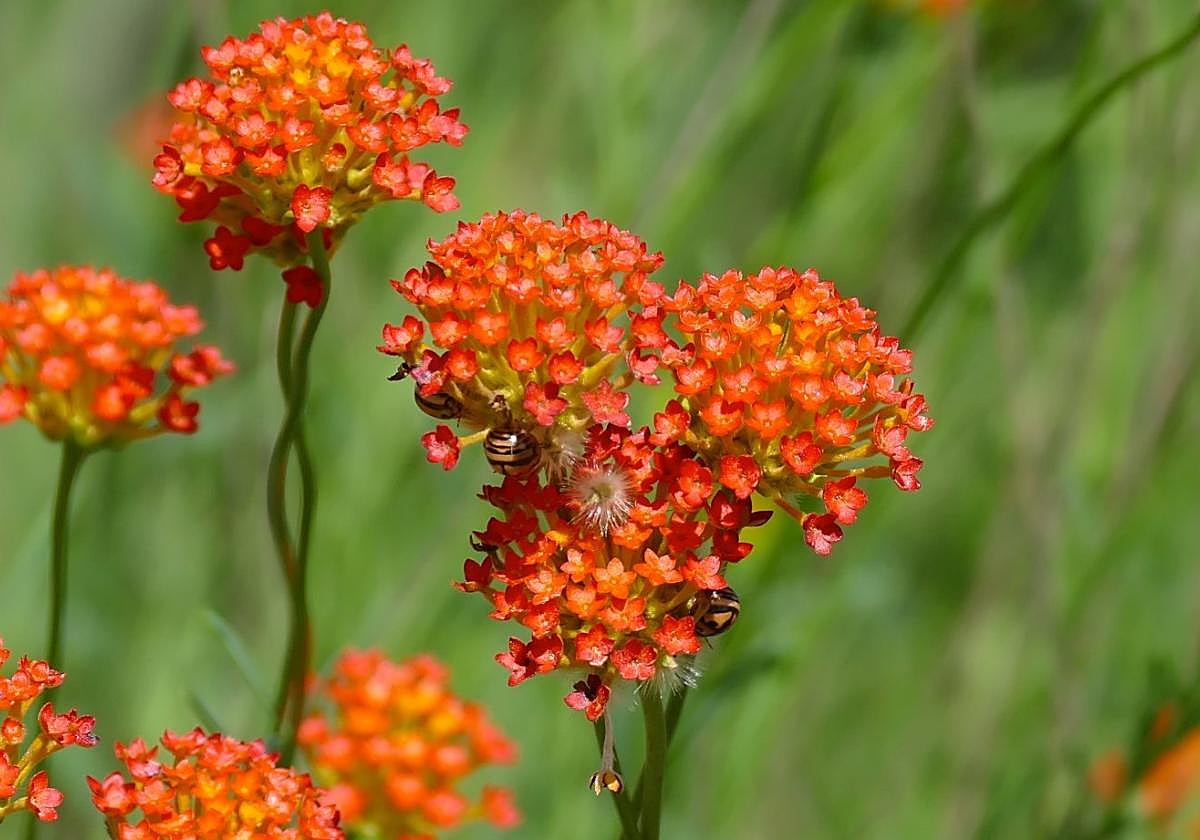
Native to southern Africa - where it grows in open bushland, rocky areas, and dry grasslands - it is a tough plant with clusters of tube-shaped flowers
Denise Bush
Malaga
Native to southern Africa, where it grows in open bushland, rocky areas, and dry grasslands, Lasiosiphon rubescens is a tough plant with clusters of tube-shaped flowers. The flowering period is mainly late winter and spring but it may flower sporadically throughout the year.
It is classed as a shrub, recognisable by its slender branches and narrow, often leathery leaves. These leaves are arranged alternately along the stems and are adapted to reduce water loss,
It is a member of the Thymelaeaceae family and is adapted to dry or nutrient-poor environments and, like many members of that family, Lasiosiphon rubescens produces flowers that lack true petals; instead, the showy part of the flower is formed by the calyx which attracts pollinating insects looking for nectar.
After flowering, small fruits form, each carrying seeds that drop nearby and help the plant spread naturally.
It is an ideal garden plant for dry or Mediterranean-style gardens, because it's tough and doesn't need much care. Trimming occasionally will help to keep it compact and promote new growth.
It was previously known as Gnidia rubescens but was moved to the Lasiosiphon genus a few years ago so it may be listed under either name in catalogues and garden centres.
All parts of the plant are highly toxic although it does have a history of medical use in traditional African medicine.
![[]](http://static.vocstatic.com/voc26/latest/assets/images/favicon/surinenglish/apple-touch-icon-57x57.png)