
International Women's Day
From a foreign girl to the most advanced Andalusian woman
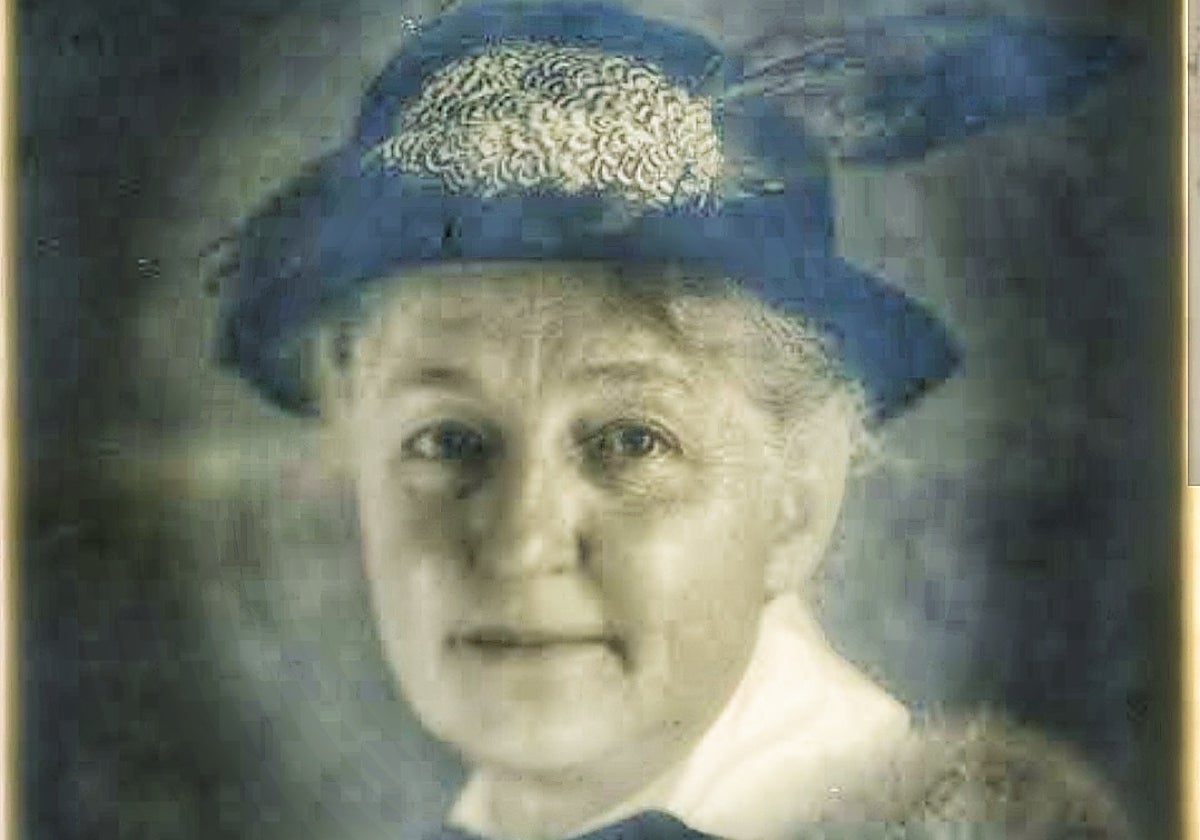
In anticipation of 8 March, it is worth remembering Berta Wilhelmi, a successful businesswoman, great philanthropist, and a pioneer of feminism
Alekk M. Saanders
Granada
As a woman free from prejudice, which was already a bold move in conservative Andalucia at the end of the 19th century, Berta fought for women's rights. Her foreign background helped her form clear ideas about equality and a desire to change the patriarchal reality of the southern region. Moreover, she devoted herself to helping all those who were particularly in need, becoming an example of altruism and generosity. After falling into obscurity, she is now considered an exceptional figure in Spain during the transition from the 19th to the 20th century.
New life in Andalucia
Berta Wilhelmi Heinrich was born in Germany in 1858, but moved to Granada with her family at the age of 12. The case is that a fire destroyed the family paper factory in Heilbronn, and her father moved to Andalucia to start a similar business. A suitable location for the factory was found in Pinos Genil, where the family eventually settled. Not much is known about her teenage years but it is documented that at the age of 19 Berta married one of the richest men from a noble family in Granada. Fernando Davila Ponce de Leon y Zea was twice her age, which was not extraordinary at the time. Ordinary to be... was the aim. With the help of the local businessman, Berta was supposed to become a typical Spanish woman of that time, and... yes, she became the mother of two children, but no, she did not want to be tied down to household chores.
Berta’s entrepreneurial spirit helped Berta Wilhelmi enter the world of beekeeping. Soon, the young woman was accepted into the Economic Society of Friends of the Country. In 1888, at a provincial exhibition of industrial, agricultural, and craft products, Berta Wilhelmi participated with her honey in a beekeeping demonstration. She is considered a pioneer of the honey industry in Andalucia, as she was the first to introduce modern beekeeping methods with help of imported hives with movable frames. Owning several apiaries in the province of Granada, she not only successfully imported honey to Central Europe, but also contributed to the promotion of beekeeping in the region. Incidentally, one of her estates in Lanjarón now houses a museum dedicated not only to bees, but also to Berta Wilhelmi.
Out of a sense of justice
When Berta Wilhelmi became a widow, she invested a fortune in projects aimed primarily at helping the most vulnerable - children and women. It is believed, she didn’t call it charity, which was quite common among wealthy local women, because she did it out of a sense of justice.
Berta Wilhelmi became deeply involved in education. Knowing about the practice of organizing summer camps in Germany and Switzerland, she organized one in Almuñecar for the most disadvantaged. However, before teaching the children to read and write, it was necessary to wash and feed them, as poverty prevented them from consuming enough food and using basic hygiene products. It was a kind of rehabilitation or, rather, recovery center. Children came back to their families much healthier. Incidentally, all the activities and results of these colonies were compiled in a report that received an award in 1890. Emphasizing the importance of fresh air in rural areas or near the beach sounded like know-how, and the presentation of an alternative approach to education, more personalized than in traditional schools, was perceived as something revolutionary.

Less talk, more action
In 1892, Berta Wilhelmi presented a report at the Spanish-Portuguese Congress on Education, in which she raised the issue of women's right to equality in any profession. Her position at the time was so progressive that it caused great controversy and rejection even from those who considered themselves supporters of Spanish feminism. It is worth noting that Berta was not just a theorist or a vocal activist on the streets. As a businesswoman, she could afford to put ideas of gender equality into practice. Doña Wilhelmi provided women with work and responsibility. For example, she employed both men and women at her paper factory, and if a man fell ill or died, his widow had the first right to take his place. Berta believed that “women have the same rights as men to develop all their abilities for their own good and the good of all humanity.”
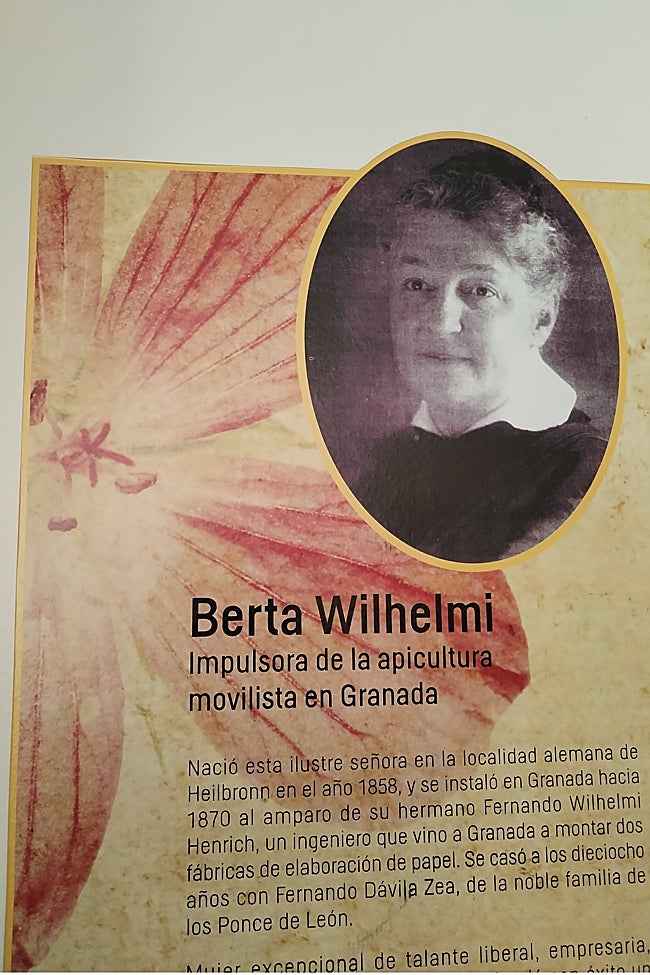
Her position at the time was so progressive that it caused great controversy and rejection even from those who considered themselves supporters of Spanish feminism
Furthermore, in 1912-13, Berta Wilhelmi founded the first co-educational public school in Pinos Genil and the first library in the village, which contained about 600 volumes donated by enlightened families from Granada.
Berta Wilhelmi died in 1934. Throughout her life, the German-born woman played a significant role in the public life of Granada, and her activities were of national importance. However, despite her enormous charitable and feminist work, Berta Wilhelmi was forgotten and her remains ended up in the public ossuary of Granada's civil cemetery. During the Franco regime that legally positioned women as subordinate to men, her name was far fom being in favour. Today, she is recognized as one of the most progressive women of Andalucia and Spain of her time, and a small street in the Zaidín neighborhood of Granada has been named in her honour.
![[]](http://static.vocstatic.com/voc26/latest/assets/images/favicon/surinenglish/apple-touch-icon-57x57.png)