
History
A disputed island named after a Spanish explorer
The Chagos Archipelago and Diego Garcia Island have been in the news this January, with references to the United Kingdom, the United States, and Mauritius. However, few are aware of its historical Andalusian connection
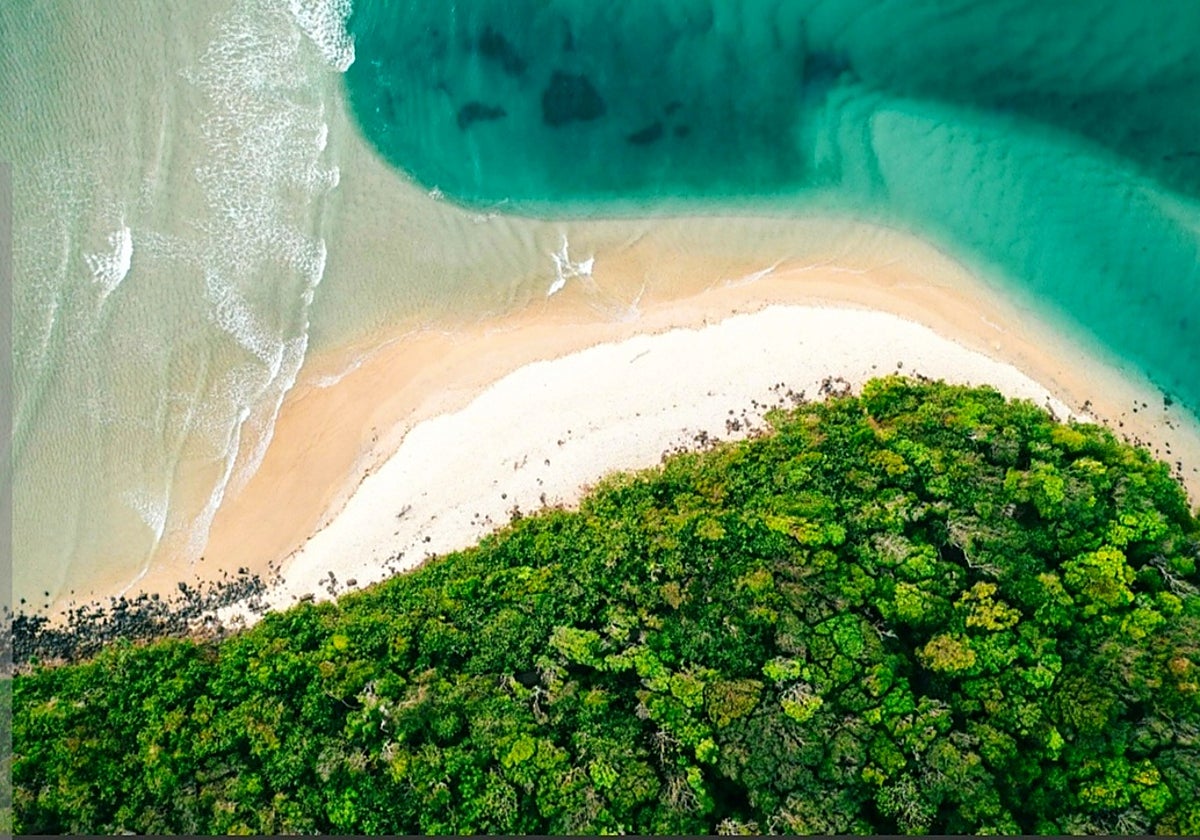
Alekk M. Saanders
Huelva
The first European to discover Diego Garcia Island in the Indian Ocean is considered to be Pedro Mascarenhas, a Portuguese explorer and colonial administrator. However, the largest island in the Chagos Archipelago is not named after him.
Portuguese historians claim that the island's name comes from a Spanish explorer who made numerous voyages across the Indian Ocean under the Portuguese flag. So who was Diego García?
Most likely, he was an Andalusian explorer who travelled in the service of both the Spanish and Portuguese crowns. His biography confuses modern historians, as many aspects of Diego García's life remain shrouded in the mists of time. To begin with, the exact date and place of his birth are unknown, and even his nationality is unclear. Some say he was born in 1471 in Lisbon and others in 1496 in Moguer, in today’s Huelva province. (The latter seems most likely). What is certain is that Diego García was a resident of Moguer and sailed several times in the service of the Spanish crown.
Diego Garcia's biography confuses modern historians, as many aspects of his life remain shrouded in the mists of time
On one of his first voyages for Spain, he was captain of a ship in the expedition of Díaz de Solís to Río de la Plata, which sailed from the Andalusian city of Sanlúcar de Barrameda in October 1515. He was one of those who returned to Spain a year later with news of large reserves of silver that, according to the indigenous people, could be found in the Sierra de la Plata in South America.
It is also known that in 1520 Diego García, together with Ferdinand Magellan and Juan Sebastián Elcano, set out on a voyage around the world. Diego García was one of the eighteen survivors who returned to Spain in 1522 after finding the western route to the rich Molucca Islands.
Later, Diego García made another voyage to the Moluccas, during which he sailed past the island of Guam, entered the Indian Ocean, and discovered a fertile island about 400 miles from Mauritius, which has since been named after him.
It has been proven that Diego García made his last voyages in the service of the Portuguese crown. This fact explains the lack of information about different periods of his life in Spanish archives. It is not surprising either that he is often presented as a 16th-century Portuguese navigator.
As for Portuguese sources, they confirm that Diego García de Moguer was probably the captain of Pedro Mascarenhas's fleet, which is believed to have “rediscovered” or secured the island in 1544. It is worth noting that alternative theories suggest that the island was named after the Portuguese governor Garcia de Noronha or is a distortion of the phrase Deo Gracias (Thank God).
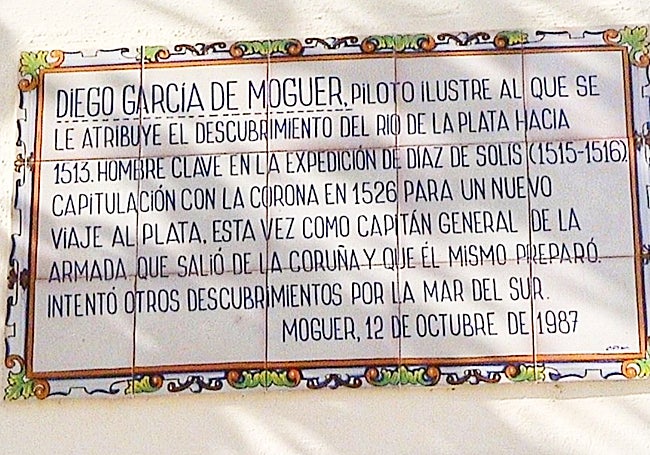
Neither is there accurate information about Diego García's death. One version suggests that he died at sea on his return from his 1544 voyage through the Chagos Islands.
Despite other versions and legends, the Andalusian town of Moguer acknowledges that Diego Garcia Island was named after one of its distinguished sons, and on 12 October 1987, it dedicated a street to the navigator, whose name has been associated for centuries with a little-known island in the Indian Ocean.
![[]](http://static.vocstatic.com/voc26/latest/assets/images/favicon/surinenglish/apple-touch-icon-57x57.png)