Horticulture in space
NASA are investigating ways to grow plants without using soil, a method that has been used for several years by commercial growers
Denise Bush
Viernes, 15 de septiembre 2017, 11:54
Ever heard of hydroponic, aeroponic or fogponic systems for cultivating plants? They are all procedures for growing plant material whether from cuttings or seeds, without using soil.
The growing media are water, air and nutrients. These high tech systems have been around for a number of years but have mainly been used by commercial growers. NASA has been researching this technique for food production on the moon, Mars and beyond.
Although I dont imagine many readers will consider growing next years crops of tomatoes and peppers this way, the aeroponic system could be a useful tool for keen gardeners to increase the success rate of rooting cuttings.
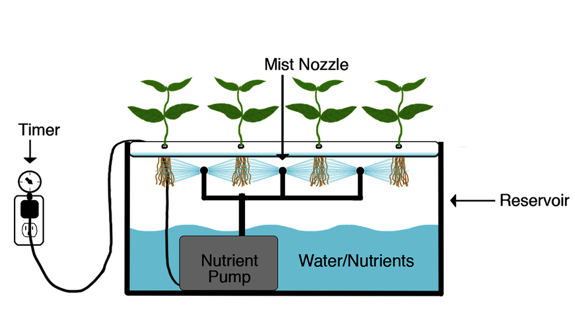
The basic system consists of a reservoir and submerged pump, a misting system (it looks a bit like the element in a kettle with holes for nozzles) and the lid which has foam discs with slots for the cuttings to be pushed through.
Propagating from berries
-
GArdening Hints for September
-
Collect the berries when they are ripe (when they squish easily between finger and thumb). Mash them gently in a sieve or on paper towels to remove the flesh and then rinse in cold water. Leave the seeds to dry for a few days on more paper towels. Seed viability usually decreases in storage but sometimes it is better to delay sowing until the spring to give the seedlings a better chance of survival. In this case place the dry seeds in labelled packets and store in an airtight container in the fridge. Check the container every month to make sure that no moisture has crept in. The little bags of silica gel that come inside the packaging of some merchandise such as electronic goods, are perfect for keeping the seeds dry.
Cuttings should be about 10cm long with all the leaves removed from the lower 4 to 5cm. This bare portion is pushed through the foam and left dangling. When water is introduced and the pump switched on, the cuttings are misted from underneath; they dont actually sit in the water (unlike hydroponics where aerated water enriched with nutrients flows through the roots).
The cuttings should be placed in a position where they will get lots of natural light but not direct sunlight. Once fine hair roots start to form, a nutrient will need to be introduced into the reservoir, the water should be changed at this point. The nutrient can be bought online or a bit of guess work and ordinary plant fertiliser could be a cheaper option.
Cuttings will then develop secondary roots and be ready to plant out, sometimes in as little as 11 days. Fogponics is a very similar system which produces very fine water droplets.
The nutrient dosage will depend on the size of the reservoir and a guide should be included with the system. Liquid nutrients are obviously much easier to add than dried forms (which may clog up the jets).
The nutrients needed for healthy root growth are primarily nitrogen, potassium and phosphorous, with secondary nutrients calcium, magnesium, and micro nutrients iron, zinc, molybendum, manganese, boron, cobalt and chlorine for further development.