
Environment
Minister praises seagrass restoration efforts at Nautilus Project nursery in Gibraltar
The initiative aims to revive the Rock’s lost Posidonia meadows and boost marine biodiversity
SUR in English
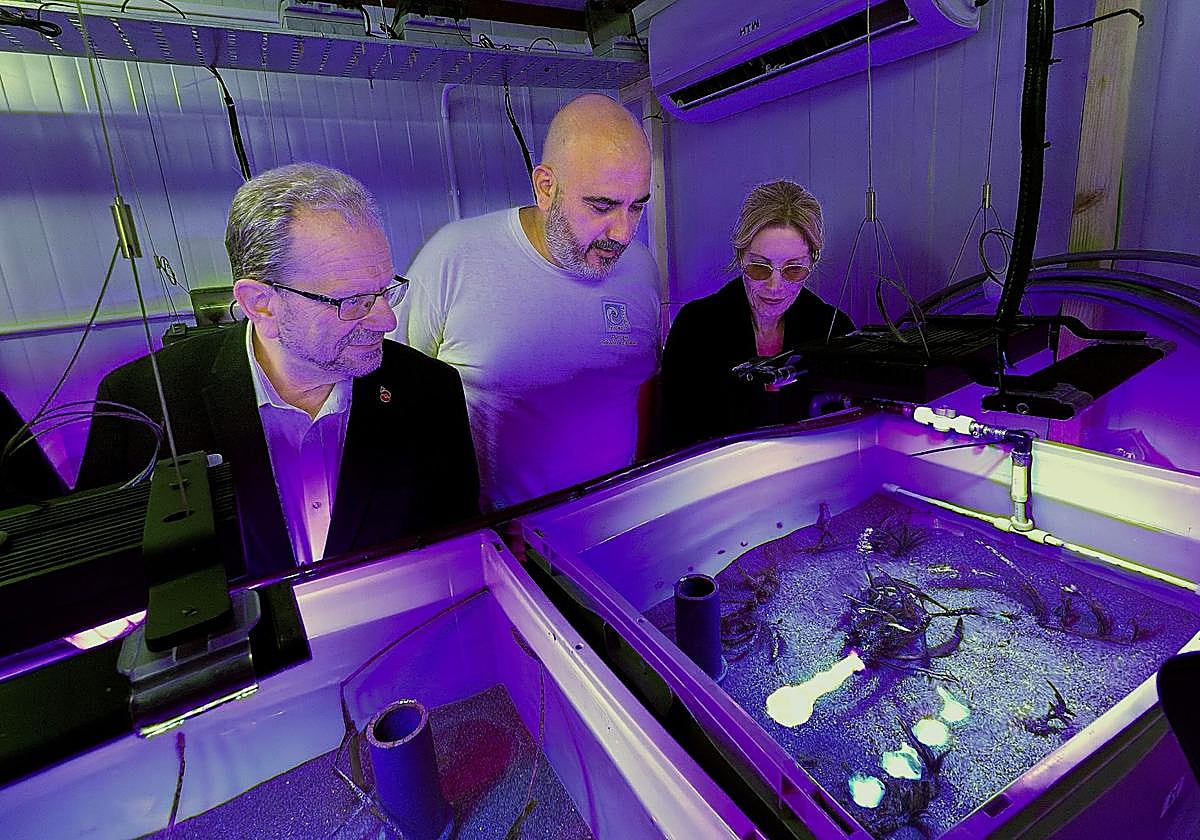
Minister for the environment, Dr John Cortes, last week visited the Nautilus Project’s new seagrass nursery at the North Mole - a pioneering initiative dedicated to restoring Gibraltar’s once-flourishing underwater meadows.
The facility, established by Nautilus Project volunteers, features sea water tanks equipped with a sophisticated circulation and temperature control system. Inside, cuttings of Posidonia oceanica - a vital Mediterranean seagrass - have been planted in sandy substrates. The specimens were recently sourced from Malta, marking a major milestone in the project’s early development.
Funded by Peninsula and supported through a grant from the UK’s Darwin Plus Fund, the project seeks to reintroduce and expand Gibraltar’s seagrass meadows, which are essential to the marine ecosystem. These meadows provide a rich habitat for marine life, serve as nurseries for numerous species, and play a crucial role in carbon absorption.
Marine Biologist Lewis Stagnetto of the Nautilus Project described the initiative as “a living reminder that with science, community, and perseverance, we can reverse damage and revive the natural balance of our marine environment.”
Minister Cortes praised the project’s potential impact, stating: “This is a really exciting project with tremendously positive possibilities in relation to our marine biodiversity and the absorption of carbon dioxide in our waters. Nautilus and their sponsors are to be congratulated and will continue to have the full support of my Ministry and of the Department of the Environment and Climate Change.”
Once the seagrass has matured in the tanks and produced seeds, both cuttings and seedlings will be transplanted into Gibraltar’s seabed, marking a significant step toward restoring the Rock’s natural marine heritage.
![[]](http://static.vocstatic.com/voc26/latest/assets/images/favicon/surinenglish/apple-touch-icon-57x57.png)