
Nature
Why is Andalucía's biggest tree with a 302-square-metre crown dying?
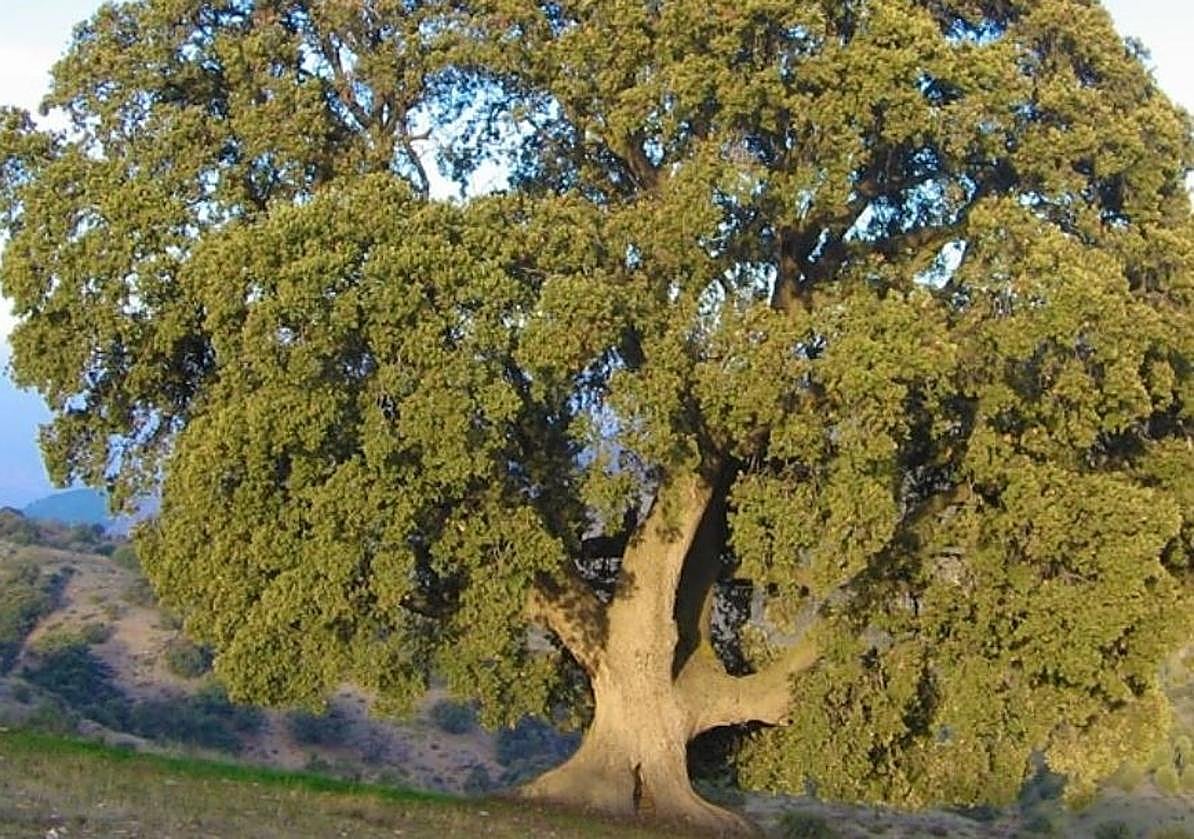
The monumental holm oak is known as 'La Peana' due to its massive trunk base which measures 15 metres and acts as a pedestal
Europa Press
Almeria
The monumental holm oak, known as 'La Peana' ('The Pedestal'), in Serón (Almeria province) is considered the largest tree in the Andalucía region of southern Spain. Unfortunately, the tree has been gradually deteriorating despite a project launched two years ago with the aim of mitigating an almost four-metre-long and eight-centimetre-wide split that runs from the base to one of the main branches. Although it was initially stabilised, the latest revisions have confirmed the crack's further growth.
"It is a tree in an advanced stage of senescence (ageing), which is unstoppable and will, unfortunately, lead to its death. The aim is for that moment to come as late as possible," said sources from the regional ministry of sustainability and the environment.
Since September 2022, the official institution has made almost 20 control and monitoring visits. It was during the last of these inspections that the crack was declared growing in width.
"It is a tree in an advanced stage of senescence, which is unstoppable and will, unfortunately, lead to its death"
In view of these circumstances, the regional ministry has contacted the expert who carried out the first pruning and support work when the crack was detected in 2020. Their role will now be to try and delay the collapse. A new visit is expected to take place in the next few days for a follow-up first-hand assessment.
The regional ministry has stated that "all technically advisable measures" will be taken to "delay" the deterioration of this holm oak declared a natural monument of Andalucía. The tree stands out for its height of 18.5 metres and, above all, for its crown, which reaches almost 302 square metres.
18.5
metres
is the height of the holm oak, although what is more impressive is its crown, which reaches up to 302 square metres
'La Peana' features a very wide cross formed by four main branches that subdivide into a tracery. Its name comes from the massive trunk base, which measures 15 metres and acts as a pedestal. According to experts who have studied it, this is an indicator of hollows within the trunk.
Fungus, weight and weather: origin of the crack
It was in June 2020 when the crack was first noticed. To support the tree, the regional government of Andalucía installed props to hold the branches. In the meantime, experts were asked to determine the origin of the crack, which can be explained by a combination of factors such as fungus, the weight of the branches and the influence of the weather.
Forestry phytosanitary experts determined that the crack had appeared due to several factors, among them some cavities and internal rotting of the trunk and branches caused by xylophagous fungi, which penetrate the tree and proliferate over the years from cracks caused by broken branches due to natural or human causes.
Subsequent work tried to prevent the tree's death. Analyses discovered that a "drastic pruning" had been carried out some 80 years earlier, involving large cuts considered to be the possible cause of the entry of xylophagous fungi.
Its name comes from the massive trunk base, which measures 15 metres and acts as a pedestal
However, analyses of plant samples have not detected the presence of the pathogenic fungi Phytophtora cinnamomi and Pythium spiculum or the bacterium Xylella fastidiosa in the branches that were removed in subsequent interventions.
In addition to this biological factor, the crack was caused by the weight of the tree's large branches, which endured snowfalls and strong winds in the winter of 2019. This would have produced some «extraordinary» stress on the tree.
Rainfall followed by high winds and temperatures the following spring caused drying of the internal structure and shrinkage-expansion of the tissues, resulting in a "transverse collapse, causing splitting or cracking".
The experts' conclusions pointed to the eventual death of the tree, while confirming that certain actions could delay the collapse.
Crown pruning and cabling
Arboriculture company Arbores started a thinning pruning intervention in July 2020. It allowed the reduction of around 30% of the tree's foliage. The aim was to help the tree reduce leverage and wind resistance in the presence of the crack, while also allowing more light to penetrate between its branches. This was intended to encourage internal growth that would shift the tree's centre of gravity and help rebalance it.
Small diameter branches were also removed and, in parallel, cabling was used to counteract tension, prevent the crack from growing and allow the tree to settle.
In 2022, following expert recommendations, a perimeter rope fence with wooden posts was installed to prevent soil compression and ensure the safety of visitors. All this work was carried out with the agreement and collaboration of the owner of the land on which the holm oak stands.
![[]](http://static.vocstatic.com/voc26/latest/assets/images/favicon/surinenglish/apple-touch-icon-57x57.png)