
Tradition
When Santa Claus comes from southern Spain
While many wait for Santa Claus at Christmas, Saint Nicholas (Sinterklaas) has already left Spain and is heading together with Pedrito to children in Europe
Alekk M. Saanders
According to the legend, Dutch character Sinterklaas, one of the sources of the popular Christmas icon of Santa Claus, leaves Spain to visit towns and villages in the Netherlands on 5 December.
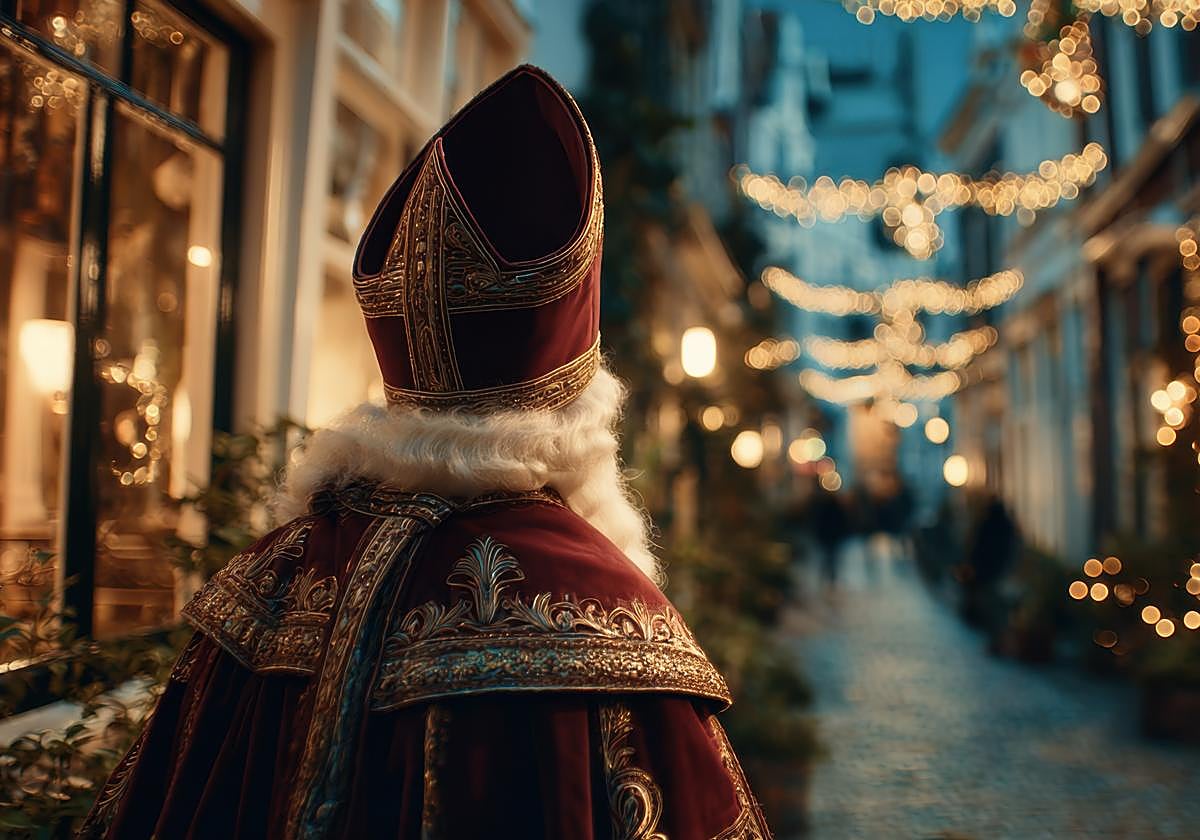
This elderly, dignified and serious man with white hair and a long beard wears a long red cape over a traditional white bishop's alb. This is quite normal, since the origin of Santa Claus goes back to Saint Nicholas of Myra, a 4th-century bishop born in Myra (modern-day Turkey).
He was known for his kind and charitable nature. For example, the bishop is credited with secretly helping a poor neighbour by providing a dowry so that his daughters could get married, which marked the beginning of his fame as a benefactor. It is also said that he helped three girls in serious trouble by throwing three bags of gold down their chimney, which gave rise to the tradition of leaving Christmas presents there.
Saint Nicholas has no direct connection to Spain. However, in the Netherlands it is believed that Sinterklaas originated in Spain. This may be due to the fact that in 1087, half of Saint Nicholas' remains were transferred to the Italian city of Bari (which is why he is also known as Saint Nicholas of Bari), which later became part of the Spanish Kingdom of Naples.
A steamboat from Madrid
"Children in the Netherlands do not look to the northeast, towards Lapland, but to the south, from where Sinterklaas is believed to come each year. Moreover, unlike Santa Claus, Sinterklaas does not arrive on a reindeer sleigh, but on a steamboat from... Madrid. The story of Sinterklaas' ship is broadcast live on Dutch national television, sometimes on the air, and also on the Internet, similar to the Spanish Three Kings parade. Yes, we know it sounds rather strange, since everyone knows that Madrid has no water connection to any of the seas," Dutch couple Twan and Jose, who live in Nerja, told SUR in English.
Upon his arrival, Sinterklaas mounts a white horse named Amerigo and travels around the country accompanied by his assistants, the pages. His faithful Spanish servant is called Pedro el Negro (Black Peter) or, more accurately, Pedrito, who lifts a bag of treats and climbs down the chimneys of houses to put treats in children's shoes. As with the caramel 'rain' organised by the three kings, Sinterklaas' pages scatter spiced biscuits (pepernoten) to children.
Incidentally, after the Dutch provinces rebelled against the Spanish crown, Calvinist preachers tried to abolish the Sinterklaas’ tradition, believing that it contained many pagan elements. The celebrations with Sinterklaas were interrupted only during the Second World War.
From Alicante or... Malaga
Apparently, for those who are well versed in geography, there is another version of Sinterklaas' arrival. Alicante is said to be the port from which the Christmas character begins his journey by steamboat. Why Alicante? Probably because Saint Nicholas is the patron saint of Alicante and a symbol of its identity throughout history. On 6 December 1244, Saint Nicholas Day, the Muslims surrendered the city to Prince Alfonso X the Wise, who ordered a church to be built in honour of the saint and placed the city under his protection. Another reason is related to mandarin oranges, which are traditionally given as gifts in honour of Saint Nicholas. These fruits led to the misconception that he must have been from Spain. As is well known, Alicante is famous for its citrus plantations.
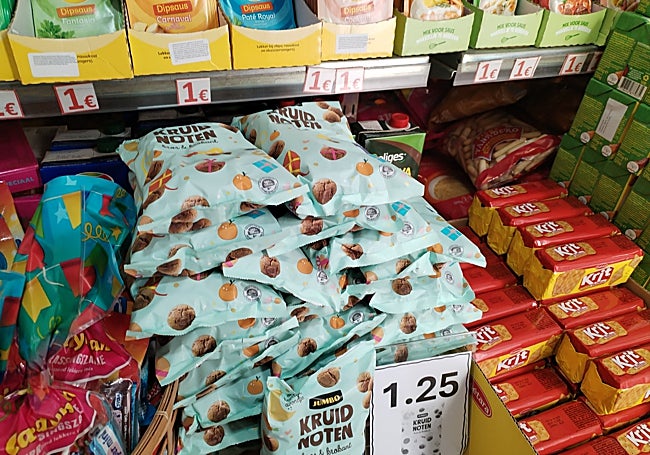
It is worth noting that in Spain, Saint Nicholas of Bari is the patron saint of sailors, and many Spanish churches and traditions are dedicated to him, including churches in Bilbao and La Coruña. Even in Malaga Cathedral, the saint gave his name to the altar and the adjacent door. In addition to the cathedral, many churches in Malaga have images of Saint Nicholas. And considering that the Guadalhorce Valley is one of the largest mandarin plantations, and neighbouring Torremolinos is one of the places particularly loved and populated by the Dutch, Malaga could also proclaim itself as the port from which Sinterklaas sets off to Dutch children with bags of spicy biscuits, which, incidentally, can be purchased in local Dutch shops.
The tradition crossed the Atlantic Ocean with the emigration of Dutch colonists to America , who maintained the celebration of Saint Nicholas in the colony of New Amsterdam. After its conquest by England in the 17th century, the city was renamed New York, and Sinterklaas gradually evolved into Santa Claus. The character later spread to England and France, where he became known as Father Christmas.
![[]](http://static.vocstatic.com/voc26/latest/assets/images/favicon/surinenglish/apple-touch-icon-57x57.png)