
Society
Malaga charities call for resources and more volunteers to keep their work going
SUR's Aula de Cultura, organised with Cervezas Victoria and Fundación Unicaja, gives a platform for the charity campaigns that support the poor, the sick, the homeless and the lonely
Cristina Vallejo
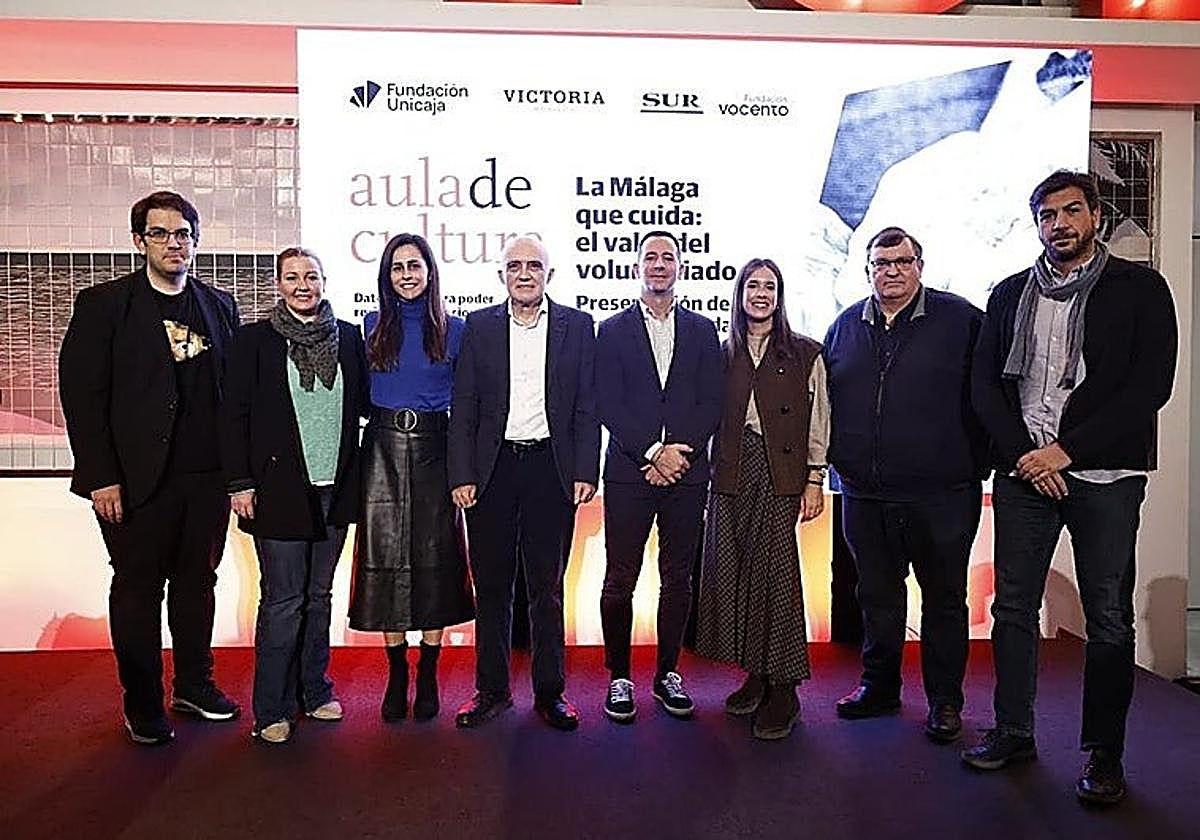
Charities across Malaga province are appealing for more resources and volunteers so they can continue providing vital support to those most in need. At a special session of SUR's Aula de Cultura, organised with the collaboration of Cervezas Victoria and Fundación Unicaja, six organisations took centre stage: Casa Ronald McDonald Málaga, Fundación Harena, Banco de Alimentos de Málaga, Ángeles de la Noche, Cáritas Española and Fundación Unicaja. The event honoured the volunteers who keep the fabric of solidarity alive, coinciding with International Volunteer Day, celebrated on 5 December.
These organisations form a network that reaches the poor, the homeless, the sick and the socially isolated. They take care of people in vulnerable situations by providing: a home for families with hospitalised children; a small army of volunteers accompanying elderly people who live alone; a food bank that also offers job training; organisations feeding society's most invisible; the vast network of parish support run by the Church; and an institution that funds and structures almost every social initiative in the province.
According to SUR news editor and host of the event Alberto Gómez, the work carried out by these organisations and their legion of volunteers "is fundamental to maintaining coexistence and the social fabric of the province". As representatives from the six organisations took turns on stage at the Cervezas Victoria brewery, they painted a picture of Malaga's entrenched social challenges: poverty and its chronic nature, loneliness and homelessness. They also showcased the breadth of their work and appealed for greater involvement from society at large, to reach where public administrations cannot, offering immediate, hands-on assistance in the here and now. The message was clear: they need more volunteers and more resources.
Political leaders were not spared critique. "They give us a lot of affection," one spokesperson said, hinting that affection alone is hardly enough. Another questioned whether the public funding allocated to the third sector rises in line with inflation.
Casa Ronald McDonald: 'When a child is diagnosed with a serious illness, the whole family becomes ill'
Casa Ronald McDonald has nearly 400 houses worldwide providing shelter for families with hospitalised children or children undergoing complex treatments. One of those homes is in Malaga city, next to Hospital Materno Infantil. The 1,700-square-metre house has 14 rooms to accommodate families going through the hardest moments of their lives.
"The house is a home away from home," Casa Ronald McDonald manager Belén Collantes said. "When a child is diagnosed with a serious illness, the whole family becomes ill. Many have to pack their bags, travel kilometres, leave their jobs and their homes. They arrive in shock." Proximity to the hospital allows families to rest after long days by their child's side. Volunteers also organise activities for parents and children to ease the emotional burden.
The home survives on donations. "It has all the needs of a hotel," Collantes said, appealing for support from individuals and companies. Contributions can be as little as one euro a month and material donations, such as mattresses or paint for the house, are also essential.
Cáritas: 'We think economic growth alone improves social conditions - it doesn't'
Cáritas works with rough sleepers, people with HIV, the elderly, jobseekers, migrants and ex-prisoners, "wherever there is a person in need". Director of Cáritas Malaga José Miguel Santos highlighted the importance of creating spaces for understanding and face-to-face contact: "Meeting people changes everything."
He warned against approaching beneficiaries with a patronising mindset: "We're not here to provide people with autonomy - they already have it. They have simply faced obstacles." He also noted that Cáritas' plan on homelessness, sent to the Spanish Parliament, was developed with input from homeless people themselves. "They must participate because they know more," he said.
Santos highlighted the persistence of structural poverty: "We think economic growth alone improves social conditions, but severe exclusion and poverty indicators remain the same. In times of prosperity, poverty doesn't fall. If we don't address the structural issues, poverty becomes chronic." Housing, he added, is a key factor pushing families into homelessness.
He questioned whether public funding for NGOs keeps pace with inflation and urged authorities to do more: "There are things we simply aren't tackling."
Fundación Harena: 'We're helping more and more younger people who are alone'
With Christmas approaching, Fundación Harena is campaigning to ensure no elderly person spends the festive season alone. "We're rushing around at a thousand miles an hour and forget the people beside us," volunteer coordinator Susana Serrano said. While the foundation originally supported people over 70, loneliness is now affecting younger age groups, often because their children have moved abroad or because retirement cuts people off from their social networks.
Many older residents cannot even leave their homes due to the lack of lifts in Malaga's buildings. "Sometimes all they need is an arm to hold," Serrano said.
The organisation has 500 active volunteers who accompany more than a thousand older people for at least a year to build trust. This Christmas, volunteers will also act as the 'Three Kings', fulfilling simple gift wishes such as a jumper or a scarf. "Some don't have anyone to buy them a pair of pyjamas," Serrano explained.
Fundación Unicaja: 'We want to humanise projects, not just provide financial support'
Fundación Unicaja is involved in almost every social initiative in the province. One of its priorities is promoting volunteering. "Volunteering is alive, it's something to believe in and strengthen," head of the foundation's volunteering department Manuel Dorado said.
Beyond providing funding, the foundation wants to "humanise" the projects it supports across social, educational, cultural, sporting and environmental fields. "There is no planet B," he stated, highlighting the importance of environmental initiatives.
He encouraged charities to apply for funding through the foundation's open calls: "We're open all year round."
Banco de Alimentos de Málaga: 'One day you're wearing a tie, the next the wheel of life has spun you to the bottom'
Food bank Bancosol has been filling fridges for 27 years, while also helping beneficiaries into work and running educational programmes for children and teenagers about poverty. Its president, Diego Vázquez, described how vulnerability has changed: "Nearly 80% of those we help live otherwise normal lives. Life gives you a blow, you're wearing a tie but it tightens around your neck and the next you're not because the wheel of life has spun you to the bottom."
Bancosol is also working with the provincial authority on the 'Málaga no caduca' ('Malaga doesn't expire') initiative to reduce food waste. Vázquez issued a heartfelt plea: "We need volunteers. Volunteering is something you do to enjoy. You feel useful. It gets into your veins."
He also called for "love, reflection, common sense, less wasted energy, safety, and roads with fewer potholes".
Like others, he noted with irony: "They give us lots of affection. They say we reach where they can't."
Ángeles de la Noche: 'Our users are society's invisible people'
The most sobering testimony came from Ángeles de la Noche. "Of our 300 users, 200 sleep on cardboard. They are the invisible people," spokesperson Adolfo Aldana said. Malaga has a core group of 300 rough sleepers not listed anywhere.
The organisation serves 300 breakfasts and 300 lunches every day, with only two salaried staff - the rest are volunteers. Meals used to be distributed on the street; now they are served indoors to restore dignity. "Breakfast is the most important thing. People aren't themselves until they've had coffee or hot chocolate. Sleeping on cardboard in Malaga's cold must be unbearable," Aldana said.
The charity is the final safety net. "If someone arrives at Puerta Única [municipal shelter] and there's no room, they send them to Ángeles Malagueños. If the Santo Domingo community kitchen can't take them, they send them to us. We are the emergency canteen."
Some of their users actively avoid shelters and resist reintegration. "Someone has to look out for them. They're at the very bottom."
Others eventually get back on their feet. "People come back and tell us, 'I used to come here, now I've got a job.' Some do manage to move on, but very few."
Aldana added that they also need volunteers, sometimes with a "special kind of resilience". Many of their volunteers are Erasmus students.
![[]](http://static.vocstatic.com/voc26/latest/assets/images/favicon/surinenglish/apple-touch-icon-57x57.png)