
Health
Andalusian health service to contact 2,000 women with inconclusive breast cancer screening results
Although further testing will be required, 98% of the cases will be diagnosed as benign, according to the Junta's estimates

Seville
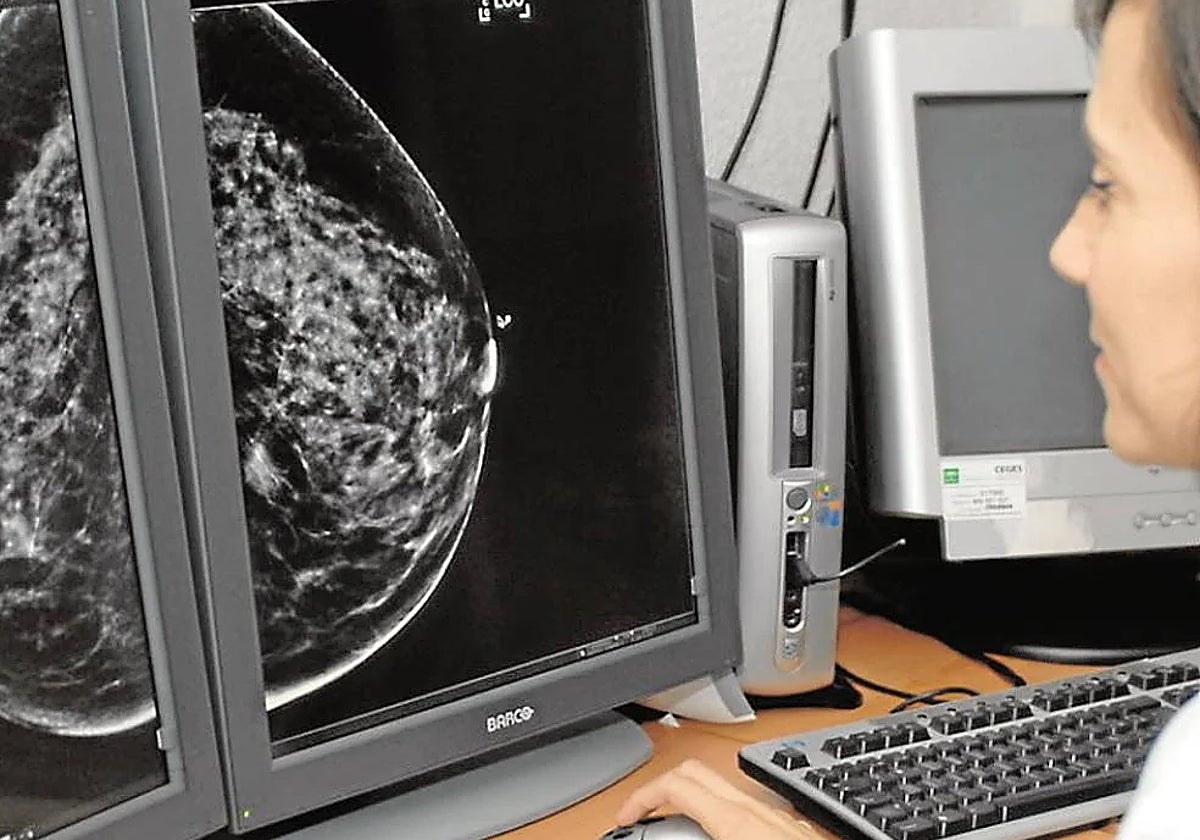
The Andalusian public health service (SAS) has started to call one by one the 2,000 women who have undergone the preventive breast cancer screening programme and whose first results have been inconclusive. In this way, authorities are tackling the failure in communication, which became evident after the announcement that an unspecified number of women who have had inconclusive results in the mammogram have not been contacted. Within a week, all these women will have been notified.
According to the Junta de Andalucía regional government, the aim is to prevent patients from receiving a call for a second appointment or check-up months or even a year after the first test. The cases of the 2,000 women concern unclear lesions that are, in principle, not serious but that require a follow-up under medical supervision.
The announcement was made by president of the Junta Juanma Moreno at the inauguration of a new health centre in Torremolinos on Thursday. At the same time, regional minister of health Rocío Hernández met with the Amama association to inform it that, after a detailed analysis of patients' data pending complementary tests, the SAS has detected a failure to inform the women who must undergo a second test.
Three possible diagnoses
Currently, when a woman undergoes a mammogram as part of the breast cancer screening programme, there are three possible diagnoses: a negative, positive or possibly benign lesion. In the case of negative diagnoses, patients are informed of the result; in the case of positive diagnoses, women are similarly informed and referred for further procedures; in cases where possibly benign lesions are detected, women may not have been informed that their case follows a medically supervised clinical procedure.
The regional minister said that, in the latter cases, up to three radiologists analyse the images and, depending on the risk factors of each patient, they decide how long the patient should wait for the second test. The patients who have not been informed, receive a call several months or a year later, without expecting a second appointment to be set by a radiologist, which generates feelings of unease and anxiety.
"It is something normal and we believe that we can correct it," Hernández stated, adding that they had already started calling the 2,000 women in Andalucía to inform them that a likely benign lesion has been detected, that their case is being monitored by a medical team and that they will receive a call for a new test within the timeframe set by the doctors. According to the SAS, 98% of these cases end up being diagnosed as benign.
Protocol
This call or informative appointment will be included in the protocol of the breast cancer screening programme. The aim is to make women feel safe and provided with all the information they need as they wait for their uncertain case to be definitively diagnosed.
Many of these women have already been informed because there are health centres that have included this call in the routine of the procedure. As it is not obligatory, however, it is not recorded in the clinical history so it is not possible to know how many women know their situation and how many do not. For this reason, the SAS will call all 2,000 women in the programme.
Rocío Hernández has once again extended an apology to all the women who have not been called. "In Andalucía, we have a solid breast screening programme that works well," she stated, adding that the regional ministry of health is committed to continue improving it.
Retroactive measure
Amama president Ángela Claverol said that the regional ministry "does not know who made the decision" not to inform women whose questionable mammograms required a second test (ultrasound). The Junta has informed Amama that it will review all mammograms from the past "three years", in addition to trying to find the party responsible for the error.
"We have felt ignored. We are not here to play politics, but to get it fixed," Claverol stated. The Amama association is considering filing a class action lawsuit. The final decision will depend on the measures taken within a month.
![[]](http://static.vocstatic.com/voc26/latest/assets/images/favicon/surinenglish/apple-touch-icon-57x57.png)