
Nature
Junta activates prevention protocol for wild birds due to risk of avian flu in Spain's Doñana national park
The decision was taken by the regional government in Andalucía following the confirmation of three outbreaks of bird flu in different locations within the protected natural area
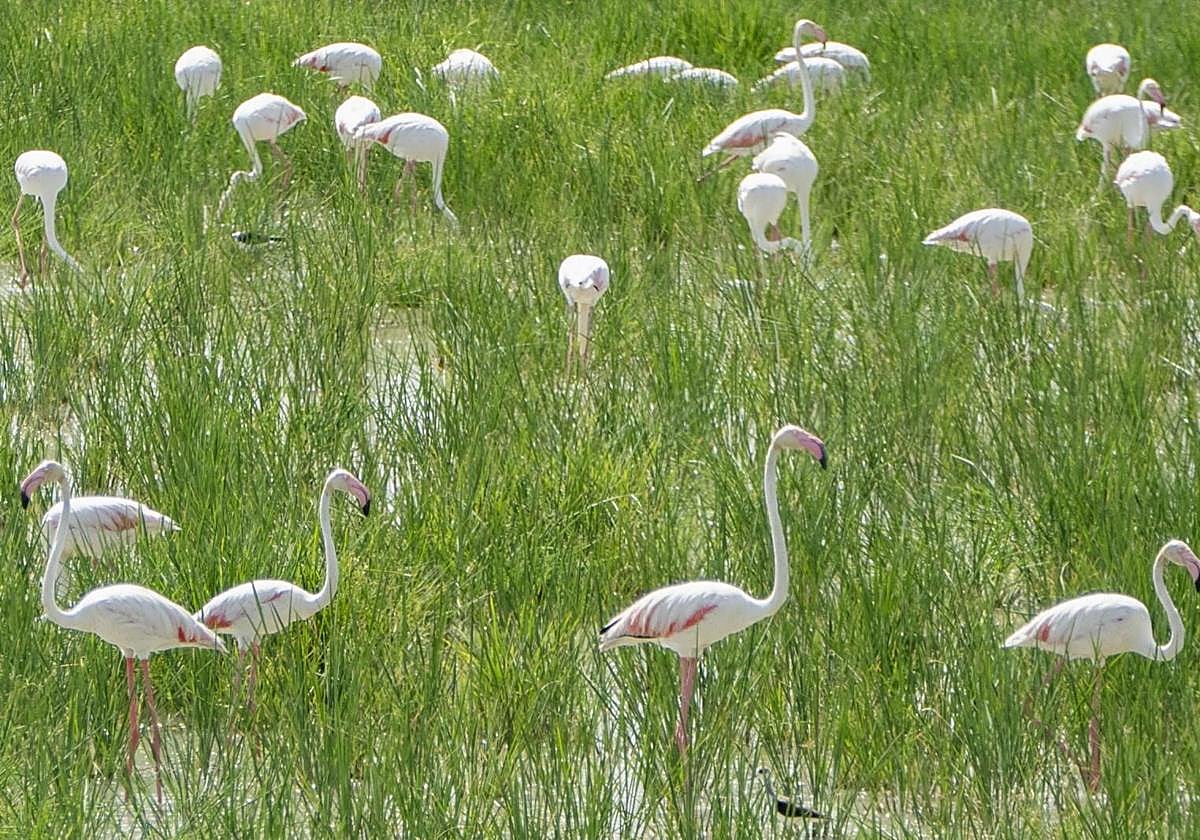
Europa Press
Seville
The Junta de Andalucía's regional ministry for sustainability and the environment has activated the level 2 prevention protocol to combat the risk of avian influenza in wild birds in Spain's Doñana natural park.
This level is available within Andalucía's health emergency protocol of the PVE (an epidemiological surveillance programme for wildlife in the region) to detect the strain of highly pathogenic avian influenza (HPAI) in wild birds. This measure applies to live or dead birds coming from provinces with declared outbreaks.
The decision was made after the confirmation of three outbreaks in different locations within the protected area, declared by the veterinary health alert network of the Ministry of Agriculture, Fisheries and Food in the Spanish government. The decision was announced yesterday by regional environment minister Catalina García while in Jimena (Jaen province).
Altogether, four specimens have tested positive for the HPAI strain, subtype H5N1, in wild birds. One of the outbreaks corresponds to the confirmed finding of a great crested grebe in the municipality of Aznalcázar.
Two more have been added to the protocol in the municipality of Hinojos, in the Caño Cardales area, where a grey heron and a red-crested pochard were found to be infected, along with a gadwall in one of the local lakes.
García stressed that the activation of level 2 of the protocol allows for more surveillance and control in Doñana, increasing preventive measures to reduce risks. She also indicated that the established protocols are being applied for the removal of dead birds and the treatment of their remains, setting up temporary storage points under strict biosecurity conditions until they are collected by authorised companies.
In the case of sick specimens, a distinction is being made between endangered and non-endangered species. The former will be transferred to the endangered species recovery centres (CREA) for monitoring, while health control measures will be applied to the latter in accordance with established protocols.
García stated that this procedure "guarantees a rapid and effective response, ensuring both the conservation of the most vulnerable species and the protection of public health and the ecosystem itself."
In addition, samples are being taken from specimens to confirm or rule out the presence of avian influenza, with the collaboration of CAD (Andalusian centre for the analysis and diagnosis of wildlife). The regional minister specified that the teams working on the ground "have received training and are equipped with individual protection measures (PPE suits), which allows them to act safely and rigorously in all interventions."
Coordination
García also stressed that there is ongoing coordination between all the governing bodies and agencies involved, with a special role for surveillance programmes, veterinary teams and CREA's regulatory coordinators. "This cooperation strengthens the response capacity and allows for better management of the situation," she said.
The regional minister maintained that, in an area the size of Doñana, where large populations of birds in transit are concentrated, it is normal to experience instances of natural mortality. However, she insisted that the Junta de Andalucía "is acting with particular caution and is adopting all the necessary measures to guarantee environmental health."
Finally, she noted that bird flu cases have also been reported in Doñana natural park in previous years. Specifically, three instances were confirmed in wild birds in 2022, with another single case reported in 2023.
Monitoring 25 people, although contagion is "unlikely"
The regional health minister, Rocío Hernández, explained on Monday this week that the Junta is monitoring 25 people who have been in contact with dead birds or samples of birds killed by avian flu, stressing that human infection is "unlikely". Speaking to the media during a visit to La Línea de la Concepción, Rocío Hernández stated that "no case of human transmission has been detected" and that "right now" there are three outbreaks located in Tamarguillo park in Seville, in a poultry farm in Huelva and a bird in Aznalcázar (Seville), in addition to another case in Malaga still under investigation. These are outbreaks, hotspots, as Hernández stated, that "we are monitoring" and all three regional ministries (environment, agriculture and her own health department, which is responsible for "monitoring human health") are working together on this matter. This monitoring measure is specifically for people who have been in contact with infected birds. In this regard, she indicated that if these people are having the symptoms they should watch out for they should report them immediately. This is as well as carrying out PCR tests on anyone who may have been in contact with these dead birds. So far, she declared, "all samples are negative". García then issued a message of reassurance because "it is very unlikely that avian flu will be transmitted to people", also that "no cases have been reported and person-to-person transmission has not been reported either."
![[]](http://static.vocstatic.com/voc26/latest/assets/images/favicon/surinenglish/apple-touch-icon-57x57.png)