
History
Central government in Spain grants over one million euros to locate and exhume Andalucía's Civil War victims
A four year plan for the period 2025-2028 also includes 100,000 euros to erect memorials where human remains that cannot be identified can be deposited
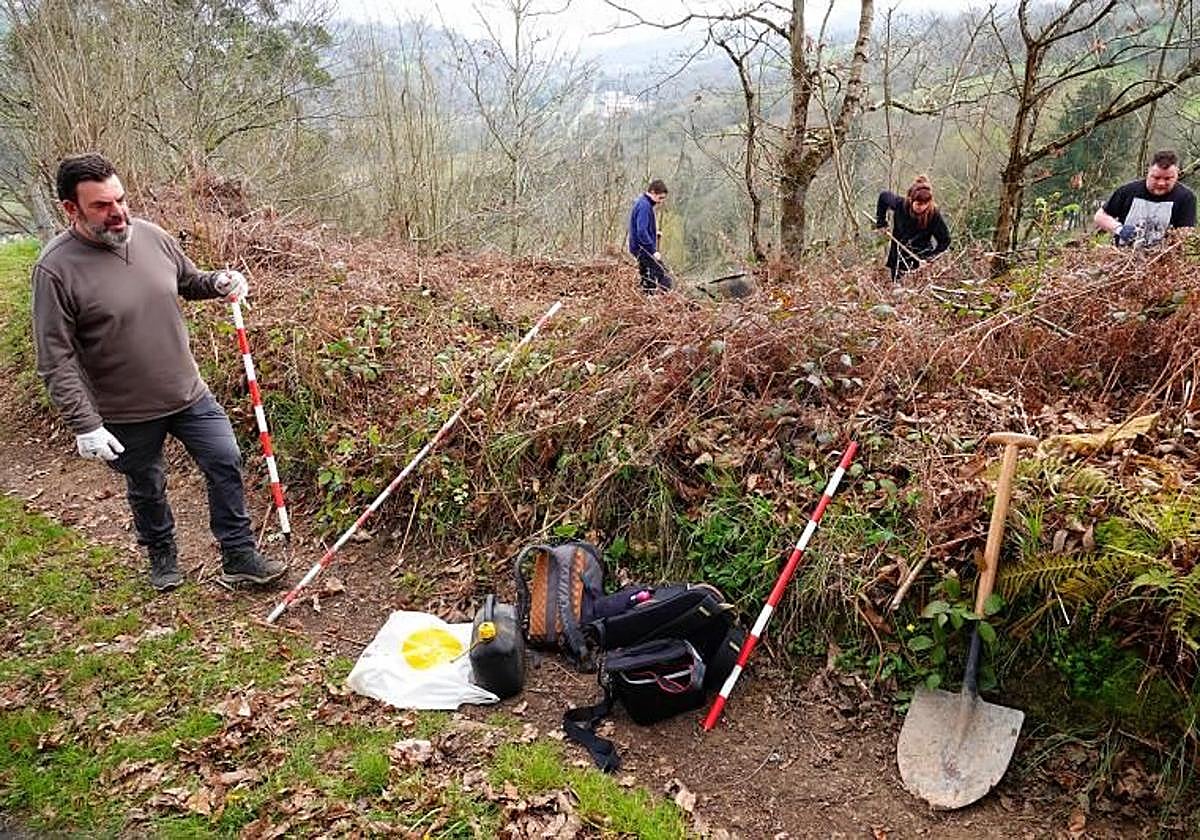
Europa Press
Seville
Spain's central government this week approved September a Royal Decree giving the power to Andalusian provincial authorities and town halls for the search, location, exhumation and identification of the remains of victims of the Spanish Civil War and Franco's dictatorship. The decree comes with a budget of just over one million euros.
The beneficiaries in Andalucía are the provincial authorities (Diputacións) of Jaén and Seville, and Córdoba as well as Huelva, Seville, Jaén, Nerva (Huelva) and Víznar (Granada) town halls. Aid has also been granted to the diputaciones of Cáceres, Badajoz and La Coruña, which, together with the million awarded to the FEMP, make a total of 2.4 million euros in direct subsidies for democratic memory.
In addition to these, the Spanish Federation of Municipalities and Provinces (FEMP) has been granted another million euros for the same purpose, according to a press release from the central government delegation in Andalucía.
This Royal Decree, which was approved in the framework of the II Four-Year Exhumation Plan 2025-2028, also includes 100,000 euros to erect memorials of dignity where human remains that cannot be identified can be deposited.
Some 50,000 euros will go to Nerva (Huelva province), where the remains of 266 victims have been found and a further 50,000 euros for Víznar (Granada province), where the remains of 171 victims have been exhumed.
Assessment of the four-year plans
The Minister of Territorial Policy and Democratic Memory, Ángel Víctor Torres, reviewed the achievements obtained with the two four-year plans that the government put in place from 2019 until today to exhume mass graves throughout the country.
The plans establish that the eradication of graves that are susceptible to exhumation, with the location, exhumation and identification of the victims, the dissemination of the work carried out and the dignification of the victims under the principles of "truth, justice and reparation", be prioritised.
Since 2019 "8,941 exhumations of victims have been carried out throughout Spain" of which 6,000 have been financed directly by the four-year plans, according to the government.
The minister also recalled that, in 2019, a study by the Aranzadi Society put the number of victims' bodies that could be exhumed at that time at 20,000. "With these almost 9,000 exhumations in five years we have come a long way. We are talking about almost half of those that could be exhumed, and this has been thanks to the memorial organisations, public administrations at all levels and the contribution of the Spanish government with the four-year plans," he pointed out.
Among the beneficiary entities are the Diputaciones of Jaén (100,000 euros) and Seville (150,000 euros), as well as the city halls of Seville, Jaén, Huelva and Cordoba, which have "large graves in the process of exhumation or which will begin shortly, as the first state contribution for the exhumation of large graves".
Seville city hall will receive 200,000 euros for the exhumation of the mass grave of the Monument of the San Fernando cemetery, which contains the remains of more than 2,000 people.
Some 200,000 euros have been allocated to Jaén city hall for the exhumation of grave 702 in the cemetery of San Eufrasio, where the remains of some 1,800 people are located, "the result of the executions of the death sentences of the summary war councils".
Huelva city hall will receive 150,000 euros to continue with the exhumation of mass graves in La Soledad cemetery, where the remains of 1,100 people are located, "the result of the executions of death sentences from the summary war councils and the war bands".
Cordoba city hall will receive 150,000 euros to continue with the exhumation of the mass graves in La Salud and San Rafael cemeteries, "in which there may be some 4,500 people, the result of the summary war councils and war bands".
The government has also agreed to allocate 50,000 euros to Nerva and Víznar town halls to "erect memorials of dignity where the bodies that are not identified and therefore, cannot be handed over to their relatives for dignified burial for the time being, can be deposited".
In the exhumation of graves carried out with state funding in both municipalities, 266 victims have been recovered in Nerva and 171 - of which five have already been genetically identified - in Víznar, according to the government.
![[]](http://static.vocstatic.com/voc26/latest/assets/images/favicon/surinenglish/apple-touch-icon-57x57.png)