
Heritage
Serious fire at Cordoba's historic Mezquita was accidentally sparked by an electric sweeper
A forensics report on the recent blaze at the Unesco World Heritage site mosque-cathedral has ruled out that it was started intentionally
Europa Press
Cordoba
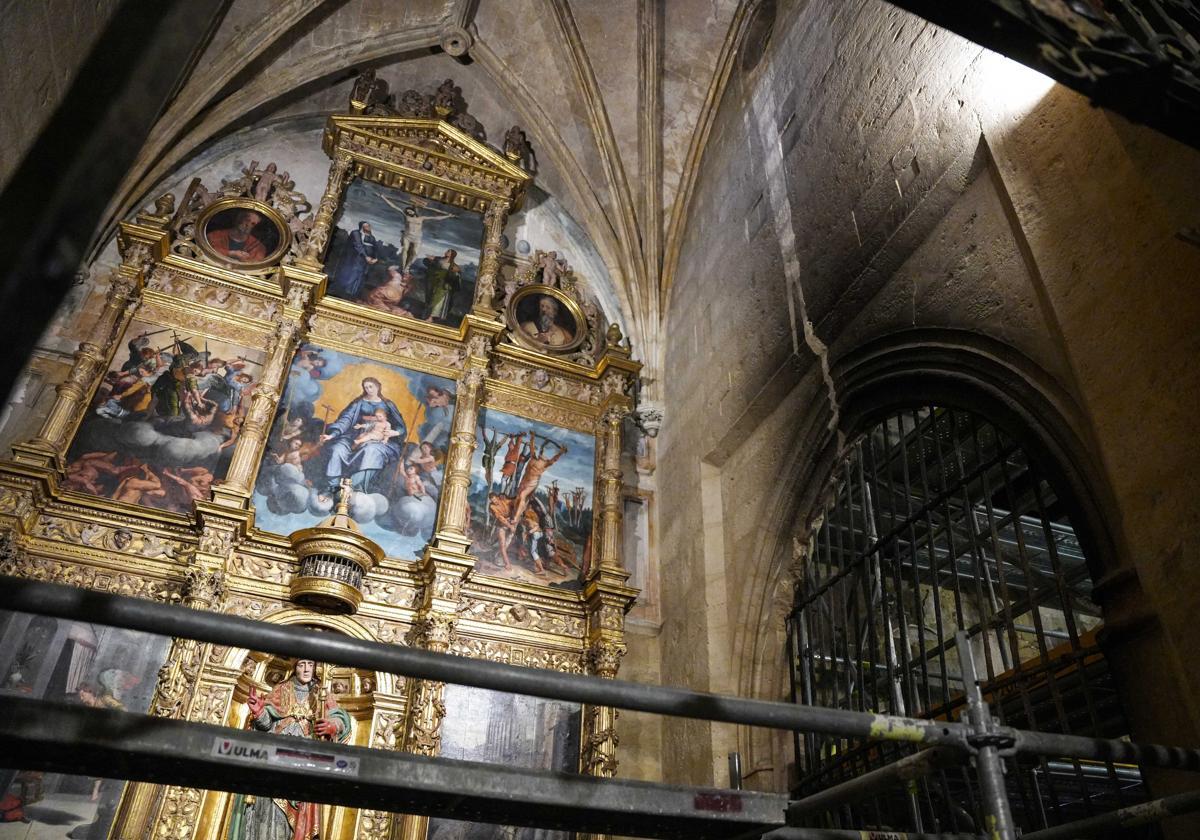
The report from the forensic specialists on the cause of the fire in a chapel of the mosque-cathedral of Cordoba at the beginning of August finds that the fire started accidentally. The focal point was an electric sweeper that was stored in the heritage building.
This was confirmed by investigative sources after the National Police submitted the report on the origin of the fire to the judicial authorities this Wednesday, in this case to Cordoba's Court of Instruction No.2.
After several weeks of work, one of the Mezquita's conservation architects, Gabriel Rebollo, reported a few days ago that the emergency repairs work to ensure the safety of the monumental complex is "more than 90% complete". He also noted that the cathedral's chapter (Cabildo in Spanish) has plans to install a misting system throughout the building, to "act as a fire protection measure".
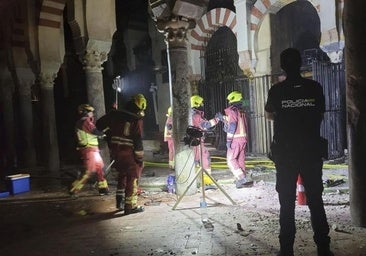
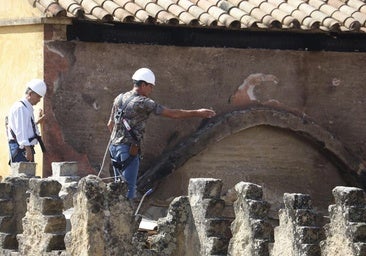
Speaking to Europa Press, Rebollo explained that the damage caused by the 8 August fire was concentrated in three specific areas, including the roof of three chapels and the roof of the vestibule of the Puerta de San Nicolás. According to his estimates, the surface area affected "is around 80 square metres, which represents approximately 1% of the cathedral's monumental complex. The fire was confined to a very small area; the real risk was that it could have spread."
In this regard, he pointed out that some roofs collapsed in the fire, while others have been rendered "unusable". However, he stressed that, "as luck would have it", the two most valuable chapels of the mosque-cathedral - the chapel of St Nicholas and the chapel of the Holy Spirit - have stone roofs that acted as a barrier, supporting the weight of the wooden structure that fell onto them. Thanks to this, both chapels "have actually suffered very little damage".
The chapel that suffered "most damage", according to Rebollo, is a third one with a ribbed vault built of reeds that was lacking structural resistance, which caused it to collapse during the fire, leaving the chamber "open to the sky". However, he stressed that the altarpiece in this chapel was, coincidentally, the least affected by the flames and smoke.
He also pointed out one "last bit of damage" recorded in the cathedral, a column that, for the moment, remains propped up to avoid the risk of structural collapse of the building. In addition, the smoke caused several vaults and other areas of the building to turn black, so they are also undergoing restoration.
First phase
This first phase is part of the emergency project aimed at ensuring the safety of both the building and the people that work there and visit it. According to Rebollo, "a very high proportion of the project has been completed, more than 90% of it is safe."
On the other hand, the restoration plans and projects are still pending, which will make it possible to assess and, if necessary, repair other areas of the cathedral affected by the fire. "What has been lost are roofs that can easily be rebuilt, because they were installed about six years ago and we are going to rebuild them with some technical changes, while in the interior areas we are going to restore the damage to the chapels," said Rebollo.
As for safety and security measures, Rebollo stressed that "one of the most effective aspects has been the protocols" previously established, which allowed for rapid and collaborative action.
He referred to the misting system that is planned to be installed throughout the building in the coming years. This system, which was also used at Notre Dame as a "fire protection measure", "although expensive, is very safe".
Contingency fund
Meanwhile, the cathedral's leadership, the chapter, has expressed its deep gratitude for "all the initiatives coming from institutions, from any government level" and also "from private initiatives", as a show of "solidarity and support" following the fire. However, the chapter has clarified that, in order to restore the area affected by the flames, it does have its own "contingency fund".
In statements to Europa Press, the chapter spokesperson, José Juan Jiménez Güeto, stated that the chapter is "tremendously grateful" after the regional minister for culture, Patricia del Pozo, announced that the emergency intervention plan for the area of the Mezquita affected by the fire will be approved, noting that the restoration project would have an estimated cost of around one million euros.
However, according to Jiménez, "the issue is not a financial one", given that, when it comes to tackling "the action plan" anticipated for the "recovery and restoration" of the fire damage, it turns out that "the chapter has a contingency fund, which it allocates annually", in "anticipation", in case "at some point there should be some kind of disaster, as has happened now", with "a fire", but "it could have been an earthquake" or something else.
As such, he insisted, "in the event of any circumstance that might arise, the chapter always provides for this contingency fund every year". "Therefore, the financial issue is not going to be a problem", and he asserted that "the chapter can afford the restoration".
However, as he stressed, "it would also be very important for this initiative if all the governing bodies" were to "speed up all deadlines and permits so that, as soon as possible, all the interventions set out in this action plan can be undertaken", helping the recovery and restoration of the area affected by the fire, "and that would be the most important thing".
Unesco's assessment
Meanwhile, the director of the Unesco World Heritage Centre, Lazare Eloundou Assomo, sent a letter to the dean-president of the cathedral chapter, Joaquín Alberto Nieva, in which he conveyed his "most sincere gratitude for the efficient way in which the chapter, together with the local city authorities, managed to quickly and efficiently control the fire that occurred at the mosque-cathedral, a site inscribed on the World Heritage List, on 8 August".
This is stated in a letter signed by the aforementioned Unesco official, dated 20 August and to which Europa Press has had access. In it, Lazare Eloundou highlights, "in particular, the fire prevention protocols that were implemented and applied in a coordinated and timely manner" in response to the fire.
The Unesco representative expressed his appreciation that this "made it possible to avoid the loss of human life or a large-scale fire and damage to this priceless monument of exceptional importance to all humanity".
"As our director-general pointed out in her letter of 14 August to the mayor of Cordoba", José María Bellido, "the foresight shown by ensuring fire preparedness measures and rapid response capacity by the cathedral chapter is exemplary and deserves to be shared with other World Heritage sites exposed to similar risks", stated the letter to the dean.
The director of the Unesco World Heritage Centre concluded his letter by thanking the dean of the cathedral for "his constant collaboration and support in the implementation of the World Heritage Convention".
![[]](http://static.vocstatic.com/voc26/latest/assets/images/favicon/surinenglish/apple-touch-icon-57x57.png)