
Employment
80% of private detectives' cases in Andalucía concern reports of suspected fraudulent sick leave
Demand for these professionals, who are soon to have their own association in the region, to monitor workers allegedly on sick leave has grown by 20% in one year

Rafael Aguilar
Sevilla
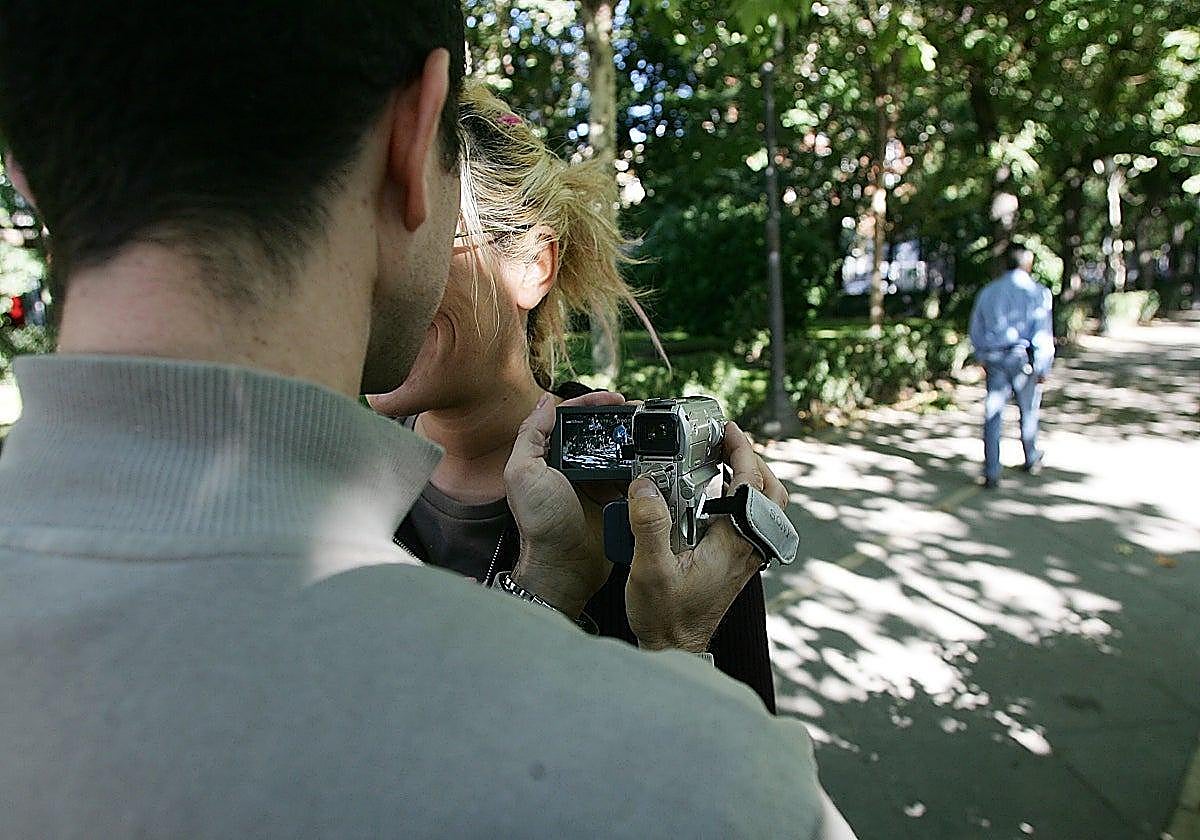
Companies are increasingly turning to private detectives to keep an eye on employees they suspect are exploiting their right to sick leave. In the last year, the number of cases of possible sick leave fraud accounted for 80% of the cases handled by private investigators in Andalucía.
These figures have been provided by the Andalusian branch of the professional association of private detectives of Spain (APDE), whose spokesperson is José Alberto Domínguez, director of the Domca Detectives office in Seville. "The services offered by a private detective are mostly in the economic, commercial, labour, family and marital spheres. The main weight, however, corresponds to the labour sphere," Domínguez says.
"In our office and in general in the sector, approximately 80% of the cases are labour-related. Of these, around 90% are related to allegedly faked sick leave, absenteeism, unfair competition or professional malpractice," he states, adding that around eight out of ten cases in this area of activity are resolved in favour of companies. In other words, it is proved that the worker is engaging in fraud by irregularly using their sick leave.
An unsustainable situation
The question is why are private detectives increasingly being hired to track the activity and suspicious behaviour of employees? Domínguez has the answer: "Because the situation is already unsustainable: before the two recent major economic crises, 2008 and Covid-19, companies could afford to not care about absenteeism as much. They could bear its costs, but not anymore, because their profits have been reduced and they have less margin, so they are stricter."
The latest Randstad report on absenteeism confirms an increase to 7%, which means nearly 1.6 million employees absent every day - a clearly unsustainable situation for any company.
'Before, companies could afford to not care about absenteeism. They could bear the costs, but not anymore, because their profits have been reduced and they have less margin'
For the time being, the detectives' activity primarily focuses on possible labour fraud in private companies and hardly enters into the area of public administration.
The case of Fuengirola
Fuengirola town hall stirred a debate in the summer of 2025 by proposing to hire detectives in order to reduce absenteeism, but the measure did not go ahead as it did not achieve a sufficient majority in the municipal council.
The regional government of Andalucía (the Junta), however, has previously activated this control system. In 2023, the regional ministry of industry and energy hired a company to deal with cases of "unjustified absenteeism" among the staff of the technical vehicle inspection services (ITV). The private company was contracted for 36,293 euros and a period of two years, with the possibility of two extensions of 12 months.
This boom in the activity of private detectives in Andalucía comes at a time when companies engaged in such practices are in the process of creating their own professional association.
In December 2024, Consejo de Gobierno, at the request of Asociación de Detectives Privados de Andalucía, began processing the draft bill for an association. The legal text was ratified last November. The group had requested the creation of a professional association at regional level several times. Such associations already exist in other regions, such as Catalonia, Galicia and Valencia.
What do detectives expect from the association? Domínguez says that: "The creation of the professional association has been a historical demand of the sector for more than 30 years. We are now at the fourth attempt, which seems to be definitive."
"Andalucía is home to just over 17% of the private detective offices in Spain, totalling around 250, with a sustained growth trend. There are currently three official associations: in Barcelona, Galicia and Valencia, but not in Andalucía, despite the region having six universities that offer such a degree. This means that, in many cases, we have to register outside our region," he says.
Although joining the college is not mandatory, "it does provide a mark of trust and guarantee for clients, as well as an effective tool against unqualified practitioners", as Domínguez believes. The creation of the professional association will help promote and dignify the profession and allow for stronger dialogue with certain public administration bodies," he says.
![[]](http://static.vocstatic.com/voc26/latest/assets/images/favicon/surinenglish/apple-touch-icon-57x57.png)