
Drought crisis
Many municipalities in Malaga have still not introduced measures to reduce use of mains water
Since last month, the Junta de Andalucía has obliged cities, towns and villages to reduce their consumption by as much as 20%, but not every municipality is doing its bit. Find out who is and who isn't...
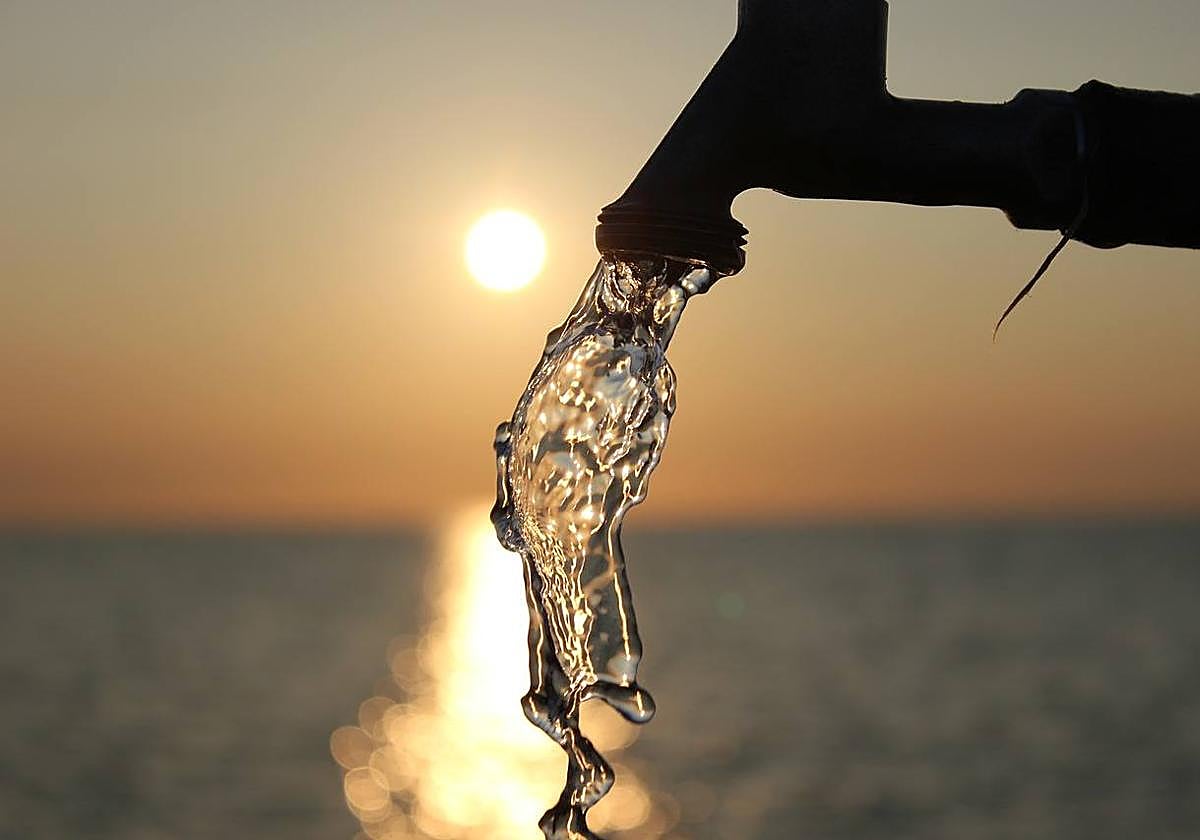
Eugenio Cabezas / Andrea Jiménez / Alba Tenza / Lorena Cádiz / A. J. Guerrero / Vanessa Melgar
Malaga
The seven reservoirs in Malaga privince are, on average, at 27.5% of their capacity, with 168.2 hectometers, compared to 287.5 a year ago. In the last week they have lost five hectometers. The situation is becoming more of a cause for concern as two months of summer remain, yet no rains are forecast until next autumn.
In June, the Junta de Andalucía regional government ordered that the 31 municipalities of the Axarquia had to reduce their consumption of drinking water by 20%, and other towns and villages in the province by 10%. Now, more than a month after the restrictions were implemented, it is worth asking how the municipalities of Malaga are faring when it comes to compliance with the requirements.
Since 2021 there have been three drought decrees approved in Malaga province by the Junta to reduce water consumption and implement limits. Restrictions included prohibiting the use of drinking water for irrigation of gardens, filling and refilling of swimming pools and irrigation of golf courses. But it has not been until now that many of these municipalities have started taking action.
Malaga city
In Malaga city, the Partido Popular government has not specified to SUR how they are achieving a 10% reduction in water consumption. The mayor, Francisco de la Torre, said on 10 July that "for now we have water reserves that work acceptably well". "We are in a position to offer a normal service to the city," he told reporters, only to add later that: "the new normal is looking to use the least amount of water possible." The showers on the beaches of Malaga city are still working, unlike the Axarquia, where four of its five municipalities have stopped their use to save water.
Sources of the Junta in Malaga pointed out to SUR that they monitor the consumption of all municipalities in the province, through the data provided by the associations, concessionary companies and municipalities. They said: "right now the measures are being complied with, we track this through follow-up periodic reports and transfer of data from the water management companies and from the municipalities".
"There are drought management committees, which is where they analyse and adopt the necessary measures to achieve the water savings we need at all times and the Junta ensures compliance with these measures."
Marbella
Marbella has reduced street washing and irrigation of green spaces by 20%. It is the main measure adopted by the drought committee, after the declaration of a severe water shortage. According to the mayor, Angeles Muñoz, the frequency of street cleaning will be reduced to three days a week and special machines will be used to optimise resources, and cover more cleaning areas. She also pointed out that measures such as restrictions on beach showers and drinking fountains have not been considered, since "they do not have much impact" to the savings.
Estepona
In Estepona, as previously reported by SUR, the town hall agreed to implement urgent measures to strengthen water resources and "contribute to guaranteeing the water supply in the face of the existing water problem" with the construction of a desalination plant. The new infrastructure is part of the Estepona Water Supply Master Plan, which has other projects under way such as the expansion of the drinking water storage capacity of the Las Mesas reservoir.
Benalmádena
In Benalmádena, the town hall issued a municipal notice and created a drought committee, which meets weekly to analyse the situation in the municipality and take measures. Among the measures is modifying the buttons on the beach showers so that water stops flowing as soon as the button is no longer being pressed. There has also been a 35% reduction in the water used for street washing, which in the case of Benalmádena, is drinking water. This reduction has created a saving of 330,000 liters of water per week. The Town Hall is also using 10% less water to irrigate parks and gardens.
Torremolinos
In Torremolinos, the government team led by Margarita del Cid decided to cut the water supply to 50% of the showers and footbaths on its beaches - this will last until August 31. Since last June the Town Hall has also reduced the consumption of water for irrigation of green areas by 30%.
Fuengirola
In Fuengirola, the measures agreed by the municipal team are focused on raising awareness among beach users. Posters have been installed in the shower areas, encouraging responsible water use. The Town Hall is also carrying out street washing with non-drinking water.
Guadalhorce Valley region
In the Guadalhorce region, municipalities have published notices with the different measures they have adopted.
Alhaurín de la Torre, Alhaurín el Grande, Cártama, Álora, Coín and Pizarra all prohibit the use of drinking water to wash streets, sidewalks, facades or any surface, for both public and private areas. Drinking water is also not allowed to use for filling or refilling private swimming pools, or watering gardens, parks and green areas, both public and private.
The Guadalhorce municipalities also prohibit the use of drinking water for car washing outside authorised establishments, for ornamental fountains that do not have a closed water circuit and any other non-essential use of drinking water.
Guadalteba
Some of the Guadalteba region is not yet adopting measures. The mayor of Teba, Cristobal Corra said: "We are very concerned about this issue, especially for the primary sector". "Regarding water for human consumption, we have been fixing the network for months, however, the works we are doing to increase the municipal reservoirs and the connection through a water ring has made it impossible for us to make cuts in the last month," Corral added.
In Ardales, the mayor, Juan Alberto Naranjo, said that they have not yet had to take any restrictive measures "since the water well that supplies the municipality is in optimal conditions".
Campillos mayor Daniel Gómez said that they are also having problems with the drought, and did not rule out needing to implement restrictions. "The level of the wells is increasingly empty, all the water that enters the tanks is consumed and on many occasions the water expenditure is even higher," he said.
So far, the measure they have taken is to regulate the water pressure in the upper areas so that the cisterns are filled. Gómez visited on Wednesday 26 July, the works of the water network Majavea, and said that "a month from now it will be operational and water supply to Campillos will improve".
Antequera Town Hall said that "for now we have no problem of water supply," as it depends on the aquifer of the Villa, which is at the foot of the natural site of Torcal de Antequera. Deputy mayor Antonio Garcia said: "Our reserves are fine and if there is no inconvenience, we will continue as before, with great responsibility with consumption and hoping for rain in autumn." Occasionally, due to failures in other towns, Antequera provides water to neighboring towns such as Valle de Abdalajís, Casabermeja, Archidona, Campillos, Fuente de Piedra or Humilladero.
Antequera region
In Fuente de Piedra, the filling of swimming pools with drinking water, street washing and the watering of orchards has been prohibited since April. Mayor, Siro Pachón, said it is the responsibility of the neighbours to transport the water to fill the pools. "The month of June has been cooler and has allowed us to keep the tanks and everything more stable but at any time if the tanks drop we may be forced to put more restrictions," he said.
Casabermeja has adopted the measures of other villages such as the ban on the use of drinking water for filling swimming pools and street sweeping from about 2pm until 8am the next day in the urban areas. Those who do not have tanks or cisterns have to go to the water sources of the town, or take advantage of the available hours - about six a day - to get water.
In rural areas the situation is even more complicated, since they only have five hours a week to retrieve water. The Town Council said that they will soon be able to put into operation a well in Sierra de Cabras. At the moment, the town has, since July 11, used four tanks, with a capacity of 25,000 litres each, which is 100,000 litres more since last month.
Ronda and Sierra de las Nieves
Ronda Town Hall has cut the supply of almost all its fountains to save water, except those with a closed circuit. It has also prohibited filling swimming pools and washing cars outside authorised areas. Among other measures, it also advocates the elimination of lawn areas for shrubs that need less watering. Aqualia, the company that manages the water service in the town, said that the supply is not compromised.
Alozaina has not yet taken action, but its mayor, Antonio Perez, said limits are about to be implemented if the situation does not improve. "The Jorox aquifer, which is the one that mainly supplies Alozaina, has fallen by almost 50% compared to last year," he said.
There are no water restrictions in Archidona, but a new well is opening in the town to ensure supply. Right now it is in the extraction phase to check its flow rates, the Town Hall said.
![[]](http://static.vocstatic.com/voc26/latest/assets/images/favicon/surinenglish/apple-touch-icon-57x57.png)