
Research
University in Spain develops 'sustainable and more resistant' asphalt made from discarded cigarette butts
Students from Granada have collaborated with the Italian University of Bologna in the project which has been co-financed by the Chinese government
Andrea G. Parra
Granada
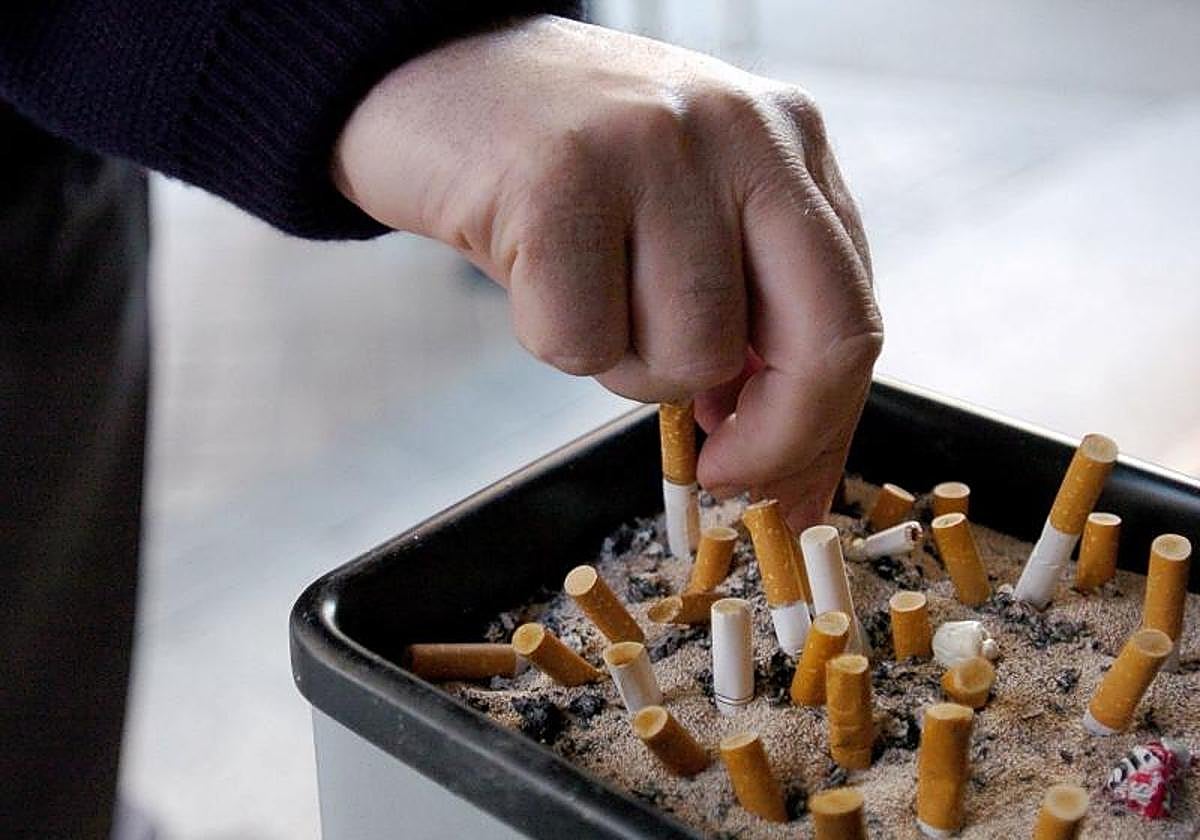
"Every material deserves a second chance. Just like people. Any material can surely be used for something else." These were the thoughts of Professor Fernando Moreno Navarro from the University of Granada (UGR) during a presentation of a sustainable and more resistant asphalt made with cigarette butts, on Tuesday 22 July.
This highly innovative proposal has been developed by scientists from the University of Bologna in Italy and co-financed by the Chinese government, together with scientists from the UGR. The research is at an early stage, but it opens possible doors to using the waste product which in Spain alone generates sixty million units a day.
These tests are being carried out in the construction engineering laboratory of the UGR (LabIC.UGR) at the school of civil engineering at the Fuentenueva campus. In the same space they work on sustainable, automated and intelligent asphalt materials (Masai), an asphalt devised at the university to repair roads in a sustainable way. This new proposal with cigarette butts is also Masai because it meets sustainability and other criteria.
Some 120 kilometres of Masai material that came out of the UGR laboratories has already been used to asphalt roads according to Mª Carmen Rubio Gámez, who directs the LabIC.UGR together with Moreno Navarro. The new project with cigarette butts opens up new options yet to be explored. She explained that one kilometre of road would require 20 million cigarette butts.
Serious environmental problem
The researchers explained that since the emergence of filter cigarettes, cigarette butts have become a predominant waste product, with projections indicating a generation of about nine billion per year by 2025. Moreover, since the advent of low-nicotine e-cigarettes, the consumption and production of this waste is a growing trend (especially among 14-30 year olds).
Much of this waste poses a serious environmental problem, as it is "improperly" deposited in natural environments, beaches, forests, aquatic environments, etc. and has an extremely slow degradation rate. This new proposal would take this pollutant out of circulation, according to Granada's Ideal newspaper.
This alternative for the recycling of cigarette butts (of any type of cigarette, but especially electronic cigarettes, as they contain a higher amount of usable fibre) is presented as an additive in road construction. Research has demonstrated the feasibility of incorporating this waste to improve the crack resistance of road pavements and the reuse of higher rates of recycled material.
The department of civil, chemical, environmental and materials engineering of the University of Bologna undertook the design and manufacture of different types of pellets from cigarette butts. The final part of the cigarette butt (composed of organic ash) was discarded, while the rest (almost all of it by weight, composed of cellulose fibres and PLA plastic) was crushed and mixed with a Fischer-Tropsch type wax (which acts as a binder) and subjected to a process of pressing, temperature and cold cutting to produce the pellet.
LabIC.UGR was commissioned to evaluate the strength of asphalts made with 40 per cent by weight of recycled material from deteriorated roads and pellets from electronic cigarette butts. During asphalt manufacture, when it comes into contact with the hot bitumen, the wax from the pellets melts and releases the recycled cellulose and plastic fibres from the cigarette butts, which act as reinforcement within the asphalt matrix, increasing its resistance to cracking, but also as a binder retainer, increasing its content and making the material more ductile and flexible, as Professor Navarro explained. Furthermore, the presence of the waxes would make it possible to modify the viscosity of the bitumen and reduce the manufacturing temperature of the mixture, thereby reducing energy consumption and pollutant gas emissions.
The results of the tests carried out at LabIC.UGR show that the use of these pellets would make it possible to manufacture asphalt with a high content of recycled material that offer better resistance to cracking under both traffic loads and thermal shrinkage than conventional asphalt.
Many possibilities
Navarro said that the research is in early stages, but explained how they have been able to see the possibilities in the laboratory. Both Rubio and Navarro defended the sustainability of this new proposal and Rubio stressed the need to value and reuse local materials. They are working not only on roads, but also on railways, ports, airports and other roads.
Mónica López, director of the school of civil engineering, highlighted the commitment of her centre to "innovation, sustainability and excellence", as well as the commitment to the circular economy. "Not only do we train the engineers of the future, we (researchers) also propose global solutions to real challenges," she said. Sampedro said that the "research is necessary for the development of our region".
![[]](http://static.vocstatic.com/voc26/latest/assets/images/favicon/surinenglish/apple-touch-icon-57x57.png)