
Environment
Huelva coastal erosion: Experts debate 'radical' retreat to save Matalascañas
Sustainable development group meets to weigh emergency sand replenishment against controversial plan to move the beachfront inland

José María Aguilera
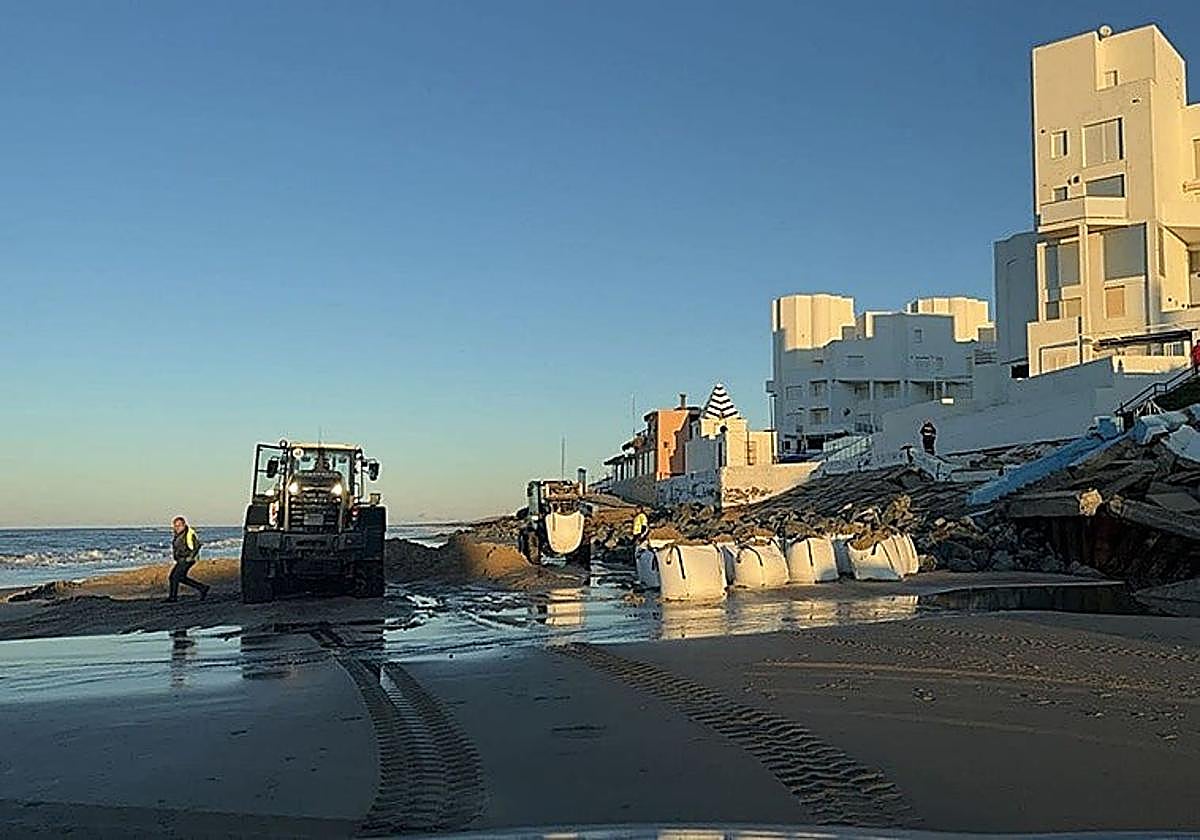
The impact of the recent storms on the Matalascañas beach and its immediate surroundings is the topic under discussion at a meeting of the sustainable development working group, part of the committee for the Doñana Natural Area.
This meeting is considered crucial for outlining plans for the immediate future and, above all, for the medium and long term. Experts insist that structural measures must be implemented alongside temporary solutions if the problem is to be tackled properly and not postponed, thereby passing the burden on to future generations.
The winter storms , especially the one in the first days of 2026 (Storm Francis), devastated the municipality's beachfront, causing serious damage to the promenade and some beachfront properties.
The mayor of Almonte, Paco Bella, the municipality to which this popular beach location belongs, once again complained of institutional neglect and the Spanish government's inaction, which has failed to provide the necessary sand to prevent such destruction.
He reiterated the need for both sand replenishment operations and financial support for infrastructure repairs.
However, the rather bold statements coming from Secretary of State for the Environment, Hugo Morán, present a new outlook on the recurring problem. He believes that the real solution lies in 'retranqueo': demolishing the current beach bars and beachfront properties and moving that boundary back a few metres to build a new promenade further from the shoreline.
This is a complex and drastic measure that requires a lot of investment and sacrifice. It would also face resistance from the owners of these seafront properties. However, continuing to ship in more sand every season "is a sticking-plaster" over what is really needed: significant investment. To ignore it just postpones the conflict.
The Matalascañas dilemma
Annual sand replenishment or pushback? This is the central question to be debated at the meeting. Participants also stress that the issue not only affects Matalascañas, but the entire Huelva coast. Studies indicate that the Andalusian coast will suffer this type of pushback, losing between five and 35 metres of beach, depending on the area, due to coastal erosion.
In addition to rising sea levels, increasingly aggressive storms due to climate change, the lack of natural sand replenishment, the impacts of infrastructure and the frontline encroachment on natural coastal areas have all contributed to the current state of play.
All levels of government are involved in this issue: some are responsible for land-use planning and the environment (regional government of Andalucía and various ministries within), others for urban planning (municipal councils) and others for coastal management (central government).
"Long-term plans will have to be implemented, which in many cases will be controversial, but they are the solution," stresses Juanjo Carmona of WWF (World Wildlife Fund). "It's not enough to postpone these issues from one year to the next, it's not enough to think that we can simply dump sand on the beaches every year and it's not enough to think that a stone wall will protect against the erosion that is happening."
For the time being, emergency measures and compensation have been prioritised, but "it's unrealistic to think that we can financially sustain this every year. It's completely illogical and not only a waste of resources, but totally unsustainable", concluded Carmona.
![[]](http://static.vocstatic.com/voc26/latest/assets/images/favicon/surinenglish/apple-touch-icon-57x57.png)