
Adamuz train crash 2026
Victims of second wrecked train in Cordoba did not receive assistance for more than one hour
The Guardia Civil and the first emergency services that arrived at the derailed Iryo train were not told that there was another train (Alvia) that had suffered an even more serious accident
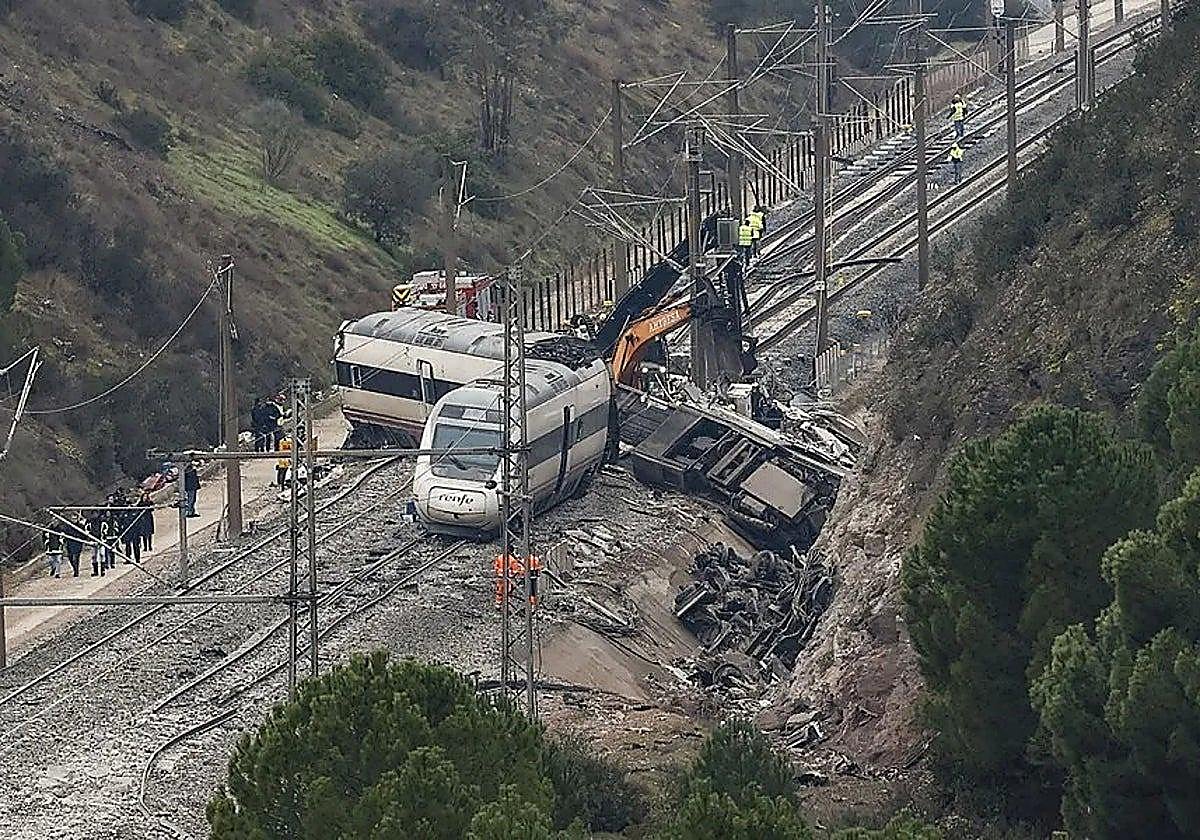

The first emergency services that arrived at the scene of the Adamuz train crash thought that only the derailed Iryo train was involved in the accident.
According to official documents, confirmed by both the Guardia Civil and the Andalusian regional government, it took more than an hour and a half for the victims of the other, more seriously damaged train (Alvia) to receive assistance.
The documents state that neither the police nor the first emergency services that arrived at kilometre 318 of the Madrid-Seville high-speed line at 8pm on 18 January (about 15 minutes after the crash) were told that a Renfe train was also involved.
There are some discrepancies in the chronology. Passengers of the Alvia train have said that the first alerts came much later than the information from the Ministry of the Interior and the Ministry of Transport states. According to the latter, the first news about the second train were reported by a Guardia Civil patrol after 8.15pm. The 112 emergency services reported the accident to the police at 7.47pm.
It was not until 9.16pm that "the Guardia Civil reported an undetermined number of people trapped and several bodies between the two trains, which were almost a kilometre apart". This has been confirmed by officials who were present at the scene.
Until that moment, the paramedics and the rescuers focused exclusively on attending to the passengers of the Iryo train, while the survivors of the Renfe Alvia who managed to get out of the wreckage looked in the distance, bewildered, at the emergency lights of the ambulances that had not arrived yet.
In their statements, survivors say that they decided to go towards the lights when they realised that no one was coming to help them. It was then, as they got closer to the Iryo train, that they came across the first patrols and told them about their train.
93 key minutes
Exactly 93 minutes passed between the incident (7.43pm) and the first official report (9.16pm), which confirmed the existence of a second train. According to official sources, both rail infrastructure company Adif and 112 were aware that there were very serious indications, albeit confusing, that there was a second train involved.
According to the official chronology and the data from the black boxes, at 7.48pm there were two calls from the Atocha control centre (CRC) to the Alvia train driver. Both were unanswered. Just a minute later, Adif received the first reliable confirmation of the Alvia accident through a third call with the train's conductor, who said that she had suffered a blow to the head and that she was going to try to locate the driver, who by then was already dead.
What's more, Alvia survivors started calling the emergency services as early as 7.51pm. The area near Adamuz has reasonable mobile coverage and the calls were successful, according to investigation sources. However, nobody realised at the time that these calls were not coming from the Iryo train but from another train involved in the accident.
Coordinates of the Iryo
According to the reports, at 7.54pm, "H24 and the Adif protection and security centre were asked to mobilise the emergency services: civil protection, health services, fire brigades, state security forces, maintenance base personnel, remote control personnel and the emergency services of the railway companies". All the operatives, however, were given the coordinates of the Iryo. Nobody spoke of the location of the Alvia or of its existence.
"At 8pm, the first Guardia Civil patrol arrived at the scene of the accident" and confirmed the need for more personnel, paramedics and firefighters. At that time, the official chronological documents do not mention two trains.
During a lengthy press conference on Thursday, minister of the interior Fernando Grande-Marlaska was asked whether the police who first arrived knew of the existence of a second train, but he repeatedly dodged the question and provided vague answers.
According to the versions gathered by SUR, it was only when the first survivors of the Alvia managed to approach the Iryo train around 9pm that the emergency services realised that they were facing a double tragedy - a collision between two trains. The Iryo driver, who called the Atocha centre two minutes after the accident, was also not aware that an Alvia had collided with his train. In the first call he reported a "snag" in the catenary - the overhead wire system used to supply electricity to trains - and a derailment in the second call a few minutes later (7.49pm).
![[]](http://static.vocstatic.com/voc26/latest/assets/images/favicon/surinenglish/apple-touch-icon-57x57.png)