Can vaccination end the virus? 'Maybe in time, but we must not drop our guard'
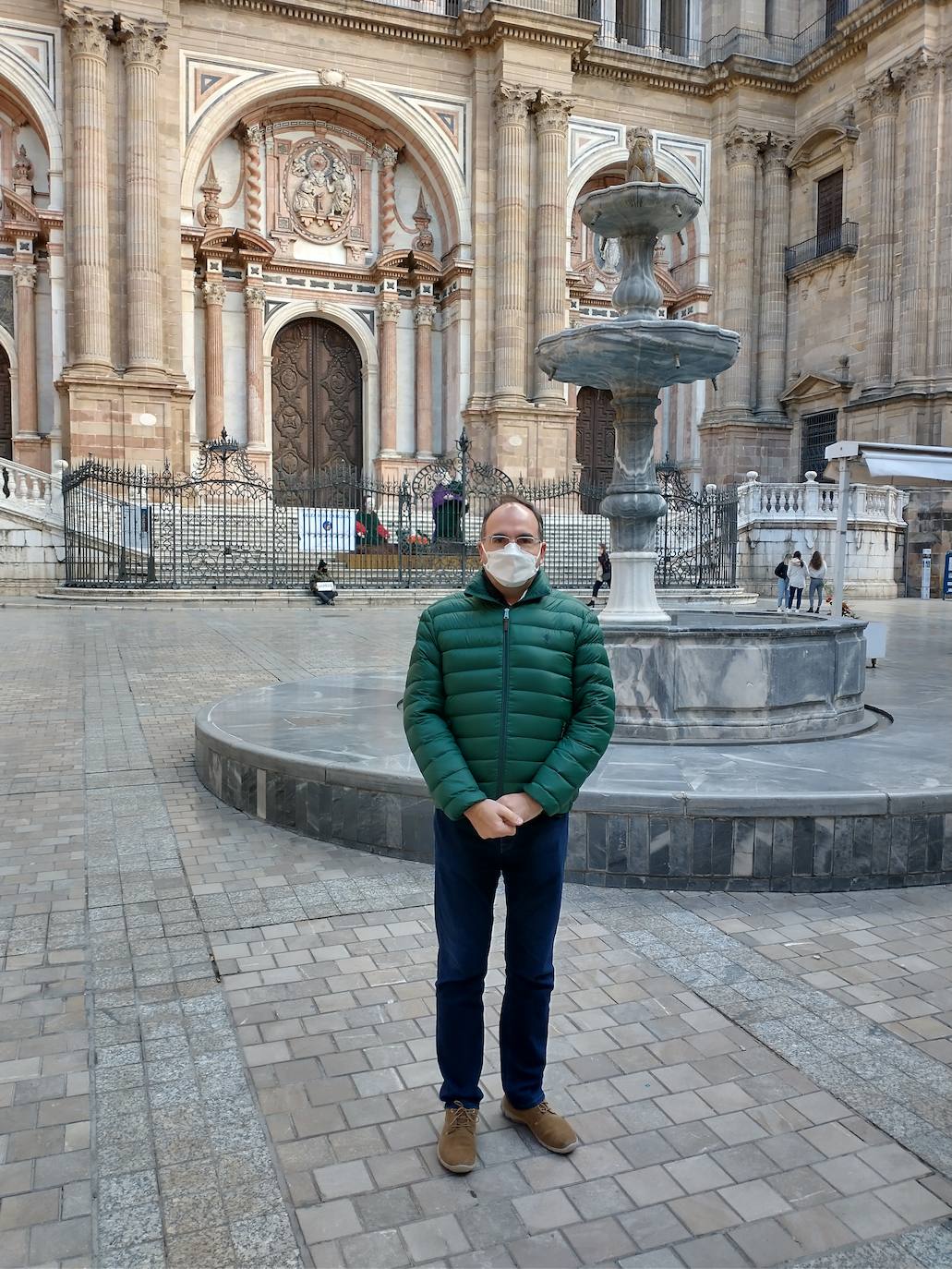
Juan Manuel Pascual. The renowned doctor, professor and researcher at the University of Texas came back to Malaga for a visit and spoke to us about the pandemic, how it is being handled and whether it will disappear
PEDRO LUIS GÓMEZ
Martes, 12 de enero 2021, 12:41
He is currently involved in five spectacular pieces of research, in his laboratory or in direct collaboration with 35 professionals from different fields of science at the University of Texas, with a considerable budget which is funded mostly by the American government. Juan Manuel Pascual, a dual professor at that prestigious educational centre, researcher and doctor, also works in three hospitals (each with approximately 900 beds) which are associated with the same university. He was named the best doctor in Dallas in 2019, and his prestigious career has made him one of the best-known malagueños in his field, internationally.
Dr Pascual came back to Spain to spend Christmas with his mother, after many intensive weeks running a hospital service which has seen numerous patients with Covid-19, and a complicated journey. His experience, his opinions and reflections at this time are more valuable than ever.
Whats your analysis of the Covid-19 situation in the world at the moment?
As happens with many epidemics, I had been thinking that it may have significantly decreased or even disappeared, but like others, there still seem to be unknown factors prolonging it, no matter what is being done or not being done. The evolution of epidemics is like the behaviour of starlings when they fly in large groups: individual characteristics can be known (for example the way each bird flies), but the behaviour of the group is unpredictable (when grouped together to fly, several hundred starlings generate very complex geometric patterns which a single bird never does when it flies alone). The same occurs with weather forecasts: there are so many inter-related components influencing the weather that it is hard to know what will happen a week later. Another example is the economy, and the way stock markets behave. Or, going back to the subject of medicine, the number of years someone will live, no matter how much we may know about their genome or illnesses.
In general terms, do you think people are really aware of what this pandemic is?
In general terms, yes: nobody ignores the fact that it can kill or have possible long-term effects, but from what I have seen on this trip, that seems less important to people than the desire to get together without safety precautions or the reality of an infrastructure which is lacking in many hospitals, bars, shops and other public places.
Is the vaccine the panacea for its eradication?
Yes and no, because every concept has to be seen in context. To be able to eradicate the virus through vaccination we would need three aspects in our favour. One, the vaccine would need to be significantly effective in every person that receives it (effectiveness being defined not just as the simple production of antibodies following the injection, which is a purely biological phenomenon, but the absence of illness in people exposed to the infection, which is something different and very important). Another is that there should be few side effects (there always are some and they become more clear as time passes and more experience is acquired). And a third is that it would have to be produced and administered in a reasonable time. What do I mean by reasonable? Well, lets look at a simple example: lets suppose the aim is to vaccinate 20 million people in Spain (Im only giving that number as an example). Lets suppose that it takes five minutes to vaccinate each person (assuming that lists of people have been drawn up beforehand and appointments made in advance). And lets suppose that each person needs two injections. That would mean, if everybody was vaccinated in the same place in the whole country, it would take 380 uninterrupted years, working 24 hours a day with no coffee breaks, vaccinating one person after another in that same place. That is equivalent to one solid year of vaccinating (again, 24 hours a day) if there were 380 different vaccination points. Those are not pleasant figures for those responsible for the logistics. And heres a really important point: despite the vaccine, what we must absolutely not do is drop our guard.
Havent we been in a bit of a hurry with the vaccine? Did we end up in a scientific-economic race?
ts strange that many vaccines, if they meet the requirements, of course, will practically be copies of others (more than 100 are currently being developed). That must mean there is a lack of scientific imagination and a race to obtain sales as soon as possible. But nobody should place all their eggs in the same basket. Several very similar vaccines would not be much use if they didnt work as a result of changes in the strain of the virus which is spreading most. In fact, few problems in medicine are tackled or resolved from a single angle. For example, in one year recently the vaccine against the common flu, a mortal illness which is caused by another respiratory virus and was also produced through an accelerated process, only had a level of effectiveness of 10 per cent. Even last year it was only 30 per cent.
How can a pandemic like this suddenly appear in the world and change our lives?
How could it not? Life is an unstable process and the surprising thing is that it lasts (with luck) more than 80 years. The physico-chemical world around us is generally adverse to life, and we also carry the seeds of our destruction in our biological nature.
Can normal medications or remedies can be used for Covid once someone is infected?
There are many studies being carried out into this and my institution is looking into anti-viral drugs, experimental antibodies and several types of blood filtering. But the most important thing is very, very basic: isolation to avoid others being infected, and keeping respiration and circulation going when the worst is threatening. This is generally what happens in intensive care units. It seems simple but it isnt, and in fact in many countries intensive medicine is deficient. In many others, like Spain, it barely reaches a minimum. For example, Spain has fewer than one third of the number of intensive care beds per inhabitant than the US or Germany and I cant see any medium-term planning in that respect. Remember the controversy over the ventilators: first of all there werent enough and then there was an spate of new ones which werent really the right thing, but anyway I looked at where they were going to put them and who would operate them: where were the rooms and the suitable personnel? Because it isnt at all simple to use a ventilator correctly. The press said that in many places the solution was to limit access to intensive care units based on age and those priority protocols, which are so deep-rooted in Spanish civil servants of all types. In reality, those are inquisitorial processes disguised as equanimity.
Can so much stabbing in the dark have any positive effect against something as unknown as Covid-19?
The first effect has been a major reduction in the frequency of other infections such as common flu and other illnesses which are preventable through hygiene. The usual five per cent child mortality due to syncytial respiratory virus (common at this time of year) has almost disappeared. There are several hundred respiratory viruses like those and although it is still early in the seasonal cycle, many have still not appeared yet this year. With luck, some might disappear forever, because they need to spread among people in order to keep going. But apart from that, Im not seeing any international concerted effort towards the diagnosis, isolation and research which the situation deserves.
They say this is just the beginning, that other pandemics will occur before long and society will become accustomed to what we are getting used to today.
There have always been epidemics and they have always disappeared. I dont see that this one will be any different.
How do you view what Spain has done to tackle Covid-19? What image does this country have abroad?
As with other things the image is average, which is lower than our country deserves. I believe some shortcomings and mistakes were only to be expected, given the context in which people have lived in Spain for several years, and those have already been forgotten. Nevertheless, the saturation of the hospitals, despite the very high spending on health which is funded by taxes, has highlighted deficiencies which I dont see being discussed or tackled.
Does the low incidence of the virus in Wuhan, where this whole pandemic started, seem normal to you?
What do you mean?
Well there is concern about the mutations which have occurred in the UK. Is it normal for that to happen?
The virus has already mutated over 1,000 times, and that was predictable (and its why the flu jab has to be given every year). That shouldnt be confused with the spread of a new strain, which is difficult to study at a world level because the means and times of detection vary considerably between one country and another. The British system of detection is much better than in other countries, which means that if the strain appears later in another country it doesnt necessarily indicate that it has come from the UK, but that it might just have been detected later in that other country, even though the strain could have occurred much earlier. That situation is analagous to the mortality rate per number of infections in Spain: it has gone down, but at first not enough tests were done, so today it may look as if there are many more contagions but that is only because so many more tests are being carried out now.
Another expert from Malaga with greater recognition abroad than at home
-
Juan Manuel Pascual, who was born in Malaga in 1967, is a professor of Neurology, Physiology and Pediatrics; a specialist in Neurology and Child Neurology and the director of the rare illnesses department of the University of Texas Southwestern Medical Center.
-
He is a member of the university teaching programmes in Neurobiology, Integrated Biology, Neurology, Neuropediatrics and Clinical Genetics, associate editor of the neurobiology magazines Neuroscience Letters and The Neuroscientist, and on the board of several patients associations.
-
He is also a member of the American Spanish Language Academy, an academic correspondent of the Royal Spanish Academy, a doctor in Molecular Physiology and Biophysics from the Baylor College of Medicine (Houston, Texas),and a specialist in Neurology and Child Neurology from the University of Columbia and the Neurological Institute of New York, where he was a professor before taking up his present post. He advises the National Neurological Institute of the USA on a wide range of matters, and also the FDA.
-
Juan Manuel Pascual currently heads five research and clinical assistance groups and their work is closely linked research in Biophysics and Molecular Biology of the nervous system in transgenic experimental models of human illnesses; developing direct non-invasive methods for the study of the functioning of the nervous system through magnetic resonance; neurotherapeutic clinical tests and diagnosis of rare and unknown diseases, or those which are especially complex, in childhood and adults, and occasionally treating patients who visit the USA from other countries, especially Spain, sometimes describing illnesses which have not been recognised until now.
-
Dr Pascual is married with a 13-year-old daughter and his life is based in the USA, where he moved with a scholarship when he was 22, recommended by renowned professor Severo Ochoa, with whom he developed a close friendship.
-
After attending school in the Martiricos district of Malaga city he studied five years of Medicine at Malaga university and completed his education at Granada university.
-
His conferences, scientific publications and seminars are innumerable, and he has thousands of followers all over the world. Despite all this, he has still not been recognised as Doctor Honoris Causa by Malaga university or an Honorary Citizen of Malaga, nor has he been awarded the Medal of Andalucía.
You are a specialist in neurology; do we yet have scientific data about possible effects of coronavirus on the brain?
Like most respiratory viruses, it produces excessive responses from the immunological system and those affect the nervous system. No doctor ignores neurological complications from respiratory viral infections, which can include paralysing inflammation of the nerves in the whole body, or illnesses which resemble multiple sclerosis, or the excessive blood coagulation which causes thrombosis and strokes, and some others, and I have seen several of these every day in recent weeks.
When will the brain stop being the least-known part of the human body?
When we can study many or all cerebral cells simultaneously, because they act in a coordinated manner and it is still not possible to analyse that correctly. Im not referring to the pseudo-problem of the brain-mind relationship, which is a scientific and philosophical mirage.
What about a third hospital for Malaga. Do you think thats necessary? What would you advise?
I thought we would already be working on a fourth hospital, but obviously I forgot which region and city this is.... my advice would be very simple: nowadays there is no excuse for not having single rooms, as there have been in developed countries for the past 20 years. And that includes normal beds as well as those for intensive medicine (apart from a few exceptions such as recovery beds in some areas of a hospital). Apart from stopping infections spreading because the patients are not sharing a ward, making friends should always be a matter of choice. When the human race began to walk on two legs instead of four, they stopped sharing food, toilet facilities and clothing.
Malaga is still an important part in your life. Wouldnt you like to come and head up a research team at the university or a health service hospital here?
Of course I would.
A piece of advice to continue living... even with Covid-19?
Better hygiene. More independent thinking, such as, for example, about everything I have just said in this interview. And more intelligent debate.