
Film culture
Sad Hill, the cemetery in Spain from The Good, the Bad and the Ugly, is given a new lease of life
The cemetery of the legendary western has been declared a cultural asset, supported by the future 'Carlo Simi - Sad Hill' museum and an agreement with a renowned film centre in Rome
José Antonio Guerrero
Covarrubias
"At 95, he is already very old and hardly ever leaves his ranch in Carmel, but we are going to send him a handwritten letter inviting him to come to Covarrubias when the museum opens," Joseba del Valle tells us enthusiastically. A decade ago, the 50-year-old from Bilbao was one of those who resurrected the legendary Sad Hill cemetery from the final scene of The Good, the Bad and the Ugly (1966), located in the Burgos region of Arlanza .
Del Valle dreams of Clint Eastwood accepting their invitation and coming to Covarrubias (Burgos) in a few months' time. Work is in full swing there so that by "the end of October, beginning of November", the Carlo Simi-Sad Hill Museum, can be opened. It will exhibit the legacy of the Italian architect Carlo Simi, who designed the iconic circular cemetery.
Simi, who died in 2000, was the production designer of the western directed by Sergio Leone with the unforgettable soundtrack by Ennio Morricone and the three great villains Lee Van Cleef, Eli Wallach and Clint Eastwood.
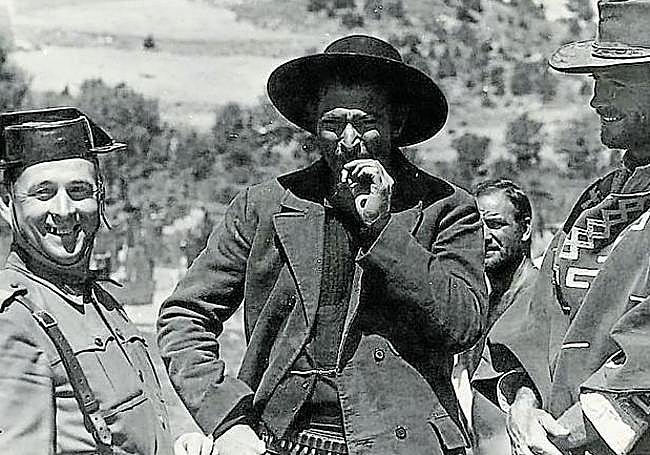
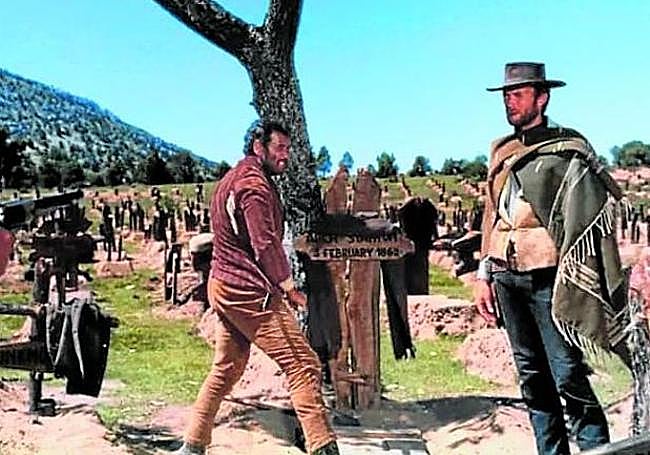
But getting the director from California to Burgos seems to be just as complicated as finding Arch Stanton's grave (where the treasure that drove Tuco crazy was hidden) among the thousands of crosses on Sad Hill.
In fact, Eastwood, who is already preparing his 41st film (he often says that at 95 he doesn't stop working to keep the "old man" from coming in), hardly leaves his ranch in California except to shoot. He has even made surprise appearances playing the piano in the lounge of his hotel, where his powerful presence left guests stunned. As if that wasn't enough, Clint hasn't been back to Spain since 1966, when he shot The Good, the Bad and the Ugly, the last film in the Dollars Trilogy, at Sad Hill (the other two being A Fistful of Dollars and For a Few Dollars More, shot in 1964 and 1965, respectively).
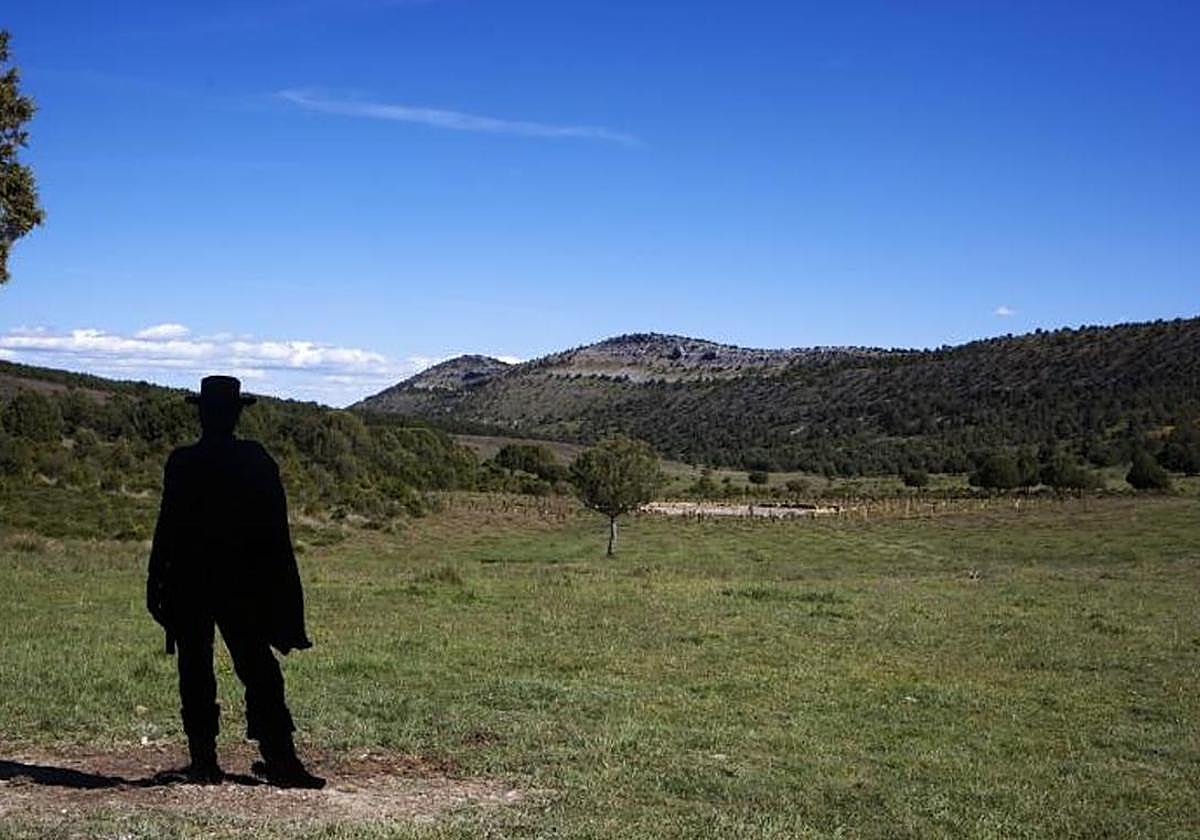
But Del Valle's tenacity should not be underestimated, because he is someone who does not give up, even when it comes to bringing what may be the last living Hollywood legend more than 9,000 kilometres from Carmel to Spain. After all, Del Valle and a group of friends have been revitalising Sad Hill since 2014: uncovering the cobblestones, removing the vegetation that has grown there for half a century and erecting around 5,000 wooden crosses to restore the film cemetery, where the unforgettable final duel of The Good, the Bad and the Ugly took place.
This endeavour was captured in the Spanish documentary Desenterrando Sad Hill (2017) directed by Guillermo de Oliveira, which brought thousands of fans of the Leone film to this magical place in the Arlanza Valley, opening the region to tourism.
Joseba's next dream was to capitalise on the popularity of Sad Hill to offer something new to visitors from all over the world. He and his colleagues came up with the idea of creating a museum in honour of the film and the spaghetti western genre in general. It was at this point that he crossed paths with Elisabetta and Giuditta Simi, widow and daughter of Carlo Simi. They were willing to donate the family's film heritage to the future museum, a private collection of hundreds of shots, sketches, props and objects used in the Dollars trilogy, as well as other films that the Italian had worked on, such as Once Upon a Time in America.
Del Valle then founded the Carlo Simi Cultural Association, of which he is chairman, and in the search for a location for the museum, they began discussions with the municipalities of the Arlanza Valley, where the medieval village of Covarrubias (which has a population of 500) finally agreed to host the museum.
The building is located in the centre of the village, around 14 kilometres from Sad Hill, and is due to open soon - with or without Clint Eastwood.
International significance
The latest step was the recent signing of an agreement between the Carlo Simi Cultural Association and the Centro Sperimentale di Cinematografia (CSC) in Rome, one of the oldest film institutions in Western Europe. Founded in 1935, it is located next to Cinecittà, the historic studios where Leone shot a large part of his western films.
Sad Hill cemetery, designed by Carlo Simi, is the scene of the final duel in The Good, the Bad and the Ugly
"The signing of the agreement brings international importance to the Sad Hill project," argues Del Valle, for whom the link between a prestigious Italian institution and a project born in rural Spain "strengthens the connection with the places designed by Simi", including the sites in Burgos (the Langstone Bridge in Hortigüela), the Fortress of Betterville (in Carazo), the Mission of San Antonio (in the Monastery of San Pedro de Arlanza) and the Sad Hill Cemetery (in Santo Domingo de Silos), as well as the villages in Almeria (Tabernas) and other sites in Granada and Madrid.
"This is a particularly important step for the international cultural recognition of both Simi's heritage and the entire group working in Burgos," says Joseba proudly.
Carlo Simi's daughter Giuditta is also pleased with the signing of the agreement. "It is a tribute to the work of my father and all the people who worked on the Spanish-Italian co-productions. Ultimately, it is a tribute to the joint work of both countries, bringing Spain and Italy together again almost 60 years later," she says.
The Carlo Simi Cultural Association hopes that the signing of this first international agreement will speed up the declaration of the cemetery as a cultural asset (a process that must be initiated by the General Directorate of Cultural Heritage of the regional government of Castilla y León). After all, it all started in this place. It was there that the spark was ignited that gave life to the museum project and now the signing of the agreement with the Italians.
"The declaration of cultural heritage is linked to Sad Hill, the reason that brought us here. The aim is to get funding for maintenance, as well as deserved recognition." This essentially consists of mowing the grass, maintaining the paving ("people often take stones as souvenirs") and replacing the crosses, which are often broken, especially by the cattle that graze there and use them to scratch themselves.
So Joseba and his colleagues from the association saddle up their horses and set off for Valladolid to persuade the government of Castilla y León to declare Sad Hill a cultural asset of special value. It is the last challenge before the dream of seeing the 'man without a name' alive and present in Covarrubias comes true. The dream continues. The legend lives on.
Leone's chair, Eastwood's poncho and El Feo's clothes
The Carlo Simi-Sad Hill Museum will house a permanent exhibition featuring everything related to the locations created by Simi for the filming of his movies. The upper floor will be used for temporary exhibitions, which will rotate over time given the magnitude of Simi's legacy. There will also be sections dedicated to Sergio Leone (they want to install a replica of the chair used by the director during filming), Ennio Morricone (his unmistakable music will "set the mood" in the museum), and, of course, Clint Eastwood, whose famous alpaca poncho, a relic with "bullet holes", patches and dust, is currently on display behind bulletproof glass in a Mexican restaurant in Carmel (California) owned by a good friend of the filmmaker. The museum will house part of the wadrobe that Eli Wallach ("The Ugly One") wore in the film, which is preserved by the Simi family. In addition to The Ugly One, Wallach was known in the film as "The Pig" and his full name was Tuco Benedicto Pacífico Juan María Ramírex. Clint was not very happy that Tuco stole the limelight, although their relationship was fantastic.
![[]](http://static.vocstatic.com/voc26/latest/assets/images/favicon/surinenglish/apple-touch-icon-57x57.png)