
Politics
Spanish PM insists on including fight against climate change as defence spending, defying both Trump and Brussels
Spain has already reached defence spending of 2% of GDP this year, according to Nato's own estimates, while other main allies have agreed to increase the figure to 5%

Madrid
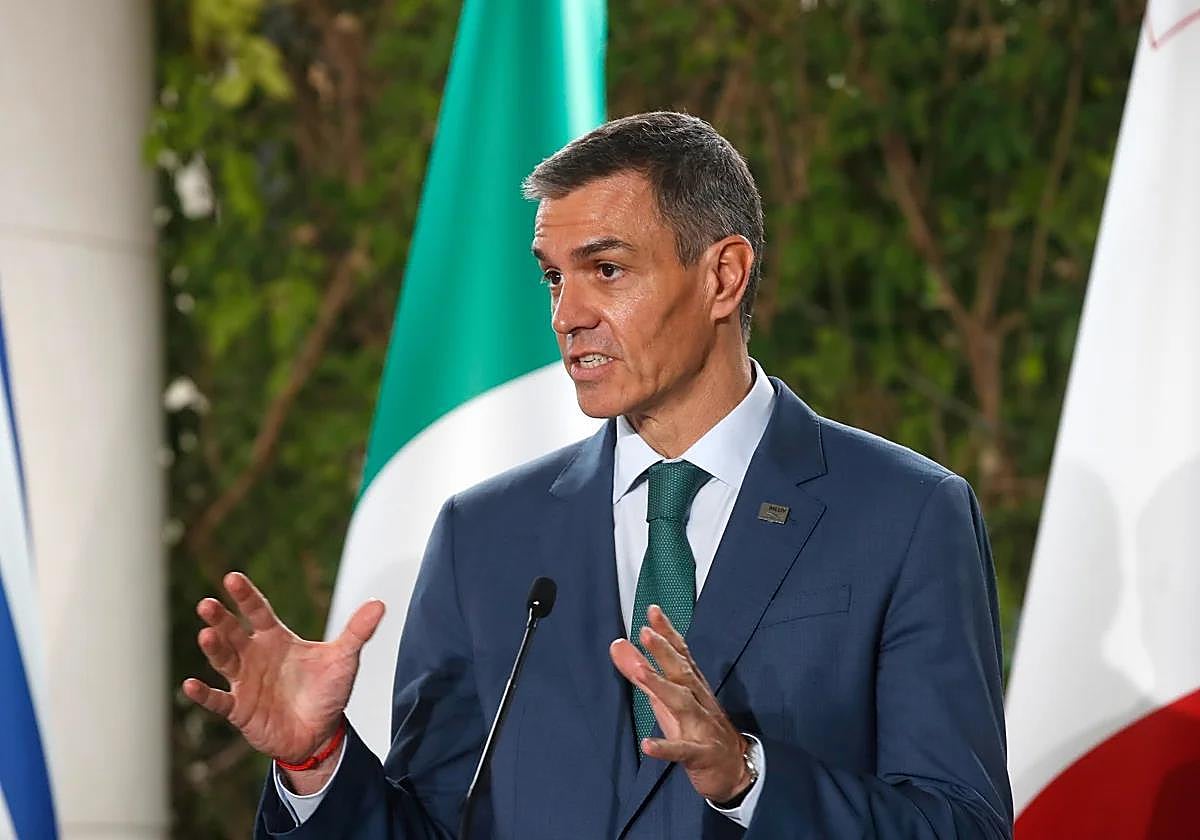
Spanish PM Pedro Sánchez is unwilling to give up his fight to make climate change prevention part of defence investment, despite the reluctance of some Nato partners and the European Commission. In the midst of tension with Donald Trump, who is an open denier of the climate emergency, over Spain's refusal to raise military spending to 5% of GDP, Sánchez used his appearance before the media in Slovenia on Monday as an opportunity to announce that he is not giving up his initiative.
According to Nato estimates, Spain has already reached 2% of defence spending this year, thanks to an injection of more than 10 billion euros approved by the Spanish government in April, through a mechanism that allowed it to bypass parliamentary authorisation. Now, its commitment to the Alliance is to increase to 2.1% at most, as agreed at the summit in The Hague in June. The other allies agreed to increase spending to 5%, pressed by Trump's demands. The Spanish government has stated that reaching 5% would be unfeasible for many of the countries, while Spain will comply with what it has promised, even though the 2.1% is also controversial.
Sánchez has been arguing for months that defence spending in the 21st century should involve wider issues such as cybersecurity, border control and the management of emergencies and natural disasters, already included in the industrial and technological plan for security and defence for 2025. However, just ten days ago, the European Commission said that Spain will not be allowed to count this type of 'green' investment as military spending in order to qualify for loans under the SAFE programme or the fiscal flexibility of the European rearmament plan.
National budgets
The five-year European rearmament plan aims to provide the EU with a deterrent force that will enable it to guarantee its own defence against the threat from Russia. Among its objectives is becoming independent from relying on the US, considering the risk that Trump might decide to withdraw his military support for Ukraine. Although uncertain, this possibility increased again after the tense meeting between Trump and Zelenski at the White House on 17 October.
The bulk of the investment will come from national budgets, but to facilitate disbursement the EU allows member states to borrow without being sanctioned for non-compliance with the Stability and Growth Pact, along with 150 billion euros in repayable loans.
In Slovenia, Sánchez sidestepped the question of whether he has been able to garner any support for his position, but stated that Spain's plan for 2025 already envisages that "13%" of the defence budget approved in April will be used to strengthen the role of the armed forces in disasters such as floods or fires. "Indeed, some of these policies can be counted as policies linked to security and defence," he said.
![[]](http://static.vocstatic.com/voc26/latest/assets/images/favicon/surinenglish/apple-touch-icon-57x57.png)