
Economy
Inflation in Spain hits 16-month high as egg prices soar 22% this year
The consumer price index has risen to 3.1%, mainly due to higher electricity bills and more expensive international flights and train fares

Madrid
Prices have continued the upward trend in Spain with a rise in inflation in October to 3.1%, some 0.1% more than in September, due to the sharp rise in electricity and transport, especially air and rail transport, partly offset by the drop in package holidays and fuel.
This is the highest consumer price index (CPI) in the last 16 months, as confirmed by statistics published by the INE national institute of statistics this Friday. In the last two months, inflation has had an impact on the prices of fresh fruit, olive oil and, above all, eggs.
"Food remained relatively stable, with increases in fresh or refrigerated fruit, eggs and olive oil offset by drops in vegetables, bread and dairy products," the Ministry of Economy said.
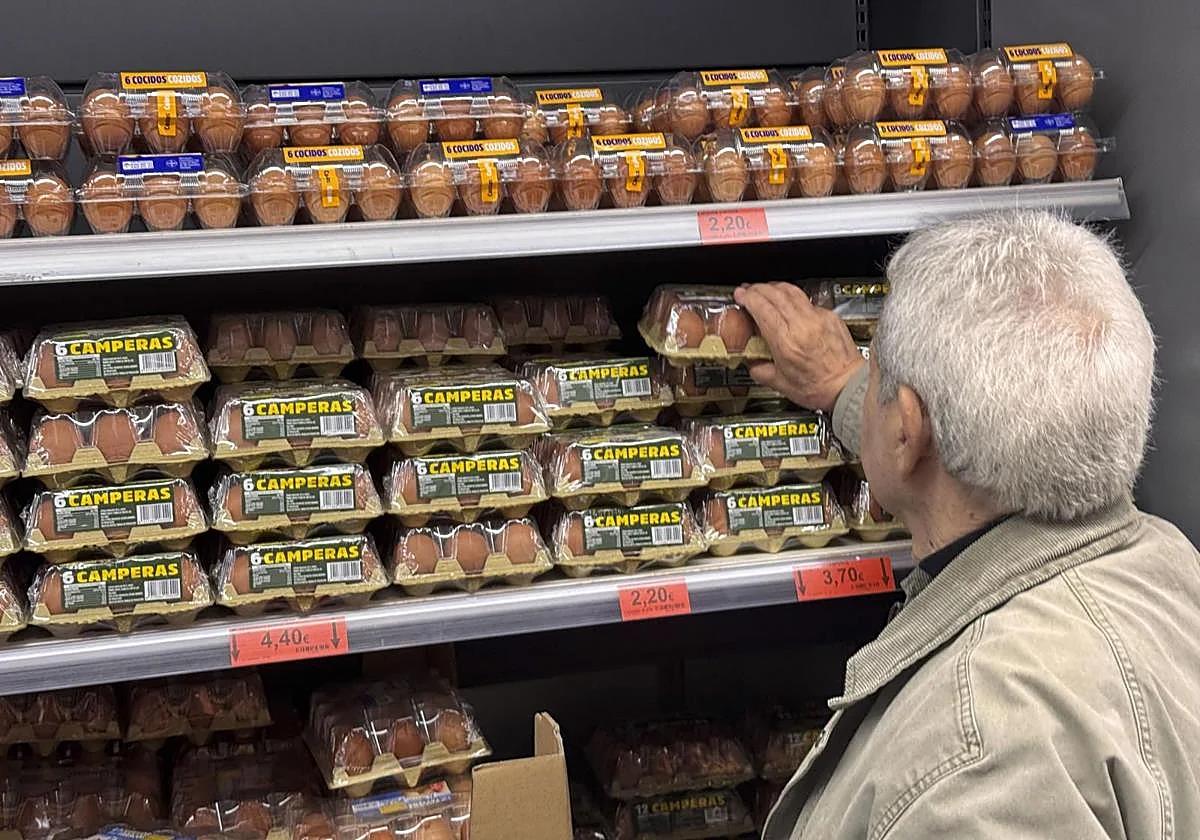
The bird flu crisis, which has prompted the Ministry of Agriculture to confine all outdoor poultry farming, has caused a 5% rise in the price of eggs just in the month of October. The overall increase for the year reached 21.7%, rising to 22.5% if October 2024 is taken as the reference point for comparison.
Since then, eggs have been the food item with the highest price increase within the CPI categories, surpassed only by waste collection (+30.3%), jewellery (+26.8%) and passenger transport (+26.7%). In fact, only coffee comes close in terms of the rate of price growth, with a rise of 19.4% over the past year.
By contrast, olive oil is the food item that has seen the largest price drop since October 2024 (-41.6%), although if only the month of October is considered, it is also among the items that rose the most in price, with a 2.7% increase. It has still accumulated a 53.7% increase since January 2021.
The latest data from the INE confirms that the impact of the bird flu is already felt in supermarkets. The sector attributes this rise (an average increase of one euro in just one week) to the control measures implemented at the beginning of the year, the increase in exports and the fear of a possible shortage. However, Spain's main poultry producers rule out any risk of shortages.
Upward trend
While it remains to be seen how this situation will affect inflation in the final months of the year, the data provides other important points of reference. For example, over the first ten months of 2025, prices in Spain rose by 2.4%. According to the institute, "three-quarters of this increase is due to the impact of hotels, cafés and restaurants (0.7%), housing, where data exclude purchases, (0.6%), and food (0.5%)".
Meanwhile, underlying inflation also rose by 0.1% compared to the previous month, reaching 2.5% in October after remaining stable at 2.4% for two months.
![[]](http://static.vocstatic.com/voc26/latest/assets/images/favicon/surinenglish/apple-touch-icon-57x57.png)