
Animal welfare
Government orders lockdown of all free-range poultry farms due to spread of bird flu
The Ministry of Agriculture's restrictions now affect the whole country due to the advance of the virus

Madrid
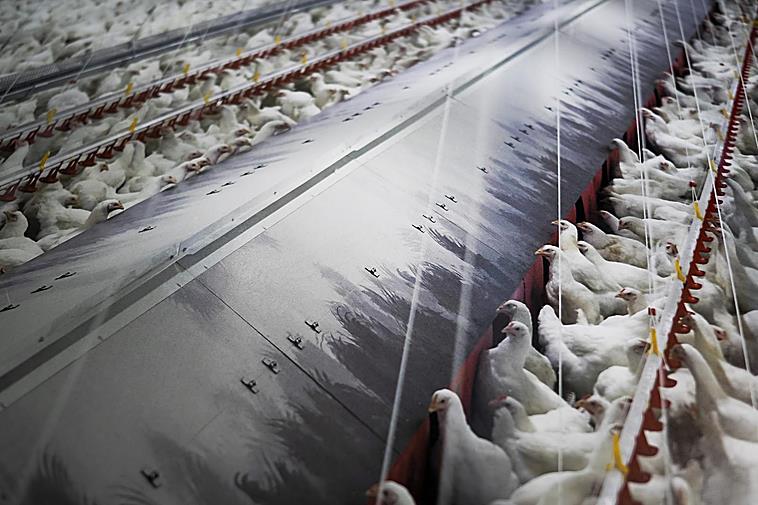
Two days after banning outdoor poultry farming in almost 1,200 municipalities in Spain, the Ministry of Agriculture today went a step further and raised the restrictions to the whole country due to the spread of the bird flu. In a new order published in the official state gazette this 13 November, the ministy ordered the lockdown of all outdoor poultry farms, regardless of their purpose: free-range or organic egg supply, meat production or self-consumption.
The order also bans the raising of ducks and geese with other species of poultry. In the event that the farm cannot be confined, the government text says that the authorities will have the power to place nets or any other device to prevent the entry of wild birds.
Since July, European authorities have reported a total of 139 bird flu outbreaks in Europe. Almost 60 outbreaks have been detected in Germany, 17 in Poland, ten in France and 16 in Italy.
For the moment, the situation in Spain is milder. The Ministry of Agriculture has confirmed 14 outbreaks, with Castilla y León accounting for more than half of them. In addition, vets have detected positive cases in 53 wild birds and 5 captive birds.
"Prevention is better than cure," the spokesperson for the organisation of agricultural enterprises (Coag) Ureña says. "It is not an overreaction, given that the situation in Europe is concerning." The Ministry of Agriculture's reasoning behind nationwide restrictions (with the exception of the Balearic Islands) is that there is an abundance of migratory birds in wetland areas. Although there is no date for the end of the confinement, the sector predicts that it might be maintained until mid-December, when the migration of birds comes to an end. "We have more at stake if we leave them in the open air," the sector stated.
The text also bans giving water to poultry from reservoirs accessible to wild birds, unless it is treated to ensure inactivation of possible viruses. In addition, outdoor water tanks required for animal welfare reasons for certain poultry must be sufficiently protected against wild waterfowl.
Blow to the sector
The order seeks to avoid contact between breeding and migratory birds and prevent the spread of the virus on farms. "If it gets in, that's the end," Ureña says.
Although Coag does not yet have economic estimates of the impact of the virus, the damage is felt in many farms in mainland Spain. "We are producing two million fewer eggs per day," Ureña said. The confinement of laying hens, many of them raised outdoors, "will cause stress for a few days", which will also reduce production. According to Ureña, however, it is better for the industry to suffer this blow than to allow the virus to spread. For him, taking no measures and allowing the H5N1 virus into the farms would be worse. "That would mean it could take almost half a year to return to normal," he said.
The avian flu outbreak has forced the culling of around three million laying hens in Spain and sparked panic across hundreds of farms nationwide. This situation has caused a new shockwave in the food supply chain, with minister Planas urging people to avoid price speculation, especially in supermarkets.
As a result of the outbreak, the price of eggs has significantly risen in the past year, with a 31% average increase, according to data from consumers' organisation Facua. The national institute of statistics puts the rate of increase lower, at 15.9%.
The sector attributes this rise (an average increase of one euro in just one week) to the control measures implemented at the beginning of the year, the increase in exports and the fear of a possible shortage. However, Spain's main poultry producers rule out any risk of shortages.
According to the Ministry of Agriculture, the total number of laying hens in Spain was around 47.8 million in 2024. As for broilers, used for their meat, annual production was around 600 million birds. The short life cycle of these birds (between six and eight weeks) means their population changes quickly. Taking into account that around 2.65 million birds have been culled this year due to the disease, the impact, for now, does not pose a significant threat to the country's supply.
![[]](http://static.vocstatic.com/voc26/latest/assets/images/favicon/surinenglish/apple-touch-icon-57x57.png)