
Food and drink
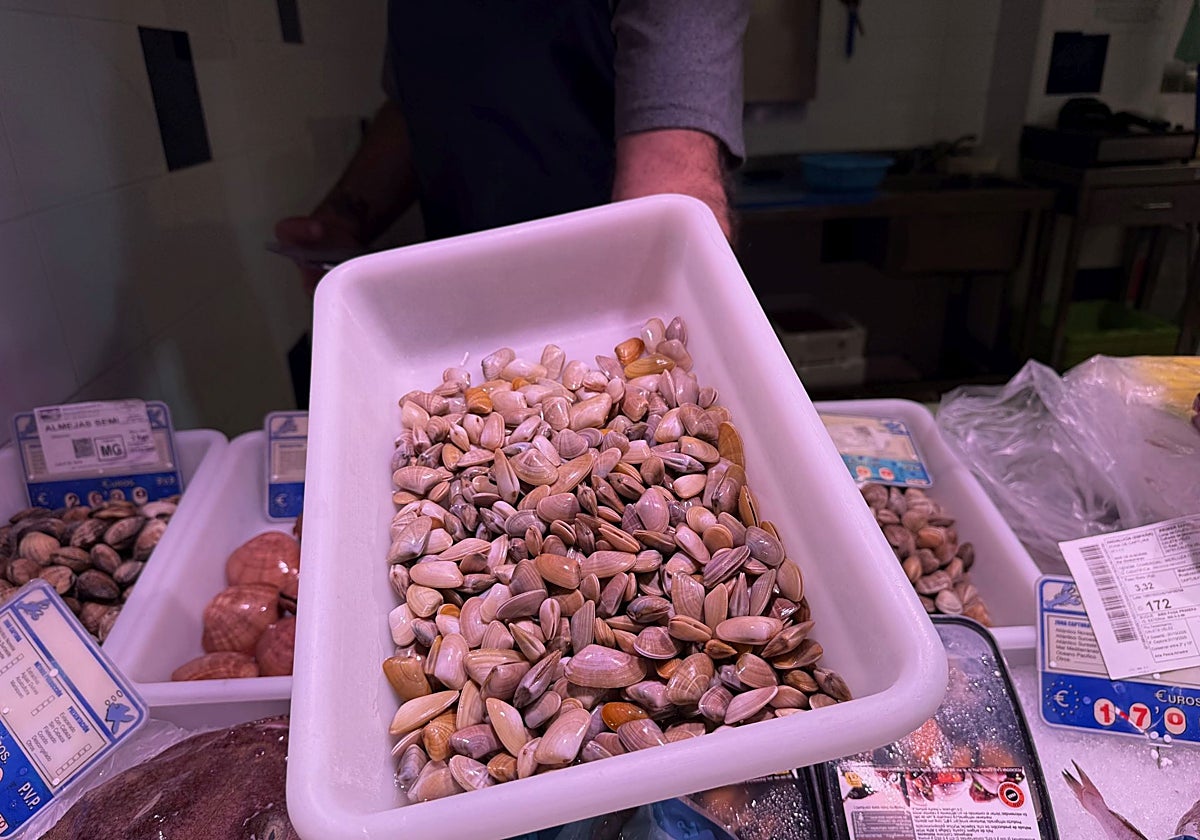
Why are 'coquinas' clams so expensive on the Costa del Sol?
The lack of other species, the catch quota and the high demand have turned this mollusc into a luxury product

Fuengirola
The 'Nuevo Rafaela Manuel' boat enters the port of Fuengirola at 20 minutes to midday. On board is 61-year-old Salvador López, who has 47 years of experience as a fisherman. He started with his father and now works alongside his son Mario - one of the only three or four young people who dedicate their time to fishing in this port. The crew of the 'Nuevo Rafaela Manuel' return with the day's work, but their catch is not from Fuengirola. Salvador and Mario come from Marbella.
"There's not as much as before, but a bit more than here," Salvador says. Three hours for the trip there and back to catch just eight kilos of coquina clams. If the conditions are great, they return with 40 or 60 kilos at most, while there used to be times when fishermen could catch 400 kilos, as José Manuel Escobedo from Escobedo Marisco Vivos says.
The average selling price in the fish market is over 22 euros per kilo this year 2025; these days it reaches 40 euros
The crew's efforts are only worth it because the selling price of the coquina is currently between 38 and 40 euros per kilo. It is a price that fluctuates throughout the year. The reason for this lies in the quota of 25,000 kilos of annual catches established for Malaga's ports. It's not a limit per port, but per province, meaning that what is landed at the markets of Estepona or Marbella affects those of La Caleta de Vélez and Fuengirola, and vice versa.
For Malaga fishermen, the coquina clam is a product that comes and goes. Due to the quota, the shellfish farmers never know how many months they will be able to catch coquina throughout the year. This year they stopped in February and did not catch them again until July. Right now, they are just over 4,000 kilos short of the annual quota of 25,000.
Price and demand
According to official sector data, the price this year stood at 22.85 euros per kilo, three times what it was in 2018 (11.37 euros) and a far cry from the 9.65 euros in 2015.
What keeps the price within these limits is the high demand. "A Malaga restaurant is not going to cheat its customers, it is going to serve local coquina whatever it costs," Escobedo says. Local business owners are ready to pay these prices, even though the annual price of coquina from Huelva is much lower: 7.43 euros and seven euros at this time of year. The cost in Malaga could result in a loss for the restaurant. "We make up for what we lose with the wine," said one restaurant owner.
"The coquina: it is what it is".
It seems that local fishermen have tried to make their peace with the situation, although this is their livelihood. The coquina clam, which lives only eight metres off the coast, seems to be going the same way as other shellfish species disappearing along the coast of Malaga. The Spanish institute of oceanography is still trying to determine the natural cause, which could also be attributed to a parasite.
If the price of Malaga's coquina clams were the same as that of those from Huelva, the two crew members of the 'Nuevo Rafaela Manuel' would never have thought of going all the way to Marbella to earn 56 euros and those eight kilos would never have made it to the fish market.
Even so, Salvador is pleased to have gone from catching sea bass and bream and other fish to shellfish. There is not much left for trammel net fishermen. Of the two boats in the port of Fuengirola, one has decided to stop, while the other continues but sells its catch in another port because, unlike coquina clams, the demand is different and, as Escobedo points out, "there are no buyers".
At the end of the day, in the fishing sector, as in any other, the law of supply and demand rules. Adam Smith (1723-1790), the father of classical economics, created the theory of the invisible hand to describe the ability of markets to regulate themselves. The problem is that there is another invisible hand along the coast of Malaga that is not as skilful. For the time being, however, Salvador and Mario will continue going out for clams, despite the three-hour journey ahead of them.
![[]](http://static.vocstatic.com/voc26/latest/assets/images/favicon/surinenglish/apple-touch-icon-57x57.png)