
Gender-based violence
Malaga gender-based violence cuts seven lives short in 2026: the deadliest year in the province
ie. One in six women murdered in Spain in 2026 and more than half of the victims in Andalucía lived in Malaga province, surpassing the previous annual record of six deaths set last year
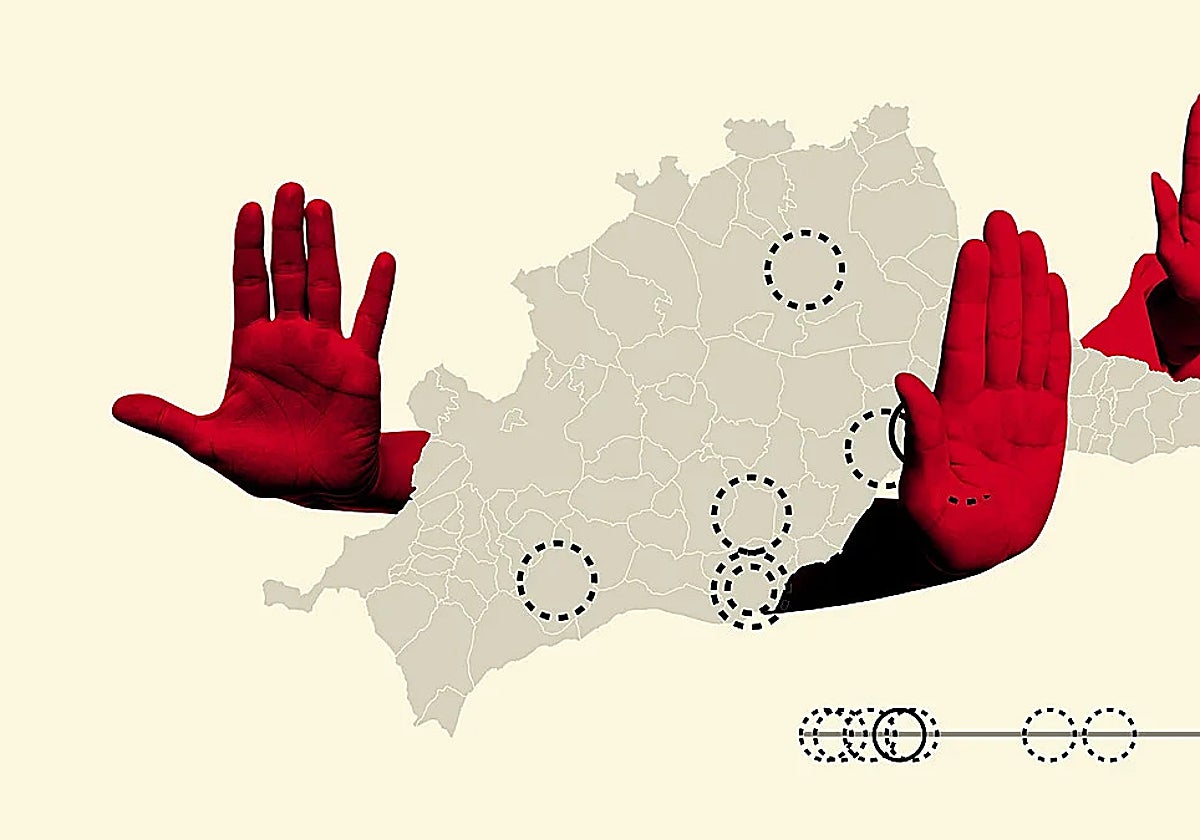

Victoria, Vicky, Cristina, Mari, María, Melinda and Ieva. These are names of the seven women who have lost their lives to gender-based violence in ... Malaga province so far this year. They are not mere statistics, but lives cut short at the hands of partners or ex-partners.
The province once again ranks bottom in Spain, having surpassed the worst annual figure in its entire historical record (since 2003). The previous record was set last year, with six murders.
The province's share of the official statistics from the government delegation against gender-based violence is alarming: one in six women murdered in Spain this year (seven out of the 42 recorded) and more than half of the victims in Andalucía (seven out of 12) lived in Malaga.
Related story
-

Gender-based violence
Irene Quirante
Related story

The province ties with Madrid for the most number of gender violence murders and brings the cumulative total of deaths in the province since 2003 to 70. Behind the cold statistical figures lie seven real-life stories that have shaken different parts of the province since the start of the year.
The first incident occurred on 24 January in Alhaurín el Grande, where 33-year-old Brit Victoria H. was stabbed to death at her home by her ex-partner while her three young children witnessed the attack. Victoria had reported the abuse and her case was active in the VioGén protection and monitoring system.
More than four months later, gender-based violence struck Malaga city. On 5 June, 51-year-old Vicky was fatally shot by her 56-year-old husband, who then took his own life. The incident took place in their home in the Palma-Palmilla district. There were no previous reports of domestic violence in this case.
It was in the summer that the statistics spiralled out of control. In July alone, four crimes came to light, two of which were committed just 24 hours apart.
On 1 July, the agonising search for 35-year-old resident of Malaga's Ciudad Jardín district Cristina, whose disappearance her family had reported at the end of March, came to the worst possible end.
A joint investigation by the National Police and the Guardia Civil led to her ex-partner, who eventually confessed to the crime and guided the police to a well on a property in Rincón de la Victoria where he had hidden the body.
Although Cristina had never reported him to the police, she appeared in the VioGén system due to the abuse she had suffered in previous relationships. The suspect had three previous records of abuse against other women.
Just six days later, on 7 July, tragedy struck Mijas. The partner of 61-year-old Mari fatally stabbed her at their home and also killed her 31-year-old daughter Patricia. Following the double murder, the suspect doused the bodies with petrol and set fire to the property in an attempt to destroy evidence before being arrested the following day in Teatinos. There had been no previous complaints against him, despite the fact that he had a history of abuse towards previous partners. The daughter is not counted in the official stats as she was not romantically linked now or in the past with the killer (violencia de género). Instead she is included in other stats (feminicidio familiar/vicario).
The second half of the month saw two further murders in quick succession. On 20 July, 29-year-old María was found dead at her home in Antequera with multiple stab wounds. Her ex-partner took his own life a few hours later.
María had filed a complaint in 2023 and VioGén had classified her case as low risk, but the court-ordered protection measures had lapsed just a few days before the murder. She left behind two young children, ages seven and four.
Just 24 hours later, on 21 July, the scene of the crime was Benahavís. Melinda, a 45-year-old Hungarian national, died at her home in the Los Arqueros residential area after sustaining a deep stab wound to the neck.
A neighbour alerted the emergency services after hearing screams and filmed the assailant fleeing in his car. The police arrested the suspect ten days later on a plot of land in Istán. He had left behind a diary in which he confessed to the crime.
The seventh victim was 35-year-old Ieva, of Lithuanian origin. Her 39-year-old partner strangled her at their home in the Pinares de San Antón area in Malaga city, with their 12-year-old daughter present. The child was the one who called the emergency service.
The assailant hanged himself in the same house. Paramedics managed to resuscitate Ieva after she suffered a cardiac arrest and she was taken to the ICU at Hospital Regional, where she died five days later, on 21 September.
There had been no previous reports of abuse. The couple's two younger children were left orphaned.
In addition to the seven women the government delegation has confirmed as victims of gender-based violence, there is also 35-year-old Franyel, a trans woman from Venezuela.
Franyel was stabbed to death by her partner in San Pedro Alcántara (Marbella). Despite the romantic relationship between the two, the case was not handled by a court specialising in gender-based violence, as the victim had not initiated the administrative procedures to rectify her gender entry in the civil register.
Orphaned children
The impact of these murders leaves an indelible mark on those who survive. So far in 2026, eight children have been left orphaned in Malaga province as a result of gender-based violence, representing the vast majority of the ten minors in Andalucía and more than a fifth of the 38 across Spain. Since 2003, 31 children and teenagers in the province have lost their mothers as a result of gender-based violence.
While the number of death is reaching record highs, the courts in Malaga are also seeing a slight rise in the number of complaints filed up to the second quarter of this year: 4,502, compared with 4,447 in the same period of 2025 and 4,296 in the same months of 2024.
At the end of October, the VioGén system was monitoring 5,070 active cases in Malaga province under police supervision to ensure the safety of the victims, with 28 classified as high risk and one as extreme risk. The vast majority are adult women, almost half between the ages of 31 and 45, although the protection network also covers 123 women over the age of 65 and 54 minors who are currently living under police supervision.
Victim support
The 016 helpline is available 24 hours a day in 52 different languages to report cases of gender-based violence. The call is free and will not appear on your phone bill.
You can also report incidents by emailing 016-online@igualdad.gob.es, regardless of whether you are the victim, a family member or a witness. Alternatively, you can contact the service via WhatsApp at 600000016.
In an emergency, you can call 112 or the National Police (091), the Local Police (092) or the Guardia Civil (062). If you are unable to make a call, you can use the Alertcops app, which sends an alert to the police with your geolocation.
