
Fishing
These are the shellfish species that have disappeared from the Costa del Sol's coastline: 'It is a disaster'
The fine-shelled clam joins the list of molluscs that have disappeared without trace. Scientists have been unable to find the cause, although they have not ruled out a parasite as the culprit

Fuengirola
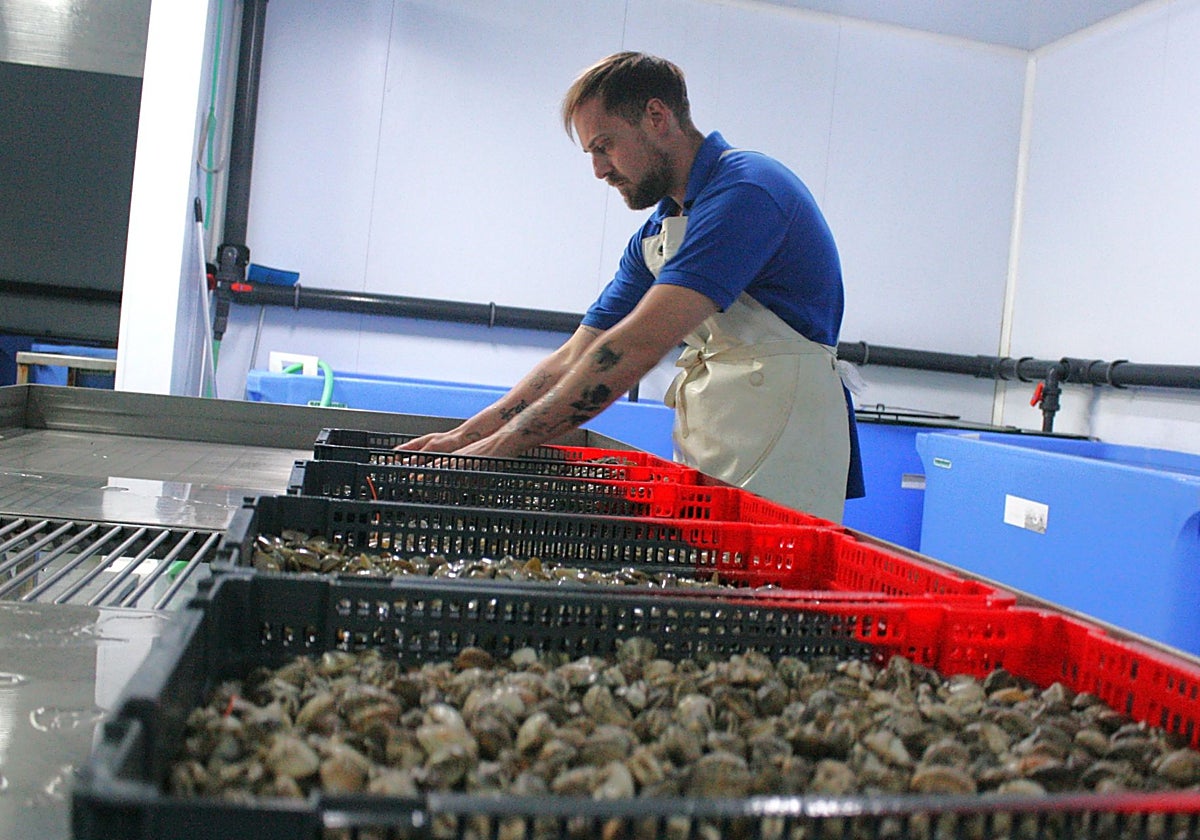
You can eat the fine-shelled clam raw, with or without a dash of pepper, or perhaps with a sprinkling of spicy pil-pil, perhaps at home, in a local restaurant or in your favourite beach bar. Still, if you do, you can be sure that this mollusc is not from Malaga. Those who actively fish for them say so, companies in the sector confirm it and official statistics from the Junta de Andalucía back it up. The death certificate for the Malaga clam was dated 28 June 2024. That was the last day on which this particular variety of shellfish entered Malaga's fishing ports.
It also has a location for its last dispatch: Estepona's fish market, where all the province's catches arrived in that fateful month when this mollusc, so special to Malaga, disappeared from its coasts (380 kilos were caught in June 2024, 61.5 on that last day, when previously they were counted by monthly tonnage).
"It's a disaster," any fisherman will tell you. "The trend is irrefutable, it's an alarming situation," adds José Manuel Escobedo from Fuengirola, of Escobedo Mariscos Vivos, the only treatment plant for these prized invertebrates between Torremolinos and Marbella. The point is that they are not only talking about this fine-shelled mollusc. This species has actually joined a whole list of molluscs that are nowhere to be seen on the coast of Malaga.
Estepona fish market was the last sales outlet to see a Malaga clam: it was on 28 June 2024
First to disappear were the bay and sea scallops. Fishermen in the province caught a meagre half kilo in November 2013, another half kilo in February 2014 and, since then, according to data from Idapes (the Andalusian fisheries production system), no shellfisher from Malaga has caught one again. Next was the clam (the 'babosa' or 'chocha' variety), whose death certificate in Malaga was issued in October 2015 (54.76 kilos that month). It was followed by the 'bolo' , in September 2020 (12 kilos after no catches were recorded in 2019 and just 124 kilos the previous year), and this was followed by the 'corruco' (a clam similar to the cockle, but larger) in February 2021 (106,000 kilos was its last monthly balance).
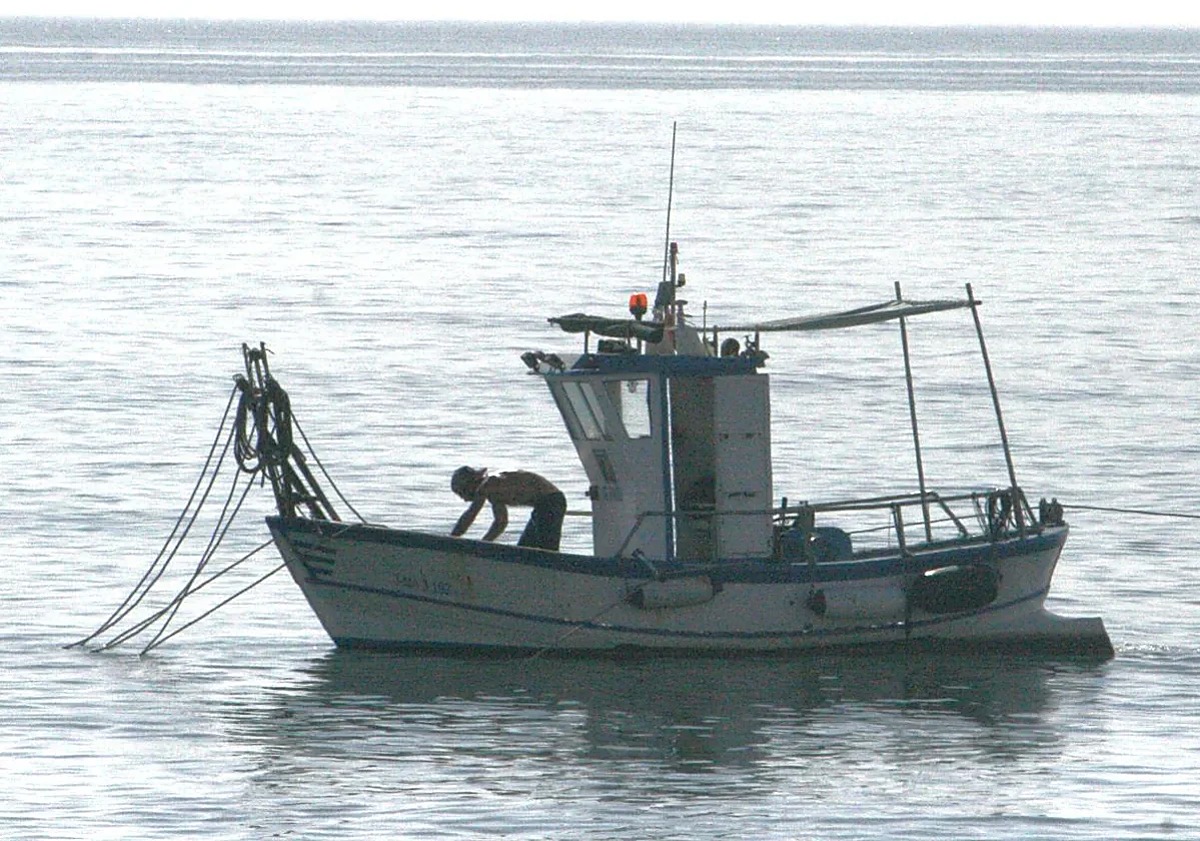
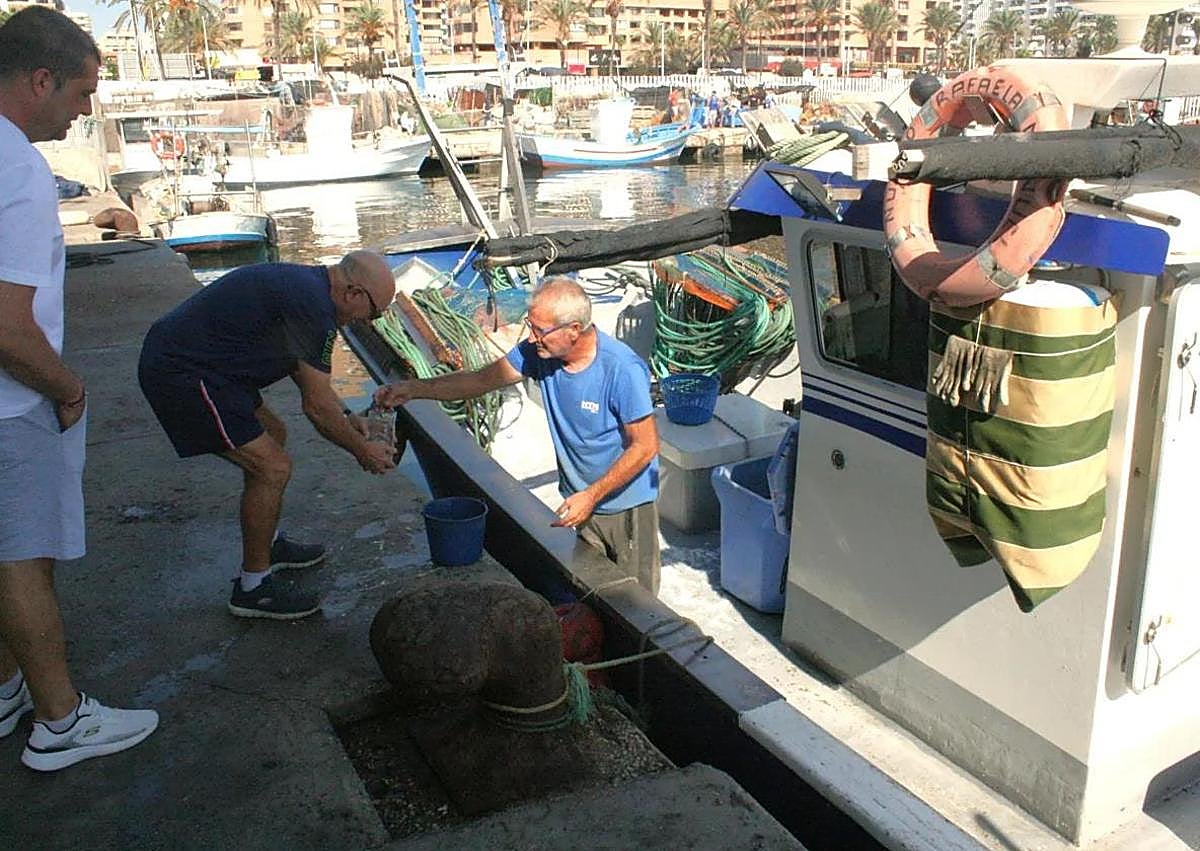
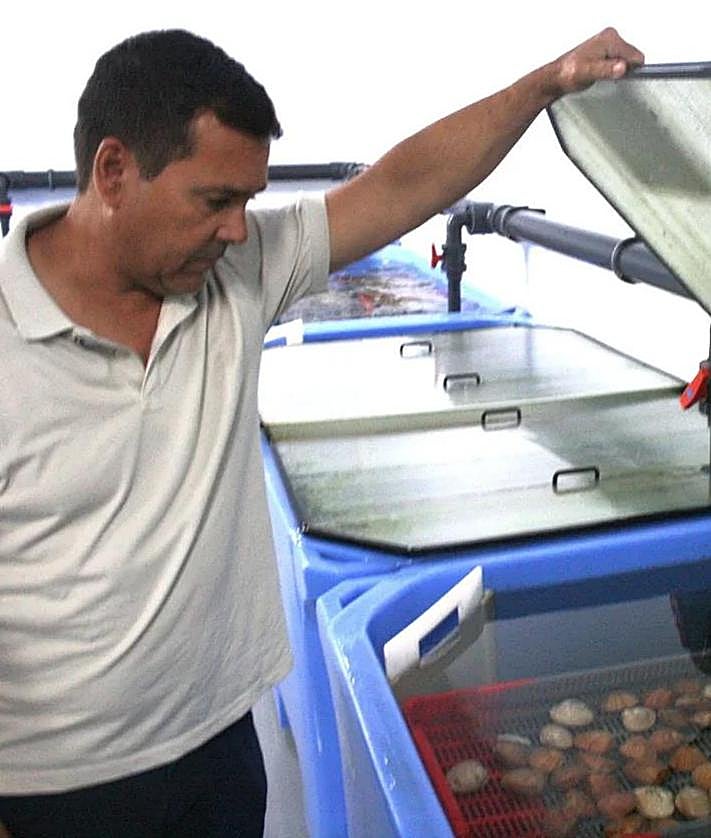
The problem is that the death certificates may bear a date and even a place of issue, but what they do not bear is a signature. "We have detected an increase in the natural mortality of shellfish, but we haven't even found any dead shells, you have to go to La Línea de la Concepción to find one, and we don't know what the cause is," says scientific researcher Jorge Baro from the Malaga headquarters of the Spanish institute of oceanography (IEO).
Oscillations, octopus, nitrates...
This institute, whose national centre is attached to the CSIC (Spain's national research funding council), has been studying the state of play for molluscs and bivalves for several years in collaboration with the regional government of Andalucía. Researchers conduct surveys at sea and analyse water temperature, salinity and fluorescence for their impact on phytoplankton (microalgae, the staple food of shellfish, and the baseline food in the marine food chain). They even take into account the effects of the North Atlantic Oscillation (NAO - an irregular fluctuation of atmospheric pressure over the North Atlantic that can strongly affect winter weather in Europe, among other effects).
Researchers have even measured the possible influence of another soft-bodied mollusc, the octopus, a species with a voracious appetite that feeds on a diet of fine-shelled clams and other, now extinct in Malaga, shellfish species. They have also collected samples from the seabed for the presence of nitrates that may have washed into the sea from farmland, but nothing has changed enough for the researchers to name it as a likely suspect for cause of death in these species.
"The increase in natural shellfish mortality tells us that there is some parameter in the environment that is causing it, but we don't know what it is and we're not ruling out a parasite"
Jorge Baro
IEO (Malaga) researcher
"This increase in natural shellfish mortality tells us that there is some parameter in the environment that is causing it. We look at oceanographic and feeding conditions, which are also associated with the former, but we don't know what's causing it and we haven't ruled out the possibility that it could be caused by a parasite," explains Jorge Baro. What has most surprised experts in the case of the fine-shelled clam ('concha fina') is the speed at which it has occurred: "It has been sudden, in just a few years; impossible to foresee."
Overfishing and sea depth?
The Malaga-based IEO researcher rules out the possibility that the disappearance of the fine-shelled clam is due to overfishing, but this might have influenced the disappearance of other clams, scallops and the corruco. A fisherman from Fuengirola testifies to this: "In two hours I would return to port with 800 kilos of corruco, it was piled up, there were places where there was so much shellfish that the boats could not get through." However, it was not just this species: a single shellfisher could catch up to 400 kilos of chocha clams in just a few hours and the scallop catch was so large that tons were exported to Galicia.
Fishermen claim that they notice in the sea plenty of hatchlings of fine-shelled clams and other species that they can no longer catch, but the babies do not reach adulthood. Pelagic larvae are at the surface and, as they develop, they attach themselves to something to head down below. They don't do this just to grow, they usually bury themselves to hide from predators, while breathing and feeding through their siphons and moving around by using their muscular feet.
The conditions for all these molluscs are not exactly the same, because there is a zoning that causes the circumstances to which they are subjected to differ. Those closest to the coast are the coquinas (butterfly clams) and chirlas (oval-shaped clams), while the 'concha fina' (fine-shelled clams) and the corruco are from deeper waters. This zoning is what leads the research scientists to think that the cause is not something that reaches the sea from land, "because these species would be the most exposed", says Baro.
Therefore, the only thing that is clear is that "something is going on in the environment". Perhaps it is a parasite, perhaps another cause, and without forgetting that the factors "can also be multiple", warns Baro. So, for now, we'll have to keep waiting to find out what killed our Malaga clam and the rest of our beloved shellfish.
![[]](http://static.vocstatic.com/voc26/latest/assets/images/favicon/surinenglish/apple-touch-icon-57x57.png)