
Health
Imminent strike by senior healthcare technicians leaves 30,000 daily lab tests in Malaga up in the air
Minimum services in public and private hospitals guarantee that all types of tests will be carried out in A&E, ICU and maternity wards, the same as on a Sunday, but everything will depend on the effectiveness of the 4-day strike (participation and the aftermath)
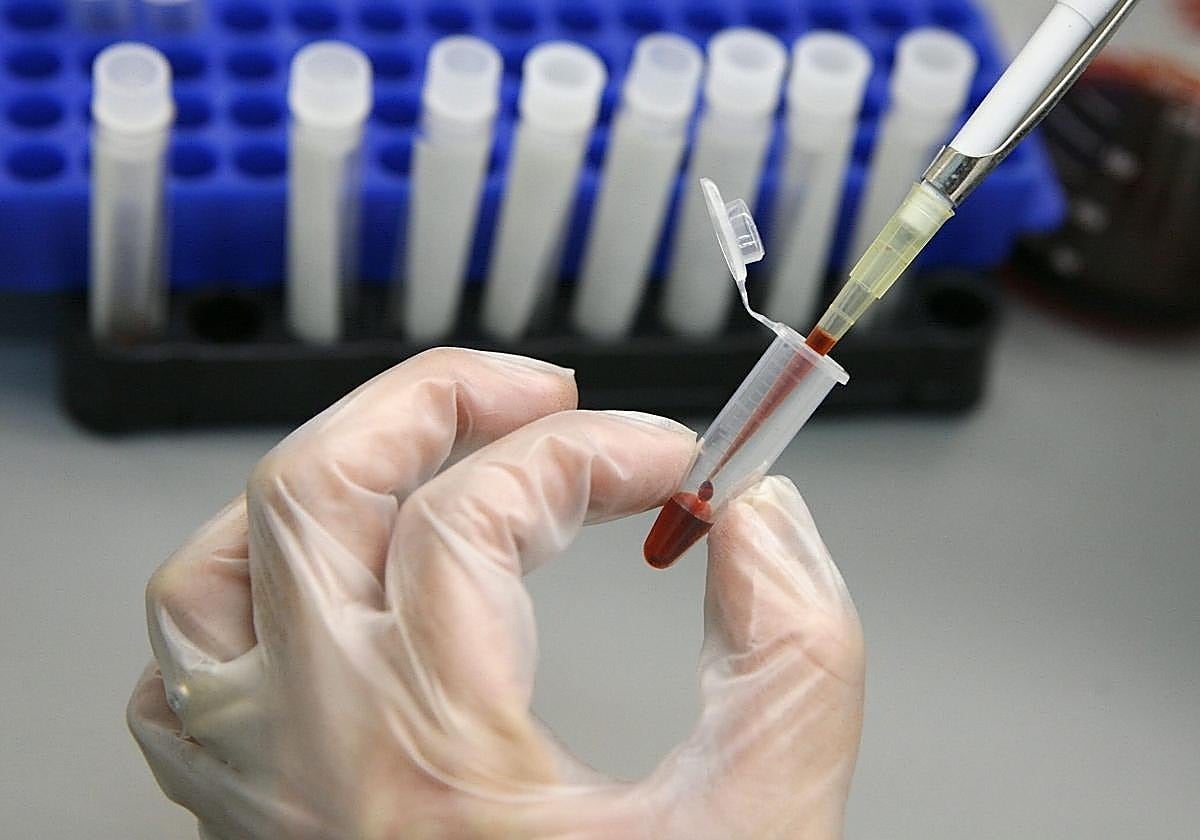

More than 1,600 senior healthcare technicians in Malaga are being called upon to take part in the strike happening on 30 and 31 October and 3 and 4 November. This group of professionals works in key positions in health centres, hospitals and clinics throughout the Costa del Sol province, both public and private, as they are responsible for analysing samples and performing basic diagnostic tests. According to estimates by SIETeSS, one of the unions organising this industrial action (and the Spanish union specifically for healthcare technicians), this strike will jeopardise the running of approximately 30,000 tests per day in Malaga (including blood, urine and stool samples that arrive daily at laboratories for analysis, as well as other imaging tests such as x-rays and so on). This affects both the public and private healthcare sectors, although everything will depend on the actual participation level on each strike day and the practical implementation of minimum service provision. The strike, incidentally, is being called against the Ministry of Health in central government, but it will affect Andalucía's public healthcare service (SAS).
The crux of the matter is that, if the lab technicians go on strike, no one will analyse the more than 23,000 stool, urine and blood samples that arrive at laboratories every day from scheduled tests (urgent tests are guaranteed), as well as the 2,000 samples that are sent to pathology for analysis (molecular biology, cytology, biopsies and more). In addition, around 4,000 diagnostic imaging tests are performed daily, which could not be carried out without the technicians. Some of the blood samples could become unusable if not analysed immediately and would have to be repeated, according to some technicians consulted, although healthcare sources believe that, if they are centrifuged quickly, they can last up to a week. Another issue is what will be decided regarding the tests scheduled for strike days, given that blood draws, for example, are done by nurses and other types of samples are taken by doctors. In other words, these could be done, but then the samples would not be analysed for at least six days.
Senior healthcare technicians are vital to the functioning of the public healthcare system in Andalucía: they are specialists in radiodiagnosis and radiotherapy, pathological anatomy, nuclear medicine, laboratory, health documentation, dental hygiene, dental prosthetics, audiometry and dietetics, among other specialities.
Healthcare technicians condemn their unfair pay and demand professional reclassification and a specialised university degree
Their main protest is that, despite being granted job category B way back in 2007, they are paid as if they belonged to category C1, resulting in a salary loss of 2,000 euros per year. Since 2007, that amounts to between 35,000 and 40,000 euros. They also demand that the Ministry of Health's framework statute recognises them as a 'regulated healthcare profession' and not as professional staff, as this also deepens the pay gap. Another demand is the implementation of a university degree programme, as Spain is the only country without one, meaning they cannot work in other countries. Their final demand is for measures to combat professional encroachment. In total, nine trade unions have come together to push for a university degree programme to be commissioned.
Scheduled tests
The strike could primarily affect scheduled tests, given that the SAS minimum requirements stipulate that healthcare services must be maintained on a public holiday, in addition to ensuring that tests and imaging procedures requested in emergency rooms, critical care units and maternity wards are provided as a minimum. This represents 100% of the services provided on a Sunday. SUR has consulted various private hospitals, which have confirmed that they will apply the same minimum services as the SAS.
Of these scheduled tests, samples arrive daily at the laboratory for analysis - stool, urine, blood (haematology, biochemistry, microbiology) - and other specialised tests, totalling more than 23,000, of which between 13,000 and 15,000 are blood samples. In pathology they would be analysing biopsies, immunology techniques, molecular biology, cytology, punctures (lumbar, for example) and HPV (human papillomavirus): approximately 2,000 determinations and, in terms of diagnostic imaging tests, the technicians carry out 4,000 (MRIs, mammograms, ultrasounds, conventional x-rays), a total to which must be added 64 nuclear medicine tests per day at Malaga's Regional and El Clínico hospitals (PET, which detects the metabolic activity of tissue and is used in oncology, neurology and cardiology, and the gamma camera, which captures gamma radiation from radiopharmaceuticals to obtain functional images of organs).
Minimum services
These analyses come from scheduled tests, so, depending on the impact of the strike and compliance with minimum services, the technicians will carry out more or fewer tests. The regional health ministry, consulted by SUR, has not revealed whether it will suspend them or what is its plan.
"Coagulation tests have a shelf life of four hours. Some samples are much more susceptible to spoilage than others," says one senior lab technician
Several healthcare technicians consulted say that up to 85% of the blood samples collected on those strike days could be lost if not centrifuged immediately, given that, depending on the procedure and the test needed, some must be processed only a few hours after collection. "Coagulation tests have a shelf life of four hours. Some samples are much more susceptible to spoilage than others. For example, if a biochemical sample is not centrifuged 20 minutes after being drawn, it will also be useless because. if it is not put in the centrifuge, it spoils, the sugar is consumed, for instance. Haematocrits and complete blood counts can be analysed after several days, but the results aren't as reliable," he says. D-dimer tests, used to detect internal inflammation, "couldn't be analysed after six hours. There are a lot of tests that are essential."
When asked if it's likely that these samples might have to be discarded, he says: "Most of them, yes, although it depends on the strike situation." The same would be true for some types of urine tests or cerebrospinal fluid tests. "With six days, that is, counting the weekend and four days of the strike, 85% of the blood samples taken are unusable," he says.
A colleague confirms this: "There are samples that, after 48 hours, we have to discard, because there's no point in processing them; if you process them, you'll get a false result. We're talking about thousands and thousands of samples, given that an average of three tubes [of blood] are drawn from every patient."
The key: immediate centrifuging of samples
The regional secretary of SIETeSS, Juan Carlos Díaz, predicts 85% strike compliance from the region's major hospitals, including the Regional, El Clínico and the main district hospitals in Malaga, and he supports the position taken by his colleagues. In any case, healthcare sources consulted by SUR point out that urgent tests are being maintained and that, if the sample tubes are centrifuged when they arrive, "the blood can last up to a week". The most problematic issues would arise with coagulation tests, which are essential for surgery, while the most frequently requested tests are complete blood counts and biochemistry panels. "It's very likely that scheduled procedures will be suspended during those days," the sources speculate.
Healthcare sources believe there will be delays in the analysis of blood, urine and stool samples
Other healthcare sources, aside from those mentioned above, also qualify what the technicians stated: "There are samples that are more viable and they can be stored, but others have to be discarded because they are no longer reliable." They explain that many of the samples are processed the following day. However, it is not so much that many litres of blood will be lost due to the strike, something that, in their opinion, will be very limited anyway, it is more that "everything will be delayed: not processing these analyses will cause a delay and then, if they're not ready, doctors cannot assess their patients". "The issue is that routine tests could be delayed somewhat," they say.
Healthcare sources are confident that minimum services will be guaranteed in hospitals and that nurses, auxiliary nurses and doctors will help "get the job done".
![[]](http://static.vocstatic.com/voc26/latest/assets/images/favicon/surinenglish/apple-touch-icon-57x57.png)