
Inflation
Price rises accelerate towards the end of the year, but why more so in Malaga?
Inflation currently stands at 3.6% in the province, which includes the Costa del Sol, compared to 3.1% nationally

Price increases are not letting up. Spain's INE national statistics institute confirmed on Friday that prices rose in October at an annual rate of 3.1% in Spain, the highest figure so far for 2025. The public body attributes the increase compared to September - when the rate stood at 3% - to the rise in housing-related costs, primarily electricity, but also to the increase in transport costs. The only good news is that this figure raises the average annual inflation rate used to adjust public pensions for next year. According to the law, these and other benefits are based on the average annual inflation figure as of November, meaning we should pay close attention to the figure that will be released in just one month's time.
The bad news is that this adjustment in pensions will be based on the national average in inflation and the surge in prices in this final stretch of the year is more pronounced in Malaga. In fact, it has gone from a year-on-year rate of 3.4% in September to 3.6% in October. Once again, this places the Costa del Sol province among those with the highest increases in the cost of living, although it does not top the list. That distinction goes to Castellón (3.9%), followed by Salamanca (3.7%) and then, tied at the same 3.6%, are the Balearic Islands, Lugo, Madrid, Malaga and Valencia.
Related story

At the other end of the scale, with rates close to those considered optimal by the European Central Bank (ECB) for the rate of inflation (2% is seen as the ideal), are Santa Cruz de Tenerife and Murcia (both at 2.2%). In Andalucía, Jaen has the most favourable inflation rate (2.9%).
Although prices in Malaga are rising above the Spanish average, the rate of increase in inflation in Malaga is not at annual highs, although it is now close to the 3.7% reached in February.
To understand why prices are rising more in Malaga than in Spain as a whole, let's compare the various components that the INE takes into consideration in its analysis. The component to which the institute attributes the bulk of the blame for the inflationary surge - housing and utilities, such as gas, electricity and water - is rising at a rate of 7.5% across Spain, while in Malaga the increase is 8%.
Moreover, there is another element where the disparity is much more pronounced: clothing and footwear. Across Spain, such items are only 0.5% more expensive than a year ago, while in Malaga the increase is approaching double digits at 8.9%.
A good indicator: the shopping basket
2.2%
is how much Malaga's shopping basket increased by in October,
below September's 2.3% and the national average of 2.4%
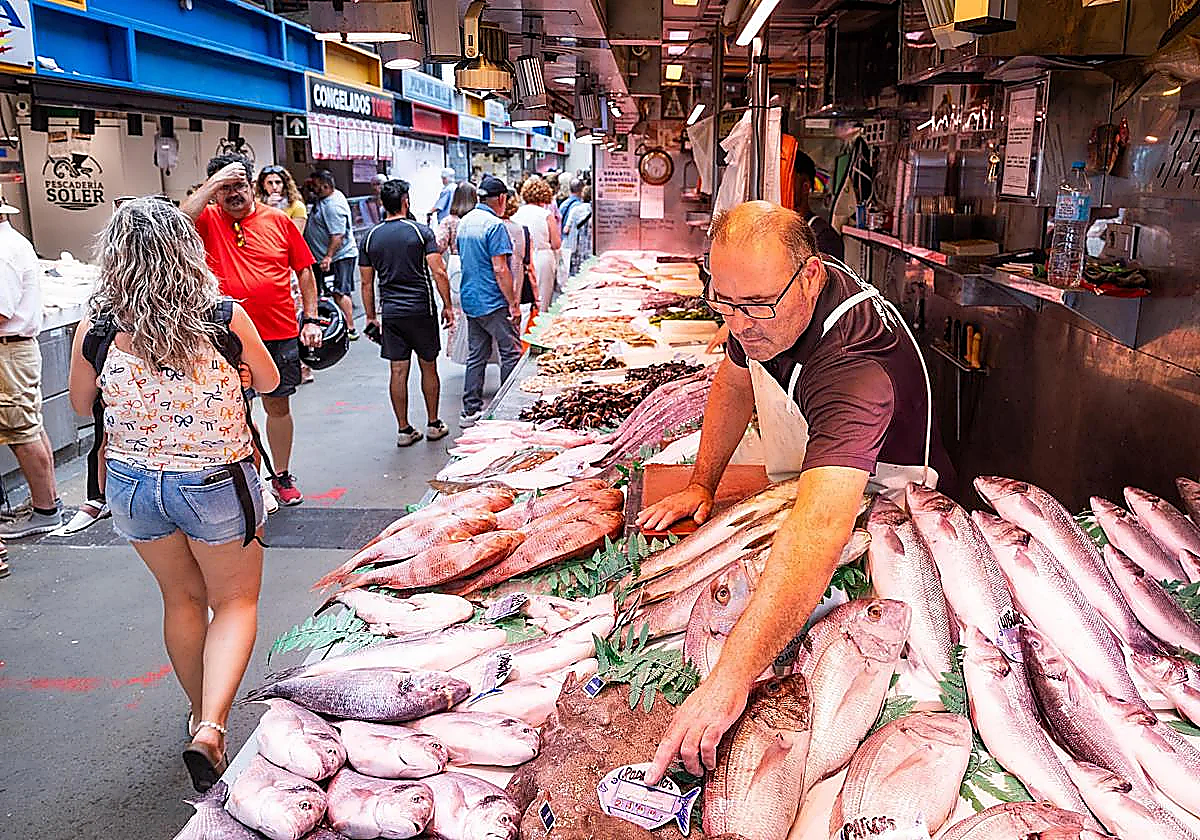
As for other basic goods, the good news comes from the shopping basket, which rose by 2.2% in Malaga, below the national average of 2.4%. Moreover, the rate of increase in food prices has slowed in the province, as last month it was 2.3% year-on-year. Transport costs also performed better on the Costa del Sol (1.8%) than nationally (2.4%). A similar trend is emerging in education (2.5% in Spain and 0.3% in Malaga).
However, the figures are once again worse for other indicators, such as alcohol and tobacco (4.1% nationally compared to 4.4% in Malaga), as well as furniture and household goods (0.9% in Spain and 1.3% in the province), while leisure and culture in Malaga are 2.2% more expensive, with Spain only at 0.1%.
Meanwhile, the hospitality industry (mostly restaurants and hotels) behaved similarly at both levels, with increases of 4.4% for Spain and 4.3% at the provincial level.
In Malaga, prices are rising steadily above the Spanish average because GDP (gross domestic product) is also growing more rapidly here, coupled with more dynamic consumer spending resulting from tourism and the presence of a more transient population.
![[]](http://static.vocstatic.com/voc26/latest/assets/images/favicon/surinenglish/apple-touch-icon-57x57.png)