
Infrastructure
Design of Costa del Sol's second desalination plant will be ready in two years: its first phase will guarantee water until 2039
Water company Acosol launches an extensive invitation to tender for the preliminary project, study of alternatives and the necessary technical and environmental reports for around one million euros
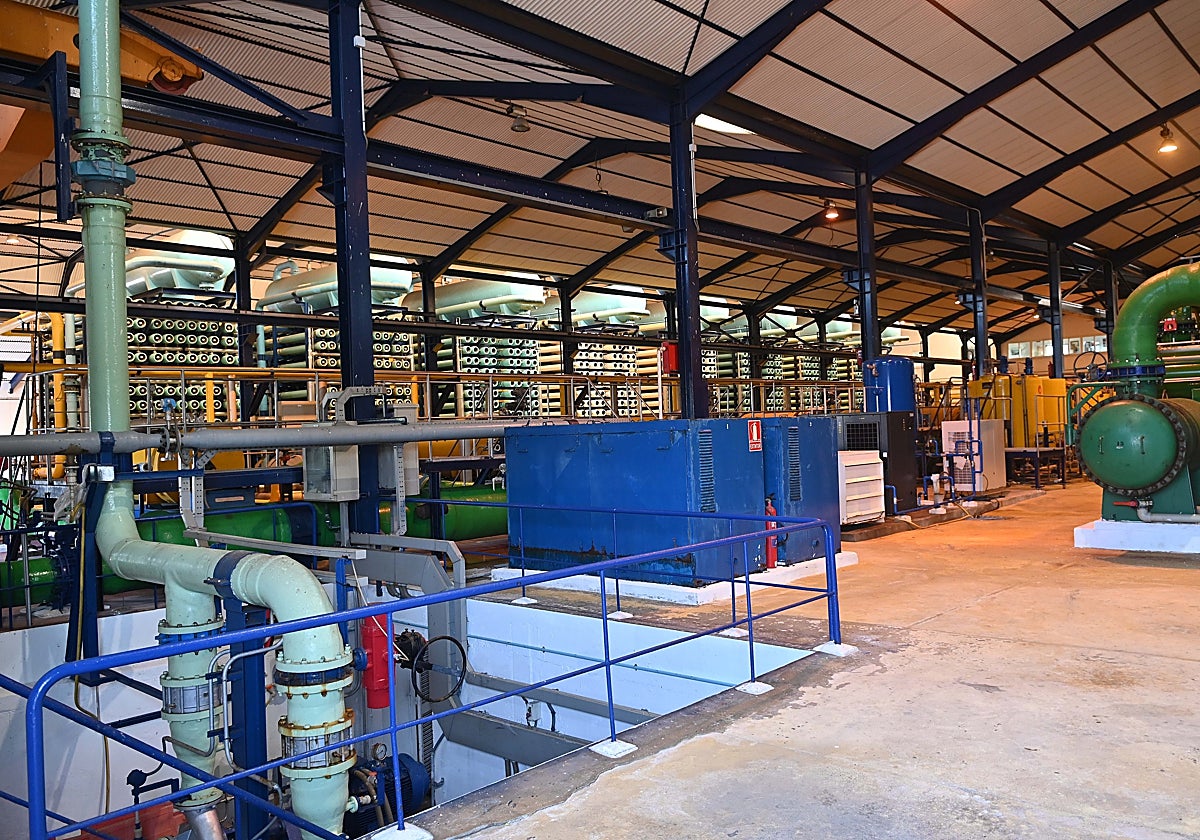

Water company Acosol has finally prepared and put out to tender the preliminary project for the second seawater desalination plant on the Costa del Sol. It took several months, because every detail had to be fine-tuned to avoid setbacks.
The contract is nearly one million euros and it has an estimated deadline of 24 months for the preparation of the design of the future plant, capacity included, and for streamlining the complex environmental and technical procedures. Its location is also yet to be determined.
10-12
million cubic metres of desalinated seawater production is the initial plan; however, this could be expanded with a plant similar to the one in Marbella, capable of desalinating 20 million cubic metres per year
The failed desalination plant once promoted by the central government was to be located in Mijas. Acosol does not rule out this location but is open to other options, such as Torremolinos and Benalmádena. In any case, these questions will have to be determined by the procedure that is now beginning with the publication of the tender.
"However, the scarce regulation capacity [reservoir], the irregularity of surface contributions and the overexploitation of coastal aquifers frequently generate imbalance between consumption and available resources, especially during periods of maximum tourist influx and low rainfall. Various previous studies have shown the need to incorporate a new stable, sustainable and scalable source of supply, which will reduce the pressure on the aquifers and strengthen the resilience of the supply system to the Western Costa del Sol," the technical specifications state.
63
million cubic metres is the annual regulation of the La Concepción reservoir, including the triple transfer Guadalmina-Guadaiza-Guadalmansa
The contract will cover all the documentation necessary to enable the joint tendering of the construction project. It includes the preparation, processing and obtaining of the environmental, sectoral and urban planning authorisations that are mandatory. It also includes the delimitation of the necessary land, the technical documentation for the initiation of expropriations when appropriate, as well as the response to allegations and the incorporation in the preliminary project of the modifications required by the competent bodies.
Timeline
The fieldwork is structured in three phases. The first is the study of needs, with an estimated timeframe of three months. The second is the study of alternatives, which will take nine months. Finally, the preliminary project is expected to take one year. At this point, Acosol gives more time than estimated to also cover the environmental processing, public information and the mandatory sectorial authorisations.
"In the event of a blockage or delay in the administrative processing for reasons not attributable to the consultant, the execution of the contract may be suspended in accordance with the applicable regulations, without this entailing any modification of the total period of 24 months set for its execution," the tender says.
A plant of these characteristics must take into account a host of variables: energy, piping, acoustics, effects on the marine environment (brine, outfalls, diffusers...), capacities, profitability curves.
Capacity
Another key issue will be the study of the overexploited groundwater bodies on the Costa del Sol. This will be one of the bases for justifying the need for extra contributions.
The plant will be expandable and in the first phase it is intended to cover the projected demand on the Costa del Sol until 2039. Initially, although not included in the specifications, the plant is intended to start with an annual capacity of some 10-12 million cubic metres, which could be doubled in a subsequent module. This would place the desalination plant with a capacity similar to that of the recently renovated and modernised Marbella plant (20 million cubic metres per year after an investment of more than seven million euros by the regional government of Andalucía and Acosol).
The 91-page tender documents set 16 January as deadline for the submission of bids.
Present and future supply
The Costa del Sol is mainly supplied by the La Concepción reservoir, which regulates some 63 million cubic metres per year. In second place is the aforementioned Marbella desalination plant. The third resource is the wells of Fuengirola and Guadalmansa, which cover 10% of the demand. Finally, each municipality's own resources, wells and springs. We should not forget the production capacity of reclaimed water, from the tertiary system of the treatment plants. This is not potable water, but it does reduce the pressure on water that is potable. Annual production is around 47 million cubic metres, but only between seven and ten are reused.
In the long term, the Costa has its sights set on the Gibralmedina reservoir project, between Cadiz and Malaga, which would provide some 15 million cubic metres of treated water per year. However, the project is worth more than 700 million euros and has a long road ahead of it. The 'water motorway', on which work has just begun and which will provide a reliable connection to Malaga city, is another vital project. It will allow up to 500 litres per second of water to be exchanged in both directions via the refurbished Rojas pumping station (Churriana).
![[]](http://static.vocstatic.com/voc26/latest/assets/images/favicon/surinenglish/apple-touch-icon-57x57.png)